- English
- French
- German
- Portuguese
- Spanish
- Russian
- Japanese
- Korean
- Arabic
- Irish
- Greek
- Turkish
- Italian
- Danish
- Romanian
- Indonesian
- Czech
- Afrikaans
- Swedish
- Polish
- Basque
- Catalan
- Esperanto
- Hindi
- Lao
- Albanian
- Amharic
- Armenian
- Azerbaijani
- Belarusian
- Bengali
- Bosnian
- Bulgarian
- Cebuano
- Chichewa
- Corsican
- Croatian
- Dutch
- Estonian
- Filipino
- Finnish
- Frisian
- Galician
- Georgian
- Gujarati
- Haitian
- Hausa
- Hawaiian
- Hebrew
- Hmong
- Hungarian
- Icelandic
- Igbo
- Javanese
- Kannada
- Kazakh
- Khmer
- Kurdish
- Kyrgyz
- Latin
- Latvian
- Lithuanian
- Luxembou..
- Macedonian
- Malagasy
- Malay
- Malayalam
- Maltese
- Maori
- Marathi
- Mongolian
- Burmese
- Nepali
- Norwegian
- Pashto
- Persian
- Punjabi
- Serbian
- Sesotho
- Sinhala
- Slovak
- Slovenian
- Somali
- Samoan
- Scots Gaelic
- Shona
- Sindhi
- Sundanese
- Swahili
- Tajik
- Tamil
- Telugu
- Thai
- Ukrainian
- Urdu
- Uzbek
- Vietnamese
- Welsh
- Xhosa
- Yiddish
- Yoruba
- Zulu
16 oz Glass Juice Bottles vs. Plastic Juice Bottles: Which Is Better?
Choosing between glass and plastic for juice packaging at scale is one of the most important choices your procurement team will make. In my experience working with beverage producers and packaging purchasers throughout the US market, 16 oz glass juice bottles routinely beat out plastic options in terms of food safety, freshness preservation, and brand positioning. Plastic is lighter and less breakable, but glass trumps it with chemical inertness, recyclability, and premium shelf appeal – the attributes that matter most to businesses competing in today’s quality-conscious marketplace.send inquiry

Understanding the Materials: Glass vs. Plastic for 16 oz Juice Bottles
To choose the right material for a container, you must first know what each one is made of and how it reacts with food.
What Glass Bottles Are Made Of
Henghua’s 16 oz drink cups are composed of Type III soda-lime glass, which is FDA GRAS (Generally Recognized As Safe). Glass is chemically neutral; thus, no reaction occurs with acidic juices, citrus mixtures, and fermented beverages. It does not have any BPA, phthalates, or other chemicals added to it;t thus, there is no opportunity for ions to transfer into your goods.
What Plastic Bottles Are Made Of
Juice bottles are often made of polyethylene terephthalate (PET) or high-density polyethylene (HDPE). Food-grade PET is generally safe for single use, but testing from the National Institute of Environmental Health Sciences suggests contaminants may leach out when heated or re-used. HDPE scores higher on durability tests, but it has the same limitations of recyclability.
Recyclability and Environmental Compliance
Glass may be recycled over and over again without any loss of purity or quality. According to the Glass Packaging Institute, salvaged glass (cullet) may replace up to 95 percent of the raw materials required in manufacturing new glass. UNEP says fewer than 10% of post-consumer plastic bottles are recycled worldwide. This distinction is highly essential for procurement teams that have to report on ESG issues.
Performance Comparison: Durability, Freshness, and Usability
Material composition is not the only thing that matters; operational performance directly impacts supply chain decisions and the end quality of the product.
Oxygen Barrier and Shelf Life
Glass is virtually perfect at keeping air out. Its smooth, non-porous surface keeps air out, which is highly crucial for cold-pressed juice manufacturers that employ High Pressure Processing (HPP). OTR (oxygen transfer rate) may be monitored in PET 16 oz glass juice bottles. This can accelerate the degradation of minerals over time, notably Vitamin C and beta-carotene. That difference may indicate a reduced effective shelf window for premium juice products.
Breakage Risk and Shipping Weight
Plastic bottles are lighter and less likely to shatter when they strike anything. This reduces the cost of shipping each bottle and reduces travel losses. Glass requires special safe wrapping, and this increases the cost of delivery. But Henghua’s thicker bottle body design and uniform wall thickness distribution considerably reduce the amount of breakage. The structural integrity also permits automated filling and capping lines that do not have to cope with size variations.
Temperature Suitability
Glass is not subject to the danger of material deterioration in the fridge or at room temperature. Standard soda-lime glass requires sufficient headroom (10-15%) for freezer storage, or it may break due to the heat. Borosilicate glass can withstand higher temperature fluctuations, although it’s not as often used for everyday juice bottles. Some plastic bottles may deform or emit gases at a quicker rate when heated (for example, during hot-filling over 190°F).
Maintenance and Reusability: Cleaning and Sterilization Insights
Sanitation requirements are vital when purchasing items for companies that employ refillable or returnable packaging, since they directly affect the overall cost throughout the lifespan.
Why Glass Is Easier to Sterilize
Cleaning agents such as peracetic acid (PAA), caustic soda, and UV light do not break down glass since they do not harm glass. All Henghua items are designed with smooth interior walls to prevent the growth of germs and to keep the smell of previous fills from escaping. Industrial juicers generally cleanse glass bottles with PAA for cleaning before hot-filling (up to 190°F), which glass handles reliably.
Plastic Degradation Over Repeated Use
Most PET and HDPE bottles are meant for one-time use. When you rinse something repeatedly, the surface produces little scratches that germs may hide in. Some polymers also leach more when they are repeatedly heated. A lifecycle cost study finds returnable glass packaging might have reduced costs per use over time. This is particularly the case for deposit return markets, which are widespread in Germany, Scandinavia and certain portions of the US.
Closure and Sealing Compatibility
Henghua’s 16 oz glass juice bottles include CT finish, lug finish, wooden, metal, or plastic screw caps in gold, silver, white, or black. The roll-type seal design maintains the seal closed throughout transport or storage. Choose the correct neck finish, such as the standard 38-400 or 38mm lug, and it will fit the quick filling and capping machinery of industrial beverage manufacturing.
Economic and Procurement Considerations for B2B Buyers
Cost analysis in glass vs. plastic packaging goes beyond unit price. Long-term supplier relationships, customization capabilities, and supply chain reliability all factor into total procurement value.
Unit Cost and Bulk Pricing
Glass bottles carry a higher per-unit cost than PET alternatives at equivalent volume. However, wholesale bulk pricing from factory-direct suppliers narrows this gap substantially. Henghua offers competitive pricing backed by 10 sets of 150-ton glass melting furnaces with a daily output capacity of up to 1 million units per furnace. Inventory products support immediate shipment, while custom orders follow a lead time of 25 days for sampling and 30 days for mass production.
Customization Options for Brand Differentiation
Here are the core customization options available through Henghua's glass juice bottle program:
- Surface treatments: Gold stamping, bronzing, screen printing, thermal transfer printing, spray painting, and internal engraving — each option supports distinct brand identity on the shelf.
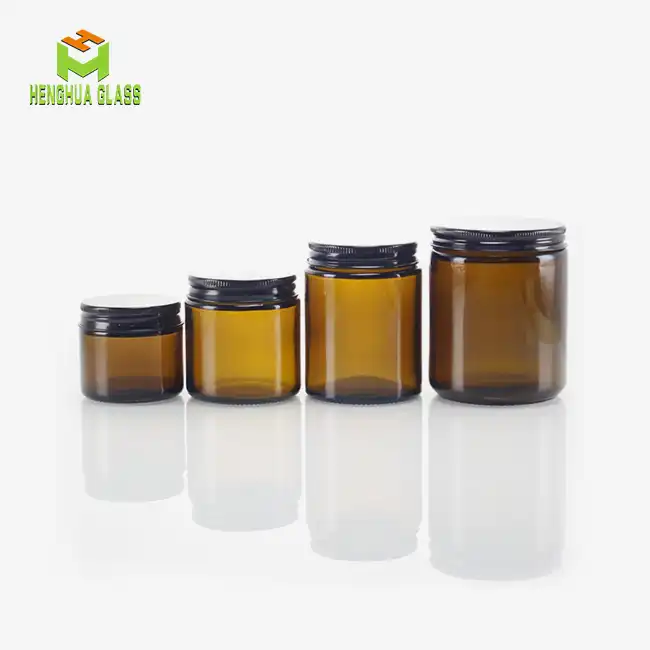
- Color and form options: Available in transparent, amber, and blue glass; capacities from 100ml to 32oz; round shapes in standard or custom profiles.
- Cap and closure variety: Wooden, metal, or plastic caps in multiple colors, supporting both functional and premium aesthetic positioning.
These options allow beverage brands to differentiate their products in refrigerated retail displays and direct-to-consumer channels without requiring separate packaging development cycles.
Certifications and Compliance
Henghua's glass bottles comply with FDA 21 CFR standards, CE, SGS, and LFGB certifications. Lead and cadmium leaching tests confirm food-contact safety, and polariscope testing (Real Temper Number) validates annealing quality to prevent spontaneous breakage. For procurement teams managing strict QA requirements, these documentation standards reduce supplier qualification time.
Environmental and Brand Impact: Choosing Sustainable Packaging
Packaging choices now have a real effect on how people see a brand, how much they trust it, and how well it follows the rules.
Glass and the Circular Economy
The circular economy is a suitable concept for glass containers. Brands may promote their goods as more ecologically friendly without the fear of greenwashing, since it is already recycled in the US and EU and can be recycled in a closed loop. For cold-pressed beverages rich in Vitamin C, amber glass is the ideal option since it shields light-sensitive nutrients from UV radiation.
Consumer Perception and Premium Positioning
According to the study from the Glass Packaging Institute, consumers perceive glass to be a purer and superior quality material in comparison to plastic. For tiny health brands and craft beverage companies, the feel and weight of a glass bottle informs the customer a lot about the brand before they ever read the label. This is a mindset that feeds straight into increased pricing in chilled food service and retail.
Regulatory Alignment in the US Market
More and more major US retailers are demanding BPA-free labeling and assurances that packaging is recyclable before they would sell new items. Glass fulfills both standards without any modifications. Plastic products often need third-party testing to ensure that they are BPA-free. This makes it easy for procurement managers working with retail partnership frameworks to comply. Glass packaging.
Conclusion
16 oz glass juice bottles are superior to plastic as regards food safety, freshness, sterilization, and brand positioning. Plastic is superior to glass since it does not shatter easily and is lighter to transport. For B2B purchasers in food, wellness, and drinks, the decision relies on the product type, how it will be distributed, and the brand strategy. Glass juice bottles (16 oz.) are often the better long-term investment for high-end juice goods, where you need to be suitable for HPP, have a longer shelf life, or be sold in high-end retailers.
FAQ
1. Can 16 oz glass juice bottles be used in HPP production?
Yes, HPP processes up to 87,000 PSI can damage glass bottles with a cylindrical shape and a flexible cap closure, as long as the cap allows for some volume displacement. Because of this, they can be used for cold-pressed juice brands that want to extend the shelf life without using heat.
2. What is the difference between amber and clear glass juice bottles?
Light-sensitive nutrients, like Vitamin C, are kept from breaking down by amber glass, which blocks UV light. Clear glass makes it easier to see what's on display in stores. The choice depends on how your product is made and where it will be placed on the shelf.
3. How do I verify a glass bottle supplier's quality compliance?
Documents like FDA 21 CFR test reports, SGS certification, heating quality records (polariscopical test results), and lead/cadmium leaching test results should be asked for.
4. Are glass juice bottles cost-effective for large orders?
When you buy directly from sources with a lot of production capacity, the unit cost goes down a lot. You can also get volume discounts for large orders that are big, which closes the price gap with plastic alternatives.
5. What cap types are compatible with glass juice bottles?
Metal caps, screw caps (CT and lug finish), and wooden caps can all be used together. The 38mm neck finish is what most commercial filling lines come with.
Partner with Henghua for Premium 16 oz Glass Juice Bottles
Henghua has been making glass packaging for more than 20 years and sells it to people all over the US. We support large-volume orders with quick shipment on stock items and a structured 30-day wait time for custom production as a reputable provider of 16 oz glass juice bottles. Our bottles are made to meet the standards of FDA, CE, SGS, and LFGB. We also offer full ODM/OEM services, which include designing the shape, treating the surface, and making custom closures to fit your brand's needs. Today, you can email denny@henghuaglass.com to get free samples and a competitive bulk quote.
References
1. Glass Packaging Institute. Glass Recycling Facts. 2022.
2. United Nations Environment Programme (UNEP). Single-Use Plastics: A Roadmap for Sustainability. 2018.
3. National Institute of Environmental Health Sciences. Bisphenol A (BPA): Use in Food Contact Application. 2021.
4. U.S. Food and Drug Administration. CFR Title 21: Food for Human Consumption — Glass Packaging Standards. 2023.
5. ASTM International. Standard Test Methods for Glass Containers: Vertical Load and Internal Pressure. ASTM C147. 2020.
6. Marsh, K., & Bugusu, B. Food Packaging — Roles, Materials, and Environmental Issues. Journal of Food Science, 2007.
Learn about our latest products and discounts through SMS or email