- English
- French
- German
- Portuguese
- Spanish
- Russian
- Japanese
- Korean
- Arabic
- Irish
- Greek
- Turkish
- Italian
- Danish
- Romanian
- Indonesian
- Czech
- Afrikaans
- Swedish
- Polish
- Basque
- Catalan
- Esperanto
- Hindi
- Lao
- Albanian
- Amharic
- Armenian
- Azerbaijani
- Belarusian
- Bengali
- Bosnian
- Bulgarian
- Cebuano
- Chichewa
- Corsican
- Croatian
- Dutch
- Estonian
- Filipino
- Finnish
- Frisian
- Galician
- Georgian
- Gujarati
- Haitian
- Hausa
- Hawaiian
- Hebrew
- Hmong
- Hungarian
- Icelandic
- Igbo
- Javanese
- Kannada
- Kazakh
- Khmer
- Kurdish
- Kyrgyz
- Latin
- Latvian
- Lithuanian
- Luxembou..
- Macedonian
- Malagasy
- Malay
- Malayalam
- Maltese
- Maori
- Marathi
- Mongolian
- Burmese
- Nepali
- Norwegian
- Pashto
- Persian
- Punjabi
- Serbian
- Sesotho
- Sinhala
- Slovak
- Slovenian
- Somali
- Samoan
- Scots Gaelic
- Shona
- Sindhi
- Sundanese
- Swahili
- Tajik
- Tamil
- Telugu
- Thai
- Ukrainian
- Urdu
- Uzbek
- Vietnamese
- Welsh
- Xhosa
- Yiddish
- Yoruba
- Zulu
What is the standard size of glass tube wine bottles?
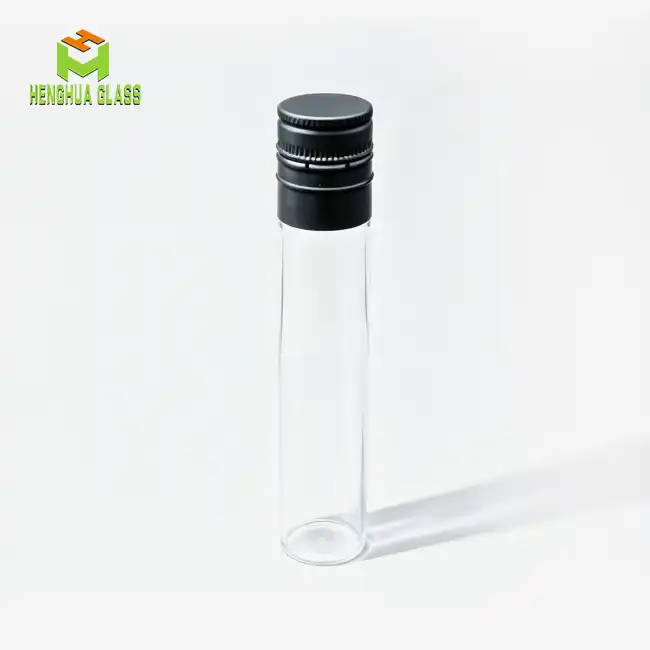
If you are seeking packaging for high-end spirits and drinks, it is crucial to know the sizes and limitations of glass tube wine bottles. Glass tube wine bottles come in conventional sizes of 100 ml to 750 ml. 500ml and 750ml are the most typical sizes for packaging wine and spirits for daily use. Manufacturers such as Henghua also provide versatile solutions such as 100 ml, 200 ml, and 16 oz. and totally custom sizes to accommodate a wide range of branding and functional needs. These cylindrical containers are made of high-quality glass, so they look excellent and will endure a long time. They can be used for wine, rum, whisky, gin, and even for non-alcoholic products such as oli16 oz,l.
Understanding Glass Tube Wine Bottles: An Overview
What Defines a Glass Tube Wine Bottle?
A cylindrical container crafted from high-quality borosilicate or soda-lime glass tubing, the Glass Tube Wine container is meticulously manufactured. Unlike normal molded bottles, with their visible shoulder and punt bottom, the walls on these bottles are all the same width, typically ranging from 1.0 mm to 1.5 mm. This style of manufacture offers them a wonderful clarity and a sleek, modern look that appeals to modern firms who wish to appeal to picky clients. The cylindrical shape eliminates unnecessary weight and provides more transparency to the container so you can see the color and quality of the drink clearly.
Uniform dimensions and adherence to international standards like ISO 12775 are guaranteed by the controlled heating and shape of the glass tubes during the construction process. The process produces bottles with better resistance to hydrolysis, preventing chemicals from migrating and spoiling the flavor and smell of the beverages stored. The smooth inside holds aromatic compounds well, making it suitable for aged beverages and premium wines when flavor retention is paramount.
Historical Evolution and Market Significance
The beginnings of tubular glass packing are from laboratory and pharmaceutical applications where accurate measurements and chemical neutrality were required. The wine and spirits business has seen this technique being employed to package commercial drinks over the last 20 years. These streamlined containers, particularly for limited editions, sampling samples, and monthly box services, were adopted by brands looking to stand out in showrooms full of other products.
Today, glass tube wine bottles are utilized for more than storage. They provide low-cost marketing by distributing samples, lower shipping costs than conventional 750 ml bottles, and greater control of quantities for food and drink services. This model is increasingly used in minibars on airplanes, premium wine subscription services, and distillery tasting kits, where portability and quality of presentation are key to how customers think of a brand.
Core Benefits for Beverage Brands
Wine in glass tube bottles has advantages in terms of function, aesthetics, and longevity. A heavier bottle body design increases the lifetime of the bottle along the supply chain and reduces the frequency of damaged bottles during transportation and storage. The precision-engineered neck finishes are designed for screw caps, cork stoppers, or synthetic closures for good closing performance, preventing leakage and air ingress that accelerates the breakdown of the beverage.
The ultra-clear glass provides the goods a premium impression from a branding point of view and makes it feel like it is more valuable. The style is both classic and modern, and it allows firms to stand out with basic yet powerful looks. This advantage is further enhanced with customization options, which enable firms to add names, labels, interior engraving, screen printing, and other finishes such as gold stamping, bronzing, and thermal transfer printing. And these bottles are recyclable over and over again, too. It addresses the demand of environmentally sensitive customers in markets with stringent regulations and assists brands in meeting environmental compliance standards.
Standard Sizes of Glass Tube Wine Bottles Explained
Common Volume Capacities and Dimensions
There are a number of normal capacity choices on the market to meet the needs of different users and customer tastes. Smaller sizes, 100 ml and 200 ml, are good for sampling, giving as gifts, and single-serve use. The height of these small sizes is usually between 150 and 180 mm, and the outside width is between 28 and 35 mm. This makes them perfect for advertising campaigns, airport services, and tasting flight collections.
The 16 oz (about 473 ml) format is in the middle of the range of sizes, between sampling bottles and full-use bottles. This size is popular in speciality stores and direct sales by craft distilleries because it makes things look more interesting. The height of these bottles is usually between 200 and 230 mm, and their diameters are between 45 and 55 mm. They still have the thin shape that marks tubular glass packing. Full-bottle sizes usually come in 500 ml, 750 ml, and 18 oz. sizes. Everyone in the wine business uses the 750 ml format, which means that designs are tubular and have heights between 280 and 320 mm and diameters between 65 and 75 mm. These measurements keep the equipment on current canning lines compatible while giving the product a unique cylindrical shape that makes it stand out on store shelves. Manufacturers in China, like Henghua, keep tight dimensional tolerances of ±0.2mm on the outer diameter to make sure that automated filling and capping operations always work the same way.
Comparison with Traditional Bottle Formats
Knowing how glass tube wine bottles fit in with other types of wine packaging helps buying teams figure out what needs to be integrated. Traditional Bordeaux bottles have pronounced shoulders and punt bottoms. They are about 295 mm tall and 73 mm across the body, and they can hold 750 ml. Tubular forms, on the other hand, don't have these parts. Instead, they have a smooth profile that may be 10-15% higher but takes up less shelf depth.
Burgundy bottles usually have shoulders that slope down and bottoms that are bigger. They are about 290 mm tall and 80 mm across. The alternative made of tubes takes up less room when being stored and moved, which could increase the density of the pallets by 12 to 18%. This efficiency is especially helpful for importers, distributors, and wholesalers who need to keep warehouse costs low and logistics operations running smoothly.
Impact on Storage and Aging Characteristics
The shape of the bottle affects how long wine lasts by changing the amount of oxygen it exposes to and how stable the temperature is. The ratio of surface area to volume in tubular bottles is different from that in other types, which could change how quickly things oxidise when they are stored for a long time. This difference doesn't matter as much for spirits because the higher alcohol level naturally preserves them. But winemakers need to think about these things when choosing packaging for goods that will be stored for a long time.
The even wall thickness of tube construction makes the thermal conductivity consistent throughout the container. This lowers temperature differences that can put stress on the drink. This benefit is especially useful for goods that are stored in places with changing temperatures or that have to be moved through areas with different climates. The smooth inside surface cuts down on nucleation sites, which helps sparkling wines keep their dissolved carbon dioxide and stops bubbles from forming too soon.
How to Choose the Right Glass Tube Wine Bottle Size for Your Business?
Aligning Bottle Size with Product Strategy
To determine the proper glass tube wine bottle size, you must consider several interconnected elements that affect the business's performance and market position. The type of product is most important since different drinks require different packaging. Rum, whisky, and vodka are consistent throughout sizes. However, wines with less alcohol do better in arrangements that limit oxygen per serving.
Target market demographics and buying patterns influence size choices. Millennials and Gen Zers like smaller packages that enable them to explore many brands without buying entire bottles. This trend has increased the 200 ml and 375 ml volumes, especially for premium products where consumers want to try lesser amounts before buying larger ones. However, purchasers who want to save money and hospitality businesses pick 750 ml and larger sizes because they cost less per unit.
Evaluating Supplier Capabilities and Requirements
Successful procurement requires examining the manufacturer's skills across several performance aspects in addition to bottle size. Quality certifications like FDA, CE, SGS, and LFGB ensure that items meet food-contact regulations in their markets. These certificates verify that glass ingredients, production procedures, and quality control systems fulfill international safety standards.
How successfully a brand stands out depends on customization. Leading suppliers offer full ODM/OEM services, including bottle shape, color (amber, clear, blue, and custom), closure system (wooden, metal, and plastic caps in different colors), and surface treatment. Logos can be added via screen printing, hot pressing, or labelling. Therefore, brands can create customized packaging that matches their brand.
MOQ and manufacturing capacity are vital when buying. Bulk customers may trust manufacturers with 10 sets of 150-ton glass melting kilns and fully automatic production lines to produce over 1 million items each day. Knowing sample wait periods (25 days) and mass production wait times (30 days) helps you plan inventories and prevent running out amid peak demand.
Real-World Application Insights
Successful brands' bottle size decisions can help procurement teams make better ones. Craft distilleries sell 200 ml bottles at farmers markets and in the tasting room to introduce new products. Customers can provide feedback before they invest in larger manufacturing runs. Low-cost trial offerings increase brand recognition and reduce financial risk.
Premium wine subscription businesses pioneered 100ml tubular bottles for tasting flights. Subscribers receive 6–12 samples monthly. This strategy transforms the economics of wine discovery by reducing shipping costs by 60–70% compared to full bottles while maintaining the quality presentation that justifies higher membership prices. The format can handle logistical networks without much packaging, reducing fulfilling costs.
Boutique hotels and airline business class offer pricey drinks in 50 ml and 100 ml amounts to avoid half-empty bottles. Minibars and service carts seem sophisticated and luxurious with the sleek tubular design. This application examines how packing format influences consumer satisfaction and value.
Comparing Glass Tube Wine Bottles with Other Packaging Solutions
Performance Analysis Against Traditional Glass Bottles
Performance variations between glass-tube wine bottles and conventional molded glass are apparent. One major difference is weight efficiency. The tubular structure eliminates shoulder and punt material due to equal wall thickness. This improvement reduces container weight by 8–12% compared to 750 ml Bordeaux bottles. This can cut large order shipping expenses.
Stress distribution affects durability. Traditional bottles break easily when dropped or handled because the shoulder transitions and base corners are stressed most. If impact pressures are distributed more evenly over the tubular construction, the cylinder structure may break less during automated filling and shipment. Due to its lack of a kick bottom, it must be properly piled for stability while stored and relocated.
Environmental and Sustainability Considerations
Sustainability performance in packaging is becoming more essential as firms aim to meet customer and government criteria. Glass wine tube bottles are easy to recycle because their substance allows multiple recycling without losing quality. They have less environmental impact per container than ordinary bottles because they require less material. Material acquisition and production energy are included.
Transportation efficiency is another environmental benefit of tubular forms. Weight decreases with improved wall thickness. Shipping uses less fuel, reducing carbon emissions per unit. Pallet density—possibly 15-20% more units per pallet than with standard bottles—increases these benefits by reducing order fulfillment shipments.
Comparing glass and plastic alternatives shows their varied environmental profiles. Plastic bottles save more space than glass ones, but governments and consumers are placing additional limitations on them due to microplastic pollution and a shortage of recycling facilities. Glass can be recycled, is inert, doesn't modify food taste, and offers the impression of high-quality, which supports higher costs.
Innovation Trends in Tubular Glass Packaging
The glass packaging industry advances tube bottle technology in several ways. Advanced glass compositions in lightweight formulations maintain structure stability while using less material. Some manufacturers have made tube bottles 20–25% lighter without reducing their impact or thermal shock resistance.
Thermal insulation research is fresh too. Double-wall tubes are being made to retain liquids at the appropriate temperature. Ready-to-drink cocktails and cold brew drinks benefit from temperature stability, making this technology ideal. The double-wall construction eliminates condensation on the outside, keeping the show looking nice and labels safe in chilly display situations.
Modern closing techniques for tubular bottles improve usability and user experience. Screw caps with oxygen barrier liners prolong oxygen-sensitive items on the shelf, while flip-top sport caps make active lifestyle drinks easier to enjoy on the move. These fresh concepts demonstrate that packaging format changes are always creating new ways to differentiate products and simplify customer experiences.
Procurement Tips for Buying Glass Tube Wine Bottles at Scale
Supplier Selection and Evaluation Criteria
You must plan and analyze supplier performance across several areas to develop trust. Manufacturing skills demonstrate consistency and problem-solving. With over 20 years of experience in glass packaging, suppliers like Henghua have seen several technical issues and market cycles. They can create processes that reduce defects and ensure accurate measurements.
Quality assurance processes should be thoroughly reviewed while vetting a seller. Automatic vision systems for size inspection, polarized light stress testing (ASTM C148) for annealing quality, vertical load strength testing for capping, and vacuum leaking testing for closure system integrity are needed for thorough testing. Quality-focused suppliers who provide detailed inspection reports and track glass tube wine bottles throughout production safeguard buyers.
When regional sourcing, you must consider wait periods, transportation costs, and local knowledge. Asian manufacturers, especially in Jiangsu, may offer cheap prices due to economies of scale and integrated supply chains. European suppliers are closer for buyers that seek small batches and short lead times. North American manufacturers emphasize domestic sourcing to strengthen the supply chain and promote sustainability to attract customers.
Pricing Models and Order Quantity Optimization
Knowing glass bottle prices helps you negotiate and budget. As orders increase, unit prices drop significantly. This is because factory setup costs are distributed over multiple orders. The price difference between 10,000 and 100,000 units can be 30–40%. Volume consolidation is appealing when storage and finances are available.
Suppliers have varied minimum order amounts depending on product complexity. Stock goods in typical sizes and colors have a 5,000–10,000-unit MOQ. However, fully tailored bottles with particular surface treatments and forms require 50,000 to 100,000 units. Using popular sizes and colors across product lines can save buyers money. Only high-end things worth the extra cost should be customized to stand out.
Negotiations include payment and deposit terms. International orders normally require a 30% deposit and the balance before shipment. Long-term buyers with good credit may be able to negotiate extended payment terms or consignment arrangements that maximize working capital. Buyers should also specify how caps, labels, and packing materials will be allocated to ensure budget accuracy.
Customization Strategies and Quality Assurance
To create unique packaging through personalization, balance your creative concept with production cost and ease. The bottle can be branded with screen printing, hot pressing, or internal etching. These approaches add $0.10–$0.50 per unit, depending on complexity. These options are appropriate for brands who want to stand out yet are budget-constrained. They use standard production tools.
Structural modification, such as bottle form and capacity, requires more money. Making custom molds costs $3,000–$8,000 for tools and 4–6 weeks for testing and prototyping. This strategy works best for well-known brands that can commit to enough volume to cover tool costs over time. Selling over 200,000 units a year usually yields high per-unit figures.
Incoming goods inspection is merely part of quality assurance. Logistics and packaging protection are crucial. Suppliers should include dividers, bubble wrap, and stronger boxes to prevent breakage during international shipping. Understanding transportation loss compensation policies clarifies liability and gives you options after harm. Customers may see and feel leading vendors' products before placing significant orders with free samples. This reduces buying risk and ensures quality.
Conclusion
To choose the right glass tube wine bottle size for your business, you need to think about product needs, market positioning, operational capabilities, and relationships with suppliers. Standard sizes from 100 ml to 750 ml are useful for a wide range of uses in the wine, spirits, and specialty beverage categories. Customization options help brands stand out in competitive markets. Procurement teams can get the most out of their packaging investments by learning about dimensional specifications, comparing performance to other packaging formats, and building strategic partnerships with suppliers. This type of packaging will continue to be shaped by trends like sustainability, new closure systems, and high-end presentation quality. Buyers who stay flexible while setting up reliable supply chains will be rewarded. Businesses can confidently find Glass Tube Wine Bottles to support product excellence and market success by using the purchasing strategies explained in this guide.
FAQ
What are the most common standard sizes available in the market?
There are 100 ml, 200 ml, 500 ml, and 750 ml glass tube wine bottles that are the most common sizes. For full wine bottles, the 750 ml size is still the standard. The 100 ml and 200 ml sizes are better for sampling, gifting, and single-serve needs. A lot of companies also make 16 oz (473 ml) and 18 oz (532 ml) sizes, which are better for craft spirits and other specialty items.
Can I order customized dimensions for my specific needs?
Companies with a lot of experience, like Henghua, that offer full ODM/OEM services make customization easy. To meet the needs of a brand, custom sizes, forms, colors (including amber, clear, blue, and special colors), surface treatments, and closing systems can be made. The process usually starts with a 25-day test period and ends with a 30-day mass production period. The minimum order quantity depends on how complicated the customization is.
How does bottle size affect wine quality and preservation?
The surface area-to-volume ratios of different bottle sizes affect how long wine stays fresh. Larger bottles may slow down the aging process by exposing less wine surface area per unit volume to oxygen in the headspace. The smooth inner walls and great sealing ability of high-quality glass tube bottles keep oxygen out, no matter what size they are. This protects aromatic compounds and keeps products fresh longer when they are stored properly.
Partner with Henghua for Premium Glass Tube Wine Bottle Solutions
Henghua is a reliable glass tube wine bottle manufacturer that has been serving global markets for over 20 years. They can help you change the way you package your drinks. Our wide choice of products includes basic sizes ranging from 100 ml to 750 ml, as well as sizes, colors, and surface treatments that can be changed to fit your brand's needs. We have 10 sets of 150-ton glass melting furnaces that can make up to 1 million units a day. This gives procurement managers, supply chain leaders, and package buyers the production size and consistency they need to keep track of their inventory.
With CE, FDA, SGS, and LFGB certifications backing up our factory-direct pricing, you can be sure that you'll get high-quality glass tube wine bottles for sale at prices that will help you make a good profit. We offer free samples, compensation for transportation losses, and full technical support throughout the whole procurement process, from coming up with the first specifications to continuing production. You can email our team at denny@henghuaglass.com or go to www.glassbottles.cn to talk about your unique needs and get a quote that fits your business.
References
1. International Organization for Standardization. (2011). "Glass containers—General requirements for wine bottles." ISO 12775 Technical Specifications.
2. American Society for Testing and Materials. (2016). "Standard Test Method for Polarized Light Stress Analysis of Glass." ASTM C148-16 Technical Standards.
3. Glass Packaging Institute. (2022). "Life Cycle Analysis of Glass Container Production and Recycling." Industry Research Report.
4. Beverage Marketing Corporation. (2023). "Premium Wine and Spirits Packaging Trends in North American Markets." Annual Market Analysis.
5. European Federation of Glass Packaging. (2021). "Technical Guidelines for Cylindrical Glass Containers in Beverage Applications. "Manufacturing Standards Publication.
6. Food and Drug Administration. (2020). "Guidance for Industry: Glass Containers for Food and Beverage Packaging - Material Compliance." FDA Regulatory Guidelines Document.
Learn about our latest products and discounts through SMS or email