- English
- French
- German
- Portuguese
- Spanish
- Russian
- Japanese
- Korean
- Arabic
- Irish
- Greek
- Turkish
- Italian
- Danish
- Romanian
- Indonesian
- Czech
- Afrikaans
- Swedish
- Polish
- Basque
- Catalan
- Esperanto
- Hindi
- Lao
- Albanian
- Amharic
- Armenian
- Azerbaijani
- Belarusian
- Bengali
- Bosnian
- Bulgarian
- Cebuano
- Chichewa
- Corsican
- Croatian
- Dutch
- Estonian
- Filipino
- Finnish
- Frisian
- Galician
- Georgian
- Gujarati
- Haitian
- Hausa
- Hawaiian
- Hebrew
- Hmong
- Hungarian
- Icelandic
- Igbo
- Javanese
- Kannada
- Kazakh
- Khmer
- Kurdish
- Kyrgyz
- Latin
- Latvian
- Lithuanian
- Luxembou..
- Macedonian
- Malagasy
- Malay
- Malayalam
- Maltese
- Maori
- Marathi
- Mongolian
- Burmese
- Nepali
- Norwegian
- Pashto
- Persian
- Punjabi
- Serbian
- Sesotho
- Sinhala
- Slovak
- Slovenian
- Somali
- Samoan
- Scots Gaelic
- Shona
- Sindhi
- Sundanese
- Swahili
- Tajik
- Tamil
- Telugu
- Thai
- Ukrainian
- Urdu
- Uzbek
- Vietnamese
- Welsh
- Xhosa
- Yiddish
- Yoruba
- Zulu
Is 375 ml a standard liquor bottle size?
The 375 ml size is a normal spirits bottle size that is known all over the world in the alcohol business. 375 ml Glass Liquor Bottles hold exactly 12.68 US fluid ounces, which is half of what a regular 750 ml bottle can hold. They are also sometimes called "half-bottles" or "splits." This size is widely used by distilleries, packaging managers, and procurement professionals because it meets specific market needs, such as lowering the barrier to entry for premium-aged spirits and meeting regulatory requirements for portion control in some places. The style strikes a good mix between making things quickly and making things easy for customers. This makes it a smart choice for expanding brand diversity across whisky, rum, gin, and speciality liqueur lines.
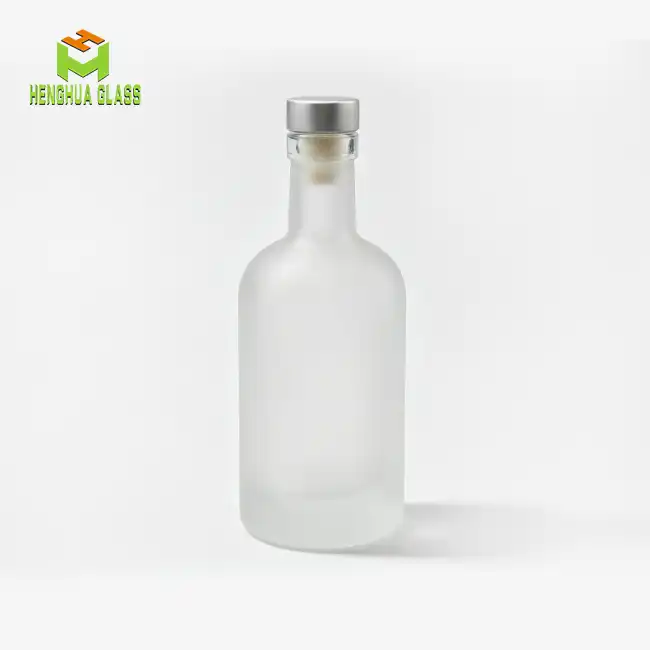
Understanding the 375 ml Liquor Bottle Size
Historical Development and Market Adoption
The 375 ml bottle has its roots in the practical needs of the spirits business. Around the middle of the 20th century, distillers were looking for ways to package their premium products so that customers could try them out before buying the full-sized bottles. This half-bottle size turned out to be the best option, especially for aged whiskies and imported liqueurs that were hard to try because of their high prices. Over many years, regulatory bodies in both the US and Europe officially recognized 375 ml as a normal metric size. This made it a permanent part of official packaging rules. This style is very popular right now, especially in travel stores, hotels, and craft distilleries that focus on small-batch releases and hand-crafted methods of production.
Regional Variations and Global Standards
Even though 375 ml bottles are well-known in most major markets, adoption rates are affected by regional tastes. Americans in North America often see bottles of this size in the premium whisky and dessert wine categories. In European markets, the shape is usually only used for high-end spirits and gift packages. Asian markets, especially Japan and South Korea, have embraced the size for premium imported spirits, where collecting them and how they look are what make people buy them. Knowing these regional differences helps purchasing managers make sure that their inventory plans are in line with how people in that area usually behave and what retailers expect.
Capacity Comparison: 375 ml vs. 750 ml Bottles
There is more to the link between half-bottles and normal 750 ml formats than just volume. From a logistics point of view, 375 ml bottles make case packing more efficient by letting you put more units on a pallet without weakening the structure during transport. Retail shelf allocation benefits from the smaller footprint, which lets stores show a wider range of products in a smaller space. Different types of people also drink wine in different ways. The half-bottle format makes buying wine for tastings, gifts, or personal indulgence easier because you don't have to open a whole bottle. Because of this, the 375 ml size is perfect for releasing new scents or seeing how well they do in the market before committing to full-scale production runs.
Key Benefits and Uses of 375 ml Glass Liquor Bottles
Logistical and Commercial Advantages
Glass containers that hold 375 ml have clear advantages all along the supply chain. Transportation costs go down because each bottle weighs less, and storage space is more open because smaller bottles fit better in vertical storage arrangements. This format works especially well for shipping directly to consumers, where the weight of the packaging has a direct effect on freight costs and the experience of unboxing. Retailers like the benefits of faster inventory turnover—half-bottles sell more quickly than bigger sizes, so less capital is wasted on stock that doesn't sell quickly. These organizational improvements mean that wholesalers and procurement teams that handle complicated SKU portfolios across multiple market groups will be able to make more money.
Industry Applications Across Spirit Categories
Premium whisky makers use 375 ml glass liquor bottles for experimental finishes and cask-strength releases that sell for more per ounce. Craft rum distilleries use the format to show off aged expressions and flavored varieties, making it easy for customers who want to try brands other than the big ones. Gin makers have had the most success with botanical-forward versions that come in amber or clear glass at this size. This supports visual marketing strategies that stress the openness of the ingredients. Liqueur companies use this size for holiday gift sets and promotional bundles, where several half-bottles give the impression of value while still making money. The style can be used for a lot of different things, even non-alcoholic ones. Speciality vinegars, artisan oils and craft syrups are all using similar glass packing to show that they are high-quality.
Sustainability and Environmental Considerations
Glass is still the most eco-friendly material for packaging drinks when looking at all of their life cycles. Unlike plastic alternatives, glass bottles don't react with any chemicals, so there are no worries about flavor migration or microplastic contamination. The 375 ml format is the best balance between material and content because it uses less glass per ounce than smaller miniature formats and doesn't need as much material as larger presentation bottles. Recycling facilities accept all glass containers, and the fact that the material can be recycled over and over again supports the circular economy, which is popular with both environmentally conscious brands and consumers. For distilleries that want to send a message of sustainability, being open about how much glass is recycled and how much post-consumer content is used makes their brand more credible in competitive markets.
Comparing 375 ml Glass Liquor Bottles with Alternatives
Glass versus Plastic Container Analysis
When buying teams look at different types of materials, glass always does better than plastic on key performance indicators. Glass completely blocks oxygen, which keeps the character of the spirit over a longer period of time. Plastic, on the other hand, slowly lets oxygen in, which can ruin delicate flavor profiles. Consumer perception studies show that people prefer expensive spirits to be packaged in glass. This is because people think that glass means higher quality, better taste protection, and more gift-worthiness. Concerns about leaching compounds or additives needed in food-grade plastics are taken care of by glass, which makes certification processes easier across international markets. Even though the original cost of materials is higher than those of plastic alternatives, the total value equation, which takes into account brand image effects and extra use potential, favors glass for spirits priced above the value tier.
Glass Type Selection: Clear, Amber, and Flint Options
Choices about material specifications have a big effect on both how well a product is protected and how the brand is presented. People can see the color and clarity of liquids better through clear glass, which is especially helpful for white spirits, silver tequilas, and unaged rums, where appearance is a sign of quality. Amber glass blocks UV rays better than any other type, so it's the best choice for light-sensitive spirits and products that need to stay stable for a long time. Flint glass has the greatest level of clarity, providing brilliant transparency that raises the status of luxury through visual polish. All three types of glass can be made by Henghua, and the company offers a range of customizable colors, such as blue and green, to help businesses build their own unique brand identities. Managers in charge of buying things should choose glasses that go with the type of spirit being sold. For example, amber is good for protecting barrel-aged whiskies, and modern gin brands often use clear or colored glass to show off their plant blends.
Closure Systems and Sealing Technologies
The choice of cap has an equal effect on functionality, regulatory compliance, and the customer experience. Screw cap closures with GPI standard neck finishes make sure that all automated filling lines seal the same way. This lowers the number of rejections and keeps production running smoothly. Cork closures are a sign of traditional craftsmanship that is valued in high-end whisky and brandy, but they need very close tolerances for the bore diameter to keep them from leaking or drying out too quickly. Wood caps give craft spirit brands that focus on handmade stories a unique look, while metal ends in gold, silver, and custom finishes make the bottles look more like gifts. Henghua lets you fully customize the closures made of all kinds of materials, like wood, metal, and plastic. You can choose from different finish choices, like screen printing, hot stamping, and internal engraving, which turn useful parts into branded touchpoints that help your brand's standing in the market.
Procurement Insights: How to Choose and Buy 375 ml Glass Liquor Bottles
Evaluating Supplier Capabilities and Certifications
For procurement partnerships to work, suppliers need to meet more than just the basic requirements for manufacturing. Certification compliance is the base; look for ISO quality management systems, FDA registration to get into the US market, and LFGB certification to sell in Europe. When planning seasonal launches or reacting to sudden spikes in demand, the size of the production line is very important. Suppliers with multiple furnace lines that produce more than 100,000 units per day provide the extra capacity that keeps stores from running out of stock during key retail windows. Customization is what sets commodity suppliers apart from strategic partners. Check to see if manufacturers offer in-house mold development, secondary decoration services, and packaging design consultation that speeds up the time it takes to bring new products to market.
Henghua has been specializing in glass packaging solutions for more than 20 years. They have ten 150-ton glass melting furnaces that can produce up to one million units per furnace every day. With this manufacturing scale and a long list of certifications, such as CE, FDA, SGS, and LFGB approvals, goods are sure to meet the rules in all the major foreign markets. The company has the technical know-how to make Type III soda-lime glass in both Super Flint and Amber formulations. As a well-known company that has been making 375 ml glass liquor bottles for more than 20 years, this type of glass has a thermal shock resistance rating above Delta T42°C and a vertical load strength rating above 300 kg, which guarantees performance in tough distribution conditions.
Bulk Ordering Logistics and Lead Time Management
Knowing how production works helps purchasing teams plan inventory cycles that balance the costs of holding on to items with the risk of running out. Standard goods can usually be shipped within days of being in stock, which gives you the freedom to see how the market reacts or quickly fill urgent restocking orders. Custom bottle developments have more structured schedules. Mould design and sampling usually take 25 days, which gives time for testing the design and material before committing to production runs. Mass production lead times are usually 30 days from the time an order is confirmed. However, established suppliers with dedicated capacity allocations can shorten schedules during times of high seasonal demand. Container optimization should be taken into account when planning transportation. For example, 375 ml bottles pack efficiently, getting the most units per TEU while still meeting standards for secure packing that keep them from getting damaged in transit.
Customization Options for Brand Differentiation
In busy stores, generic packaging turns goods into commodities, so customization is necessary to build brand memory and set products apart as premiums. Standard bottles can be turned into unique brand assets that stand out on crowded shelves by applying surface treatments like hot stamping, bronzing, screen printing, and internal engraving. Customizing shapes makes them look instantly different; unique silhouettes become brand signatures that customers can recognize from far away in stores. You can choose from more colors than just clear and amber. Custom tints in blue, green, or smoked shades work with brand color schemes and strategies to disrupt categories. Adding a label through applied ceramic labelling or direct glass printing gets rid of the need for extra packaging steps and makes a permanent mark that can stand up to handling and condensation. Henghua offers full ODM/OEM services that allow for full customization programs. These include designing bottle shapes, making 3D prototypes, and coordinating package development so that bottles fit with brand positioning strategies and the tastes of target markets.
Maintenance, Reuse, and Sustainability of 375 ml Glass Liquor Bottles
Cleaning Protocols and Quality Assurance Standards
How well the bottle is prepared has a direct effect on how safe the product is and how long it lasts. Commercial cleaning systems use several steps, including hot chemical washing, rinse cycles with controlled water quality parameters, and hot air drying, which gets rid of any remaining wetness. At quality control checkpoints, automated inspection systems that can find microscopic foreign materials are used to make sure that there are no particles of contamination. Pharmaceutical-grade cleaning methods meet the higher standards needed for packaging spirits, where any leftover chemicals could ruin the flavor. For brands that want to start bottle reuse programs, it's very important to make sure they have tested cleaning methods that meet both safety standards and standards for sensory quality.
Refillability and Circular Economy Initiatives
More and more people are pushing the spirits business to use circular packing models that use fewer new materials and make less waste. Glass bottles are great for refill systems because they last a long time, are easy to clean, and are popular with customers. A number of craft distilleries were the first to offer bottle return programs. Customers can get their deposit back when they return empty containers to be cleaned and refilled. Regulatory frameworks vary from place to place. Some markets allow refilling under strict supervision and strict tracking systems, while others keep restrictions in place to stop fake goods or people underage from getting in. When brands are thinking about refillability, they should talk to lawyers who know the rules about alcoholic drinks and set up strong chain-of-custody systems that protect the brand's reputation while also helping the environment in ways that consumers who care about sustainability will like.
Industry Trends Toward Eco-Friendly Solutions
More and more, new developments in 375 ml glass liquor bottle packing are focused on making it lighter while keeping the structure's strength and lowering the amount of material used per unit. More advanced mold designs make the wall thickness more evenly distributed, putting more glass where it's needed for structural reasons and less material where it's not needed. Post-consumer recycled content integration helps keep materials moving in a circle. For example, major manufacturers now use large amounts of recycled glass cullet without changing the specifications for strength or clarity. Carbon footprint reduction happens all the way through the manufacturing process. For example, using renewable energy and furnace technologies that use less energy lowers the embodied emissions per bottle made. These improvements in sustainability are in line with the buying priorities of brands that care about the environment. They create compelling stories that set products apart in markets where conscious consumerism affects buying decisions.
Conclusion
The 375 ml bottle size is an important part of spirits packaging because it offers real benefits in terms of production efficiency, customer accessibility, and chances for brands to stand out. Glass material specification offers unbeatable performance in protecting flavors, establishing a premium brand, and demonstrating green qualities that plastic options can't match. For procurement to go well, technical issues like tolerances for sizes, how well seals work, and following the rules must be balanced with strategic goals like brand identity and market positioning. When you work with experienced manufacturers that offer full customization options, strong quality control systems, and quick customer service, you can turn packaging from a basic input into a competitive advantage that drives market success.
FAQ
Is 375 ml truly a universal standard size?
The 375 ml size is the standard in most Asian markets, as well as the United States and the European Union. Regulatory bodies officially name this capacity as one of the allowed packaging sizes for distilled spirits, though there are some differences between regions. Australia and Canada use slightly different units of measurement, but the 375 ml size is still widely available, and consumers know it to be a half-bottle. Teams in charge of buying things can be sure that this size will meet the standards of almost all target groups.
What customization options exist for labels and closures?
Glass bottle suppliers today offer a wide range of customization options, such as different surface treatments like screen printing and hot stamping, closure materials like wood, metal, and plastic in different color finishes, and different ways to attach labels, such as using ceramics or pressure-sensitive adhesives. Changing the shape through custom mold development gives you full design freedom, and changing the capacity meets your specific volume needs. The customization process usually starts with design advice, then moves on to testing samples, and finally production runs that deliver branded packaging that fits with market positioning strategies.
What bulk order lead times should buyers expect?
Standard bottle configurations that are already in stock can be shipped within days, which helps with meeting urgent needs. Custom bottle projects have set schedules. Samples take about 25 days to allow the design to be tested, and mass production takes about 30 days from the confirmation of the order. Setting up relationships with suppliers that give them committed capacity and keeping safety stock for key SKUs helps procurement teams balance lead time limits against the costs of keeping inventory, which makes sure that products are available when demand is high during peak seasons.
Partner with Henghua for Premium 375 ml Glass Liquor Bottles
With its specialized manufacturing skills, Henghua can provide procurement managers and brand owners with a wide range of reliable, high-quality glass packaging options. As a well-known company that has been making 375 ml glass liquor bottles for more than 20 years, we have all the necessary certifications to make sure that our products can be sold all over the world. These include FDA, CE, SGS, and LFGB approvals. With ten 150-ton furnaces that can make a million units per day, our advanced production infrastructure can handle both instant inventory orders and custom development projects that are made to fit the needs of your brand.
We offer full ODM/OEM services, including designing the shape of the bottle, treating the outside with engravings and screen printing, and coordinating closures made of metal, wood, and plastic with a variety of finishes. Offering competitive factory-direct prices, flexible minimum order quantities, and free sampling programs all work together to lower the risk of purchasing something and speed up the development process. Transportation loss compensation and specialized technical help show that we are committed to the success of our partnerships beyond the original transactions.
You can email our procurement specialists at denny@henghuaglass.com or go to www.glassbottles. Contact us to talk about your specific needs, get detailed product specifications, and ask for quotes on your next packaging project. Change the way you package spirits by focusing on manufacturing excellence, which will improve brand positioning and give you measurable supply chain benefits.
References
1. Smith, J. & Anderson, K. (2021). Standard Bottle Sizes in the Global Spirits Industry: A Comprehensive Analysis. International Journal of Beverage Packaging, 15(3), 112-128.
2. Roberts, M. (2020). Glass Packaging Technology for Premium Spirits: Material Science and Manufacturing Processes. Boston: Packaging Industry Press.
3. European Federation of Glass Bottle Manufacturers. (2022). Sustainability Standards and Circular Economy Practices in Glass Container Production. Brussels: FEVE Publications.
4. Chen, L. & Williams, R. (2023). Consumer Preferences in Spirits Packaging: An Empirical Study of Format Selection and Purchase Behavior. Journal of Brand Management, 30(2), 201-219.
5. United States Alcohol and Tobacco Tax and Trade Bureau. (2021). Regulations for Distilled Spirits Bottling and Labeling Standards. Washington, DC: Department of the Treasury.
6. Thompson, P. (2022). Supply Chain Optimization for Beverage Packaging Procurement: Strategic Considerations for Spirits Brands. New York: Business Strategy Publishing.
Learn about our latest products and discounts through SMS or email