- English
- French
- German
- Portuguese
- Spanish
- Russian
- Japanese
- Korean
- Arabic
- Irish
- Greek
- Turkish
- Italian
- Danish
- Romanian
- Indonesian
- Czech
- Afrikaans
- Swedish
- Polish
- Basque
- Catalan
- Esperanto
- Hindi
- Lao
- Albanian
- Amharic
- Armenian
- Azerbaijani
- Belarusian
- Bengali
- Bosnian
- Bulgarian
- Cebuano
- Chichewa
- Corsican
- Croatian
- Dutch
- Estonian
- Filipino
- Finnish
- Frisian
- Galician
- Georgian
- Gujarati
- Haitian
- Hausa
- Hawaiian
- Hebrew
- Hmong
- Hungarian
- Icelandic
- Igbo
- Javanese
- Kannada
- Kazakh
- Khmer
- Kurdish
- Kyrgyz
- Latin
- Latvian
- Lithuanian
- Luxembou..
- Macedonian
- Malagasy
- Malay
- Malayalam
- Maltese
- Maori
- Marathi
- Mongolian
- Burmese
- Nepali
- Norwegian
- Pashto
- Persian
- Punjabi
- Serbian
- Sesotho
- Sinhala
- Slovak
- Slovenian
- Somali
- Samoan
- Scots Gaelic
- Shona
- Sindhi
- Sundanese
- Swahili
- Tajik
- Tamil
- Telugu
- Thai
- Ukrainian
- Urdu
- Uzbek
- Vietnamese
- Welsh
- Xhosa
- Yiddish
- Yoruba
- Zulu
How to Choose the Right Pump Dispenser for 750ml Glass Bottles
Each press of the right pump for a 750ml pump-dispensing glass bottle gives the same amount because it fits the neck of the bottle and can handle your formula. As the bottle is only made of glass, how well the pump fits on the neck is what determines success. First, make sure you have the right neck finish, like 28/410. Then check the length of the dip tube, the type of seal, and the output per stroke. Use your real product instead of water to test the pump. Lastly, think about how much the glass weighs, how strong it is when dropped, and how it will be shipped. That way, you won't have to deal with leaks, short pump lives, or expensive repairs before your first order. That's why I wrote this guide. send inquiry

Start With the Application: What the 750ml Pump Glass Bottle Must Do
Define Your Formula and Viscosity
The liquid is the first thing that should be thought about when choosing a pump. Things that are thin, like shampoo or hand soap, can easily go through a pump. A wider dip tube and a stronger spring are needed for thick conditioners, oils, and lotions. You should write down the range of viscosity, make a note of any particles, and guess how many times people will press the pump. A bottle of cooking soap is used several times a day, but a bottle of towel soap for guests is only used a few times. For thick products to move more slowly in cold warehouses, ask your formulator to give you the viscosity at room temperature and at the coldest temperature at which you store them. Before you choose a pump, give that sheet to the company that sells them.
Check Chemical Exposure Before You Pick Materials
Glass works well with most formulas. Ga seals, springs, and the dip tube are the weak spots on the pump. For a long time, alcohol, essential oils, and strong alkaline cleaners can make some seals softer or get bigger. What kinds of plastics and elastomers do the pumps touch the liquid? Then, match those to your recipe. Any spring that comes in contact with the product should not rust. A soak test is also a good idea. Put your finished product into sample pumps and store them for a few weeks. After that, check to see if the actuators swell, change color, or become stuck. This test doesn't cost much and finds issues that a quick bench check might miss.
Set Order Size, Market, and Packaging Rules
Next, write down how much you want to order, when you want to launch, and who you want to sell to. FTC Green Guides say that in the US, a claim that something is recyclable needs to be backed up, and a pump made of different materials can make that claim harder to make. Laws about EPR packaging have been passed in Maine, Oregon, Colorado, and California, among other states. Check to see what laws apply to your brand. Glass can be recycled over and over again without losing its quality, which fits with the idea of a reusable bottle. Early on, choose whether you need empty bottles, a full set with a pump and a cap, or a package that is already decorated and ready to be labeled. The quote and lead time will change based on that decision.
Match the Pump Type to the Bottle Neck
Lotion, Soap, and Foam Pumps Compared
Creams, conditioners, and body wash can all be put in lotion bottles. It's possible for soap pumps to work all day in kitchens and bathrooms with thinner liquids. For foam pumps to work, the formula needs to be thin, and the foam head needs to be the same thickness. For each type, check how much it can print per stroke, how quickly it primes, whether it locks for shipping, and how smooth it feels. There is a lot of product in a 750ml bottle, so the amount size is important. The bottle needs about 375 strokes from a pump that gives out 2 ml per stroke to be empty. That easy math helps you choose an amount that works for your users and your refill plan.
Verify Neck Finish, Thread, and Dip Tube
This is where most leaks begin with a 750ml pump-dispensing glass bottle. A pump will only close if the thread on the cap, the finish on the neck, and the gasket all match the bottle. A lot of pumps have a 28/410 finish, which means they have a 28 mm neck and a 410 thread style. Still, the tolerance on the same label from two different suppliers can be different. Get a drawing of the neck and a drawing of the pump closure, and then put them next to each other. Check the height of the neck, the number of threads, and the seams. Dip tube length is also important. It should get close to the bottom without being able to bend or block the intake. Before you accept anything, you should order real samples and sew them on by hand.
Check Output, Priming, and Locking
Everyday life is affected by the output per stroke, the prime speed, and the design of the lock. Keep track of how many strokes a new pump needs before it starts to make liquid. When a pump takes too many steps, users get annoyed and leave bad reviews online. At room temperature, test your real recipe. A twist lock or lock-down head can also stop pumping inside a carton by accident. Check out the height and size of the head as well. The center of gravity is raised by the tall pump on a 750ml bottle, so make sure the filled set stays put on a shelf or tray. The bathroom sink stays clean with a clean cut-off that doesn't drip.
Weigh Glass Against Alternatives and Choose Bottle Details
Glass Versus Plastic: Weight, Look, and Reuse
I'm not going to lie: glass costs more to ship than plastic because it weighs more. You get a clean, high-end look on a bathroom shelf, strong chemical neutrality, and a bottle that people can use over and over again. Glass can also be recycled, which supports an environmental story as long as the claims are true. To keep track of freight, find out early on about box design, wall thickness, and loading pallets. A thicker body makes it stronger against drops, but it also makes it heavier. The right balance depends on how you ship and what you're making.
Color, Shape, and Decoration Choices
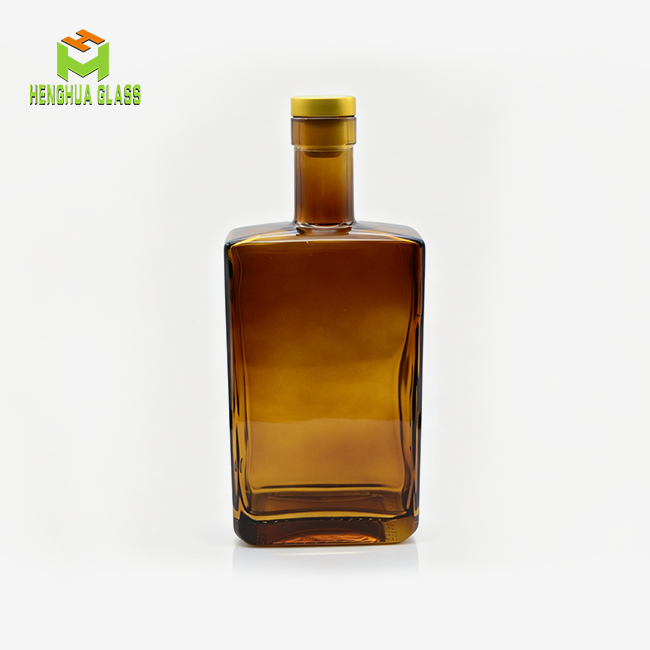
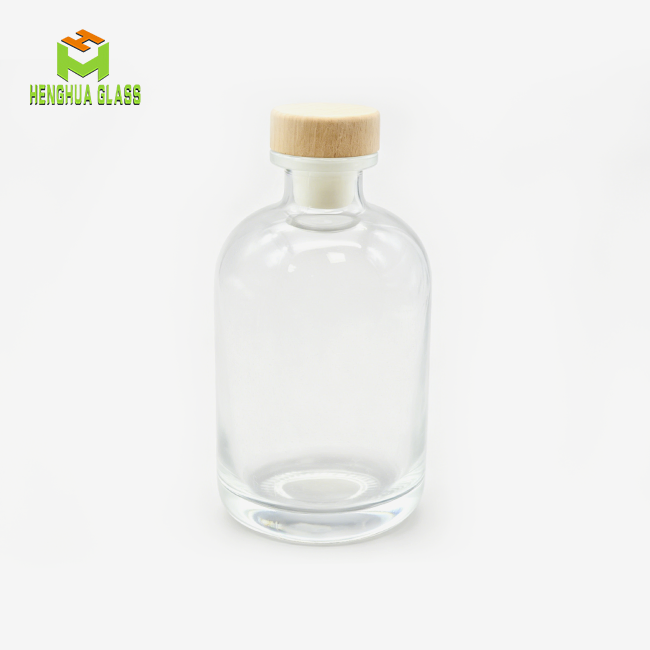
Henghua has amber, clear, and blue glass, and we can make any color you want. Glass that is clear lets the product shine and works well for recipes that don't react to light. A lot of UV light is blocked by amber glass, which helps protect formulas that change in the sun. Blue makes things look like they belong in a spa. Hot stamping, screen printing, decorative firing, thermal transfer printing, spray painting, internal engraving, labels, and stickers are all things we can do to decorate. You can also change the capacity, which ranges from 500ml to 1000ml, 16oz to 18oz, and 32oz. You can change the bottle's size and shape to fit your brand and pump.
Metal Versus Plastic Pump Parts
Metal pump parts look and feel high-end and go well with boutique lines. When used in large quantities, plastic pumps often cost less and weigh less. No matter what you choose, make sure you know which parts are metal and which are plastic, and how you'll explain how they can be recycled. Pumps that are made of more than one material can make it harder to recycle claims. So that the set looks good on a shelf, match the color of the label and cap to the finish of the pump. Pick a pump that people can buy again as a spare if you want to sell refills. The glass can be used for longer if the pump can be replaced. Otherwise, the bottle may not last as long.
Test Before You Buy and Avoid Common Mistakes
Run Tests With the Real Formula
Water is easy on seals, so tests that only use water aren't really helpful. Once your formula is ready, put it into sample sets and run a few checks. Do this ten times for each pump to see how consistent the output is. Keep track of how many strokes it takes to prime. To look for leaks, turn the full bottles on their sides and upside down. Put samples in both warm and cold places and then do the tests again. Lastly, run a few pumps several thousand times, since pumps usually stop working before bottles do. Write down all the results in a table so that your team can compare sellers based on facts, not just their words.
Prove the Set Survives Shipping
Glass needs proof that the 750ml pump-dispensing glass bottle will make it through the trip. There are three rules that you should know. Drop tests of full containers by free fall are covered by ASTM D5276. It is set by ASTM D4169 how to test shipping containers and devices. ISTA 3A tests goods that are packed for parcel delivery, which works for online orders. There are a lot of buyers and carriers in the US who want this number. Because the box is often just as important as the glass, make sure you test the whole set: the bottle, the pump, the cap, the carton, and the dividers. Find out from your supplier how the bottles are stacked and separated. Henghua packs things based on what the client wants and pays for lost items during transport.
Mistakes I See Most Often
I keep seeing the same mistakes. People buy a pump based on how it looks, but then find out that the thread doesn't fit. Some people think that every 750ml bottle has the same neck design. Some people trust nominal capacity, but brimful capacity, usable fill volume, and headspace are all different. Since a pump takes up space in the neck, adding too much can lead to leaks. It's not possible to flow through a dip tube that is too long because it turns and stops the flow. Lastly, some teams only look at bottle prices. To figure out how much it costs to return a cheaper set that leaks, you need to add the cost of shipping, the allowance for breaks, and spare pumps.
Plan the Order, Customization, and Supplier Choice
As easy as pie to get from sample to production
A clear plan helps you save weeks. The first thing you need to do is send your application, formula details, neck finish, target market, and quantity. Second, ask for drawings and samples. The third step is to use your formula on the samples and write down the results. Fourth, give the all-clear on a golden sample and make a trial batch to check the filling, capping, labeling, shipping, and leaks. Henghua has a set lead time for customized orders: 25 days for samples and 30 days for mass production. Stock things can be shipped right away. Plan your start date backward from those dates, and give yourself time for testing and making changes.
Customization for Private-Label and OEM Sets
When you plan the bottle, pump, cap, label, and carton together, you get the best results for OEM and private-label sets. We can make bottles in any size, color, shape, or brand, and we can hot stamp, carve, print on screens, print labels and stickers, and make packing boxes. Caps come in gold, silver, white, black, and other colors and are made of metal, plastic, and wood. Refill stock that doesn't come with a pump can also be closed with a screw cap. Share your pump drawing with us right away so we can look over the neck design. The neck shape affects how well the pump fits. Before mass production, decoration proofs and pre-production models make sure that the look and size are right.
Why Work With henghua?
Henghua has been packaging glass for more than 20 years, and our products have been approved by CE, FDA, SGS, and LFGB. We have 10 sets of 150-ton glass melting furnaces with automated lines. Each furnace can make up to 1 million units a day. Our bottles are made of very clear glass and have a thicker body, a smooth inner wall, and no bubbles. We give away free samples, pay for lost packages, and offer technical support. We also make high-borosilicate glass, so you can get a lot of different kinds of glass from one supplier. That size and range help buyers who want a steady supply and prices that are close to each other.
Conclusion
Fit, formula, and proof are the most important things to consider when picking a pump for a 750ml pump-dispensing glass bottle. The type of pump and dip tube used depend on the job and the thickness. The set seals or not based on the neck finish, thread, and gasket, so drawings and real samples are more important than nominal size. It looks nice and can be recycled, but glass is heavy, so early attention should be paid to carton design and drop or shipping tests like ASTM D5276, ASTM D4169, and ISTA 3A. When the real formula is tested, problems with the seal and spring are shown that water hides. Color, decoration, and the material of the pump then determine how the name is shown. Leaks and short pump life are less likely to happen before large orders with a staged path of samples, a golden sample, and a pilot run.
FAQ
What neck size should I match for a 750ml glass bottle?
Many pumps use a 28/410 finish, but sizes vary by supplier. Confirm the neck drawing, thread count, and gasket fit with physical samples before you order.
Is amber or clear glass better for pump bottles?
Amber filters much of the UV light and suits light-sensitive formulas. Clear glass shows the product and suits stable formulas.
Can I reuse the bottle with refills?
Yes, if you clean the glass and can replace the pump. Pump life often ends first, so buy spare pumps and consider refill stock with a screw cap.
Does henghua offer samples?
Yes. We offer free samples and transportation loss compensation. Customized orders follow a 25-day sampling lead time.
Request a 750ml Pump-Dispensing Glass Bottle Quote From henghua
Ready to match a pump to your bottle? henghua brings over 20 years of glass packaging experience, CE, FDA, SGS, and LFGB certifications, free samples, and transportation loss compensation. Looking for a 750ml pump-dispensing glass bottle manufacturer? Send your pump drawing, formula details, and quantity to denny@henghuaglass.com, or visit henghuaglass.com for details. We will review the fit with you and quote your custom size, color, and decoration.
References
1. ASTM International, ASTM D5276 Standard Test Method for Drop Test of Loaded Containers by Free Fall, 2019
2. ASTM International, ASTM D4169 Standard Practice for Performance Testing of Shipping Containers and Systems, 2022
3. International Safe Transit Association, ISTA 3A Packaged-Products for Parcel Delivery System Shipment, 2018
4. U.S. Federal Trade Commission, Guides for the Use of Environmental Marketing Claims (Green Guides), 2012
5. Oregon Legislature, Senate Bill 582 Recycling Modernization Act, 2021
6. U.S. Environmental Protection Agency, Advancing Sustainable Materials Management: 2018 Fact Sheet, 2020
Learn about our latest products and discounts through SMS or email