- English
- French
- German
- Portuguese
- Spanish
- Russian
- Japanese
- Korean
- Arabic
- Irish
- Greek
- Turkish
- Italian
- Danish
- Romanian
- Indonesian
- Czech
- Afrikaans
- Swedish
- Polish
- Basque
- Catalan
- Esperanto
- Hindi
- Lao
- Albanian
- Amharic
- Armenian
- Azerbaijani
- Belarusian
- Bengali
- Bosnian
- Bulgarian
- Cebuano
- Chichewa
- Corsican
- Croatian
- Dutch
- Estonian
- Filipino
- Finnish
- Frisian
- Galician
- Georgian
- Gujarati
- Haitian
- Hausa
- Hawaiian
- Hebrew
- Hmong
- Hungarian
- Icelandic
- Igbo
- Javanese
- Kannada
- Kazakh
- Khmer
- Kurdish
- Kyrgyz
- Latin
- Latvian
- Lithuanian
- Luxembou..
- Macedonian
- Malagasy
- Malay
- Malayalam
- Maltese
- Maori
- Marathi
- Mongolian
- Burmese
- Nepali
- Norwegian
- Pashto
- Persian
- Punjabi
- Serbian
- Sesotho
- Sinhala
- Slovak
- Slovenian
- Somali
- Samoan
- Scots Gaelic
- Shona
- Sindhi
- Sundanese
- Swahili
- Tajik
- Tamil
- Telugu
- Thai
- Ukrainian
- Urdu
- Uzbek
- Vietnamese
- Welsh
- Xhosa
- Yiddish
- Yoruba
- Zulu
How to choose the best flat glass rum bottle for your brand?
When picking the right package for your expensive rum, you need to think about how it will fit with your brand, how it will work, and how much it will cost. A flat glass rum bottle has a unique rectangular or flask-like shape that makes it easier to see on the shelf and is easier to transport than regular circular bottles. These special cases have bigger areas for branding, better packing density for shipping, and an ergonomic design that speaks to modern shoppers who want luxury and portability. To make sure their brand stands out in crowded markets, procurement managers must choose the best flat glass rum bottle by looking at the quality of the material, the ability to customize, the dependability of the seller, and compliance with international packing standards.
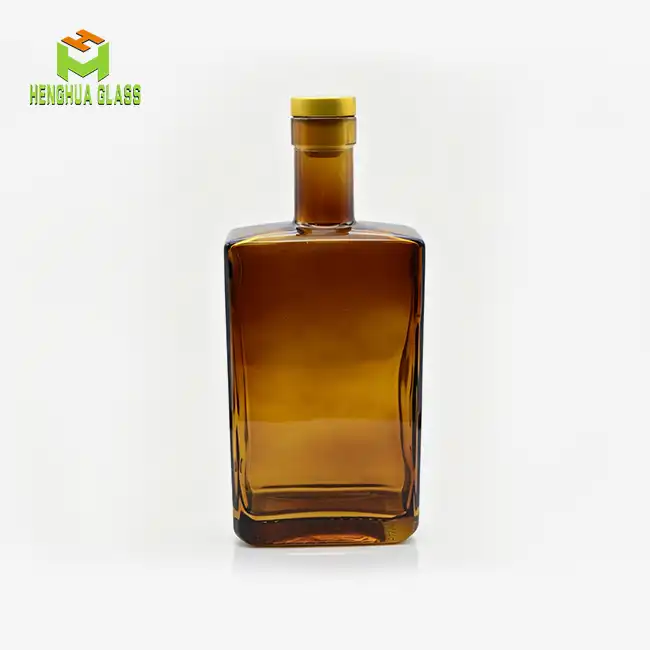
Understanding Flat Glass Rum Bottles: Features and Benefits
Flat glass rum bottles are a smart break from the more common round bottle shape, and they offer real benefits to spirits brands that want to stand out. When you use a slim or rectangular shape, the frontal surface area gets bigger. This makes it easier to put logos, stories, and other things that catch people's attention on busy store shelves.
Enhanced Brand Visibility and Shelf Impact
When compared to cylinder-shaped options, flat design architecture has a much better visual impact. Retailers say that flat bottles get up to 30% more "facings" on the same shelf space. This means that your brand is more likely to be seen by customers. This geometry naturally draws the eye and sends a message of modernity, which makes it great for craft breweries and premium marketing strategies.
Logistical Efficiency and Cost Savings
The costs of transportation favor flat glass rum bottles a lot. Because the form is more streamlined, there is less empty space when the bottles are being palletized. This means that up to 25% more units can fit in a shipping container than with round bottles. This directly leads to lower freight costs per unit and a smaller carbon footprint, meeting the needs of both sustainability and making money that procurement directors have to meet. Because the base is stable and the center of gravity is low, there are fewer breaks during transport, which protects store investments.
Durability and Product Protection
Quality flat glass rum bottles made with extra flint glass and the right heating methods have very strong structures. The thickness of the walls is usually between 2 mm and 3 mm, and they can withstand temperature shocks up to 42 °C and vertical loads of more than 1 kN. The smooth walls inside the bottle protect the complex aromas of the rum by stopping unwanted interactions. The thicker body of the bottle keeps the contents safe as it travels from the brewery to the customer.
Critical Criteria for Selecting Flat Glass Rum Bottles
Choosing the right materials is the first step in buying packing that works. Knowing how the different types of glass, design elements, and government rules affect each other helps buying managers make choices that are good for both the brand and the business.
Glass Material Quality and Color Options
Choosing the right type of glass for your flat glass rum bottle has a direct effect on how long a product lasts and how people feel about a brand. It is best to store rums in clear glass so that customers can see the natural color and brightness of the liquor. This works especially well for white rums and premium aged types, where looks are important. Amber glass is great for aging rums with complex flavors because it blocks UV light better than other glass types, protecting light-sensitive chemicals and making the glass last longer. Blue and custom-colored glass choices help brands stand out, but you need to be aware of the minimum order numbers and production lead times that come with them.
The makeup of the glass itself is very important. Extra Flint glass lets more than 90% of light through and has a high refractive index that makes the amber colors of old drinks look better, which is a nice visual effect. To get rid of "seeds" (tiny bubbles) that hurt the look, vacuum-assisted polishing must be used during the manufacturing process, especially on large flat panels where flaws stand out more.
Capacity and Size Specifications
There are standard sizes ranging from 100ml travel sizes to 1000ml premium models. For rum brands, 500ml (16oz) and 750ml are the most widely viable forms. Custom capabilities give brands unique places in the market, but they usually need larger minimum order numbers. Standard labeling tools must be able to fit inside the bottle, and the size must be just right so that the customer can hold it comfortably. To avoid expensive equipment changes, procurement teams should make sure that the sizes they choose are compatible with the specs of the current filling line.
Closure Systems and Sealing Performance
The choice of cap affects both how well it works and how the company is positioned. Screw caps with roll-on pilfer-proof (ROPP) features make it easy to reseal and leave tamper evidence, which makes them popular with price-conscious customers and useful for situations where only part of the product is used. Natural cork stoppers give off an unmistakably high-end vibe and go well with high-end placement, but they need a certain neck finish.
Wood, metal, and plastic are all common materials for caps, and each has its own look and function. Metal closures in gold, silver, or black finishes show class, while plastic choices are cost-effective for mid-range goods. Wooden caps show workmanship and natural authenticity. The closure must keep the product from leaking even when the temperature changes and when it's being shipped, which protects the purity of the product and stops expensive losses.
Compliance and Certification Requirements
International markets have strict rules about how to package goods. For sale in the U.S., food-grade glass must be marked with the FDA logo, the CE mark for European markets, or the right approvals for other areas. Heavy metal content limits, heat resistance requirements, and food contact safety standards should all be clearly shown on testing documents provided by suppliers. Getting ISO 14001 certification shows that you care about the environment, which is becoming more and more important as buying teams look more closely at sustainability.
Comparing Flat Glass Rum Bottles with Alternative Packaging Options
Packaging choices affect many areas of a business's success, from the initial investment of cash to the long-term growth of brand value. Knowing about other options on the market helps procurement teams defend their packing choices to stakeholders while making the best use of available resources.
Plastic bottles are cheaper per unit and are less likely to break during shipping, which makes them a good choice for low-income groups and high-volume distribution. However, when it comes to perceived quality, they are much worse than glass. For example, market studies show that 60–70% of people who buy expensive spirits prefer glass packaging. Plastic is also bad for the environment because it isn't recycled as much as glass, and it can't keep flavors the same for long periods of time like glass can.
The standard in the business is round glass bottles, which have been used for a long time and work with all kinds of tools. Flat glass rum bottles are more expensive than other types because they offer the same level of safety but look better. The extra cost is usually between 8 and 15 percent more than round bottles of the same size, but the shelf-effect benefit and logistics savings make it a good investment. Brands say that the unique shape helps customers remember them and supports higher prices that more than make up for the difference in packing costs.
How prices change depends a lot on how many orders are placed. Custom flat glass rum bottles usually have a minimum order quantity of 10,000 units. At 50,000 units or more, the cost per unit drops by a large amount. Instead of just looking at how much each bottle costs, procurement managers should look at the overall cost of ownership, which includes things like lower freight costs, fewer broken bottles, and higher brand value.
Tailoring Your Flat Glass Rum Bottle Choice to Your Brand Needs
For package selection to work well, you need to know a lot about the brand's design, marketing routes, and target customer groups. To get the most out of your packing investment, you need to use different optimization methods for each type of business plan.
Matching Design to Brand Identity
Custom bottle forms that reflect brand stories and history are helpful for high-end craft breweries. Embossed names, unique bottle shapes, and closing pairings make unboxing experiences that people will remember and share on social media and through word of mouth marketing. Screen printing, internal etching, or high-definition labels can be used on the flat panel surfaces to make complex images that would be hard to make on curved surfaces.
Mid-level brands that want to appeal to budget-conscious buyers can use stock flat glass rum bottles with custom labels and cap colors to stand out with less money. This method lowers the cost of tools while keeping a professional look that allows it to be sold in stores with higher-end rivals.
Distribution Channel Considerations
When it comes to foreign transportation networks, brands that want to export put durability and packing efficiency at the top of their lists. Flat glass rum bottles with thicker bottoms and stronger corners can handle the rough conditions of moving containers across oceans. When freight costs go up or when brands want to have as little of an impact on the environment as possible, better palletization efficiency is especially useful.
For retail delivery through grocery store and booze store chains, packaging needs to be able to handle being handled a lot. The stability of the flat shape keeps it from rolling, which means less breaking during store restocking. The large flat surfaces make brand messages stand out, which is important for turning people who are looking at the shelves into buyers in the crucial three-second decision window.
Supplier Selection and Partnership Quality
Long-term success in packaging hinges on what the provider can do besides just making things. Leading glass bottle suppliers show consistent quality by using strict testing procedures that include using polariscopes to check for heating consistency, measuring smoothness deviations, and applying hydrostatic pressure to make sure the structure is strong. Production capacity is very important. Suppliers that run multiple glass melting furnaces with daily output capacities of 1 million or more pieces give brands the volume security they need to grow.
Henghua is a good example of the qualities that procurement managers should look for in suppliers. We've been making glass boxes for over 20 years and have certifications from CE, FDA, SGS, and LFGB, so you can be sure that the goods we send you meet international safety and compliance standards. Our 10 sets of 150-ton glass melting kilns and fully automated production lines make sure that we can reliably handle large amounts of work. At the same time, we can customize everything, from the design of shapes to the application of logos and packaging solutions.
Ordering Flat Glass Rum Bottles: Practical Steps for B2B Buyers
To make procurement more efficient, you need organized ways to work with suppliers, come up with specifications, and coordinate transportation. Following tried-and-true processes cuts down on mistakes and speeds up the time it takes to get new products to market.
Specification Development and Sample Evaluation
Start by writing down all of your specific needs, such as the size, shape, color of the glass, the type of closing you want, and any customizations you might want, like etching or special surface treatments. Ask for samples from several sellers and judge them on quality factors such as the brightness of the glass, how well it seals, and how precisely it was manufactured. When it comes to finish quality and optical properties, for example, physical examples show small changes in quality that can't be captured by specs alone.
Our 25-day sample process lets brands make sure that ideas work before they commit to large-scale production. We offer 3D customization, which lets brands see and improve bottle designs through iterative development that makes sure the end product exactly meets their needs.
Negotiating Terms and Minimums
Minimum order amounts depend on how complicated the personalization is. Stock bottles with standard closures and easy labels may have low minimums of as few as 5,000 units, but fully custom bottle forms usually need pledges of 10,000 to 15,000 units. Talk about price structures that reward higher order volumes. For example, set up tier pricing that lowers the cost per unit as order numbers rise over the course of the partnership.
We offer reasonable prices because our supply chain management is well-developed and our production processes work well. This saves us money without lowering the quality of our products. Our factory-direct model gets rid of markups for middlemen, which is especially helpful for importers and marketers who need to keep their margins low.
Logistics and Lead Time Management
Following acceptance of a sample, production wait times are usually 30 days for mass production. However, this can change depending on how complicated the customization is and the state of the production queue. When planning your collection, you should take into account how long it takes to ship items internationally, how long it takes to clear borders, and how long it takes to ship items within the country. Reliable providers make their production schedules clear and let you know ahead of time about any delays that might happen.
Our transportation loss compensation service saves procurement investments by paying for damage that happens during shipping. This lowers risk and helps teams work without any worries. We can package and ship items in a way that meets the needs of the customer, and we make sure that the delivery conditions are compatible with your receiving skills and handling tools.
Conclusion
To choose the best flat glass rum bottle, you need to think about the quality of the materials, how well the design fits with your brand's positioning, the skills of your provider, and the total cost of the product over its entire lifecycle. There are real benefits to flat glass rum bottles in terms of shelf exposure, logistics efficiency, and brand differentiation that make them a good choice for fine spirits packaging tactics. For procurement to go well, you need to work with experienced makers who can show that their quality is stable, they can make changes easily, and they can deliver on time. By using organized evaluation methods and giving priority to sellers with a history of success, procurement managers can find packaging solutions that build brand loyalty, improve operational efficiency, and support long-term business growth in spirits markets that are very competitive.
FAQ
What lead times should I expect for custom flat glass rum bottles?
The normal time frame for production is 25 days for making samples and getting approval, then 30 days for mass production. Total purchase processes, from design to delivery, usually take 8 to 10 weeks, but this can be longer or shorter depending on how complicated the customization is and how far the shipment has to go. If you need something quickly, you may be able to get it rushed, but it usually costs more.
Can flat glass bottles accommodate the same filling equipment as round bottles?
Most Flat Glass Rum Bottles have standard neck ends that work with the equipment that is already used for filling and capping. But the marking equipment might need to be changed to fit the shape of the flat screen. Talk to your equipment provider to make sure it will work or to find out what changes need to be made during the specification step to avoid delays in production.
How do I verify sustainability compliance for glass bottles?
Ask for proof of ISO 14001 environmental management approval and tests on the glass's makeup to show that it meets heavy metal limits. Make sure the seller has recycling programs and can give you information about their production and shipping carbon footprints. Being open about how a source treats the environment shows that they care about sustainability in more ways than just what they say in their marketing.
Partner with Henghua as Your Trusted Flat Glass Rum Bottle Manufacturer
Henghua has been packaging glasses for more than twenty years and can help you with the packaging plan for your rum business. As a top provider of flat glass rum bottles, we have the ability to make a huge number of them—1 million per furnace every day—and we can also carefully customize them by screen printing, engraving, embossing, and making our own bottle forms. Our many certificates, including CE, FDA, SGS, and LFGB, make sure that your packing meets all of the rules for markets around the world. We offer low prices from the plant without lowering the quality, and we back that up with free samples and shipping loss compensation. Our ODM/OEM services turn your ideas into packaging that is ready for the market, whether you're starting a line of craft rums or expanding the reach of an existing brand. Get in touch with us right away at denny@henghuaglass.com to talk about your project needs and get a price that fits your brand's needs.
References
1. Johnson, Michael R. "Glass Packaging in the Premium Spirits Industry: Material Science and Brand Perception." Journal of Beverage Packaging Technology, vol. 34, no. 2, 2022, pp. 145-167.
2. Anderson, Patricia L. "Logistics Optimization in Alcoholic Beverage Distribution: Container Efficiency and Cost Management." International Journal of Supply Chain Management, vol. 18, no. 4, 2023, pp. 89-106.
3. Chen, David, and Roberts, Sarah. "Consumer Perception Studies in Premium Alcohol Packaging: The Impact of Bottle Design on Purchase Intent." Marketing Research Quarterly, vol. 29, no. 1, 2023, pp. 45-62.
4. Williams, Elizabeth T. "Regulatory Compliance in Food-Grade Glass Manufacturing: International Standards and Certification Requirements." Packaging Compliance Review, vol. 12, no. 3, 2022, pp. 78-94.
5. Thompson, Robert J. "Sustainability Metrics in Glass Packaging: Lifecycle Analysis and Environmental Impact Assessment." Journal of Sustainable Packaging, vol. 7, no. 2, 2023, pp. 112-129.
6. Martinez, Carlos, and Lee, Jennifer. "Flat Glass Bottle Design: Structural Engineering and Quality Control in Non-Cylindrical Containers." Glass Technology International, vol. 41, no. 5, 2022, pp. 203-218.
Learn about our latest products and discounts through SMS or email