- English
- French
- German
- Portuguese
- Spanish
- Russian
- Japanese
- Korean
- Arabic
- Irish
- Greek
- Turkish
- Italian
- Danish
- Romanian
- Indonesian
- Czech
- Afrikaans
- Swedish
- Polish
- Basque
- Catalan
- Esperanto
- Hindi
- Lao
- Albanian
- Amharic
- Armenian
- Azerbaijani
- Belarusian
- Bengali
- Bosnian
- Bulgarian
- Cebuano
- Chichewa
- Corsican
- Croatian
- Dutch
- Estonian
- Filipino
- Finnish
- Frisian
- Galician
- Georgian
- Gujarati
- Haitian
- Hausa
- Hawaiian
- Hebrew
- Hmong
- Hungarian
- Icelandic
- Igbo
- Javanese
- Kannada
- Kazakh
- Khmer
- Kurdish
- Kyrgyz
- Latin
- Latvian
- Lithuanian
- Luxembou..
- Macedonian
- Malagasy
- Malay
- Malayalam
- Maltese
- Maori
- Marathi
- Mongolian
- Burmese
- Nepali
- Norwegian
- Pashto
- Persian
- Punjabi
- Serbian
- Sesotho
- Sinhala
- Slovak
- Slovenian
- Somali
- Samoan
- Scots Gaelic
- Shona
- Sindhi
- Sundanese
- Swahili
- Tajik
- Tamil
- Telugu
- Thai
- Ukrainian
- Urdu
- Uzbek
- Vietnamese
- Welsh
- Xhosa
- Yiddish
- Yoruba
- Zulu
How to choose the best 500ml glass spirit bottles?
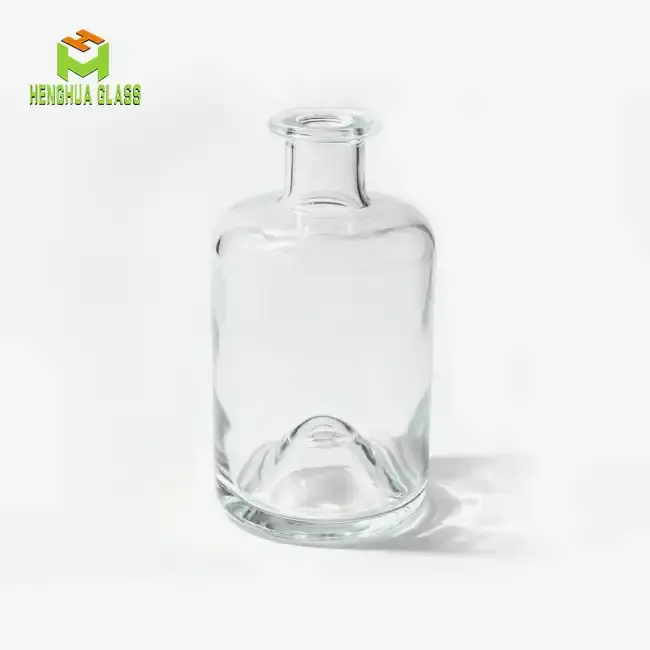
When picking the right 500 ml spirit bottles for your brand, you need to think carefully about the quality, style, and supplier's abilities. These carefully designed glass cases are the face of your distilled drinks, and how people see them and decide to buy them is directly affected by them. Premium spirit bottles are both strong and attractive. They are made with extra-flint glass for maximum clarity, reinforced bases for vertical load resistance, and exact neck finishes that work with standard seals. Aside from the physical qualities, successful procurement relies on working with makers who know how to follow regulations, allow for customization, and maintain quality across big production runs. When you choose bottles that fit your brand's positioning and meet technical requirements, you can be sure that your drinks will arrive in packaging that keeps them safe and makes them stand out on the shelf.

Understanding Global B2B Procurement Trends in Glass Packaging
As more business-to-business buyers focus on sustainable sources and digital supply chain management, the spirits packaging market has changed a lot. Data analytics are now used by procurement experts to predict trends of demand, cut down on inventory costs, and find sources with a history of consistent quality. This change is due to the fact that the market wants more openness in the whole production process, from getting the raw materials to delivering the finished product.
The way that distilleries and beverage brands connect with glass bottle makers has changed a lot because of digital channels. Cloud-based procurement tools let people talk to each other in real time, so buyers can see how production is going, accept design samples, and handle multiple SKU orders at the same time. This combination of technologies cuts down on wait times and improves communication, two problems that often happen in foreign sourcing relationships.
Sustainability as a Procurement Priority
Environmental factors now play a big role in the drinking beverage industry's buying choices. More and more, buyers are looking for companies that use energy-efficient melting furnaces, recycle cullet in their production, and move their goods in a way that leaves as little of a carbon impact as possible. Glass packaging naturally makes it easier to recycle, but forward-thinking brands demand that sellers show they are serious about sustainability by getting certifications and being open about their plans.
Adapting to Market Volatility
Changes in currencies and global unpredictability mean that procurement plans need to find a balance between lowering costs and making sure that the supply chain is strong. Smart buyers build a variety of relationships with suppliers while keeping key ties with makers that can increase production when demand goes up. This method lowers the risks that come with relying on a single source, which can cause problems with product launches or seasonal stocking needs.
Key Challenges in International Sourcing for Spirit Bottles
Buying glass packaging across international borders comes with its own set of problems that affect both timelines and the total cost of ownership. Regulatory compliance is the most important thing to think about, especially when looking for cases for drinking drinks that will be sold in markets with strict rules. The US Food and Drug Administration (FDA) and the European Union's (EU) food safety rules both require specific testing methods for heavy metal leaking, hydrostatic pressure resistance, and temperature shock tolerance.
When production is thousands of miles away from delivery hubs, quality control becomes even harder. Neck finishes that aren't the same size, even by 0.5 mm, can make whole batches unsuitable with automatic filling lines or standard closures. Before approving a package, procurement managers must set up strict checking procedures that check the quality of the annealing using a polariscope, measure the spread of wall thickness, and confirm the vertical load strength.
Navigating Logistics Complexity
Transporting glass bottles needs special care so that they don't break too often and cut into profits. Standards for palletization, how containers are loaded, and vibrations that happen during transport all affect how well the goods are packed and protected when they arrive. Experienced sellers use protective packing systems and offer shipping loss compensation. This takes the risk off of buyers who can't afford to have their production slowed down because of damaged merchandise.
Managing Minimum Order Quantities
Custom-molded 500 ml spirit bottles usually have minimum order quantities (MOQs) between 20,000 and 50,000 units, which can make it hard for small breweries and new brands to keep up with their cash flow. It takes careful financial planning to find a balance between the need for unique bottle designs and the costs of keeping supplies. Some companies give customers more choices by using semi-custom programs to change existing molds with their own special surface treatments or stamping. This lowers the minimum order quantity (MOQ) requirements while still allowing brands to stand out.
Strategic Supplier Relationship Management
Creating long-lasting relationships with glass bottle makers goes beyond simple purchases and leads to collaborative environments that encourage new ideas. When procurement leaders build relationships with suppliers, they can get early design advice, access to secret manufacturing methods, and first-choice schedules for production during busy times. These benefits happen when people talk to each other regularly, are honest about their limited resources, and work together to make things better all the time.
Performance measures are the building blocks of good partnerships with suppliers. Leading brands set KPIs to keep track of things like the percentage of on-time deliveries, the percentage of defects per production run, and how quickly technical questions are answered. When you do regular business reviews, conversations with your suppliers become strategic conversations about market trends, new glass technologies, and ways to cut costs without sacrificing quality.
Value Engineering Through Collaboration
Experts in glass packaging have decades of experience in material science that can help lower production costs and improve bottle performance. Collaborative value engineering could help find ways to change the way wall thickness is distributed so that the structure stays the same but the glass weighs a little less. These changes reduce the prices of raw materials and shipping, which manufacturers can then pass on to customers who buy from them again and again.
Building Trust Through Quality Consistency
The spirits business can't stand variations in the quality of the packaging because customers will not trust a brand's image if they find bottles with leaky caps or other cosmetic flaws. Suppliers with quality management systems that are ISO 9001-certified show they are dedicated to process control, which stops differences between batches. Procurement teams can be sure that regulatory compliance is maintained by having access to inspection records that include annealing grade paperwork and chemical leaching test results.
Leveraging Technology in Procurement
These days, buying teams use high-tech tools that help them make better decisions and make working with suppliers easier. AI-powered analytics tools look at past purchase data to find the best times to reorder, predict yearly demand spikes, and spot possible supply chain disruptions before they affect production schedules. These systems work with the ERP systems of suppliers, so you can see the whole order process, from making the quote to delivering the end product.
As brands look for permanent records of quality approvals, origin paperwork, and chain-of-custody proof, blockchain technology is starting to be used in the buying of glass packaging. This distributed ledger method answers concerns about counterfeiting while meeting customer demands for clarity about claims made about the sustainability of packing. Even though adoption is still low, companies that start using provenance identification early on gain a competitive edge in places where it affects how people buy things.
Automation Reducing Manual Errors
Email chains and disconnected files make it hard to talk to each other, but cloud-based buying tools get rid of those problems. Digital catalogs with 3D renderings of bottles, technical standard sheets, and real-time product availability make it easy for buying teams to quickly weigh their choices. Automated workflow approvals speed up the handling of sample requests and buy orders, cutting down on the time it used to take to finish a job.
Data-Driven Supplier Selection
Procurement pros can compare sellers in more ways than just price with the help of quantitative evaluation tools. Scorecards that include delivery reliability, quality fail rates, the ability to customize, and the speed with which technical questions are answered make it easier to choose a provider. This strategy that is focused on data cuts down on subjective bias and makes sure that choices are in line with the organization's overall goals for risk management and total cost of ownership.
Evaluating Technical Specifications for Spirit Bottles
To choose the right glass specs, you need to know how the properties of the material affect both the safety of the product and the way the brand looks. Extra-flint glass recipes give elite spirits brands the high refractive index and exceptional clarity they need. This is especially true for vodkas and gins, where the clear bottles show how pure the liquid is. The lack of iron in super-flint glass gets rid of the yellow tint that you can see in regular soda-lime mixtures. This makes containers that are visually neutral and don't change how you see the color of spirits.
The weight of a bottle gives consumers physical quality cues that affect how much they value something. While lighter bottles are better for the environment and save money on shipping, thicker walls ranging from 400g to 600g for 500ml sizes show that the bottle is a quality product by giving it a good feel in the hand. Pay close attention to the base width because weak spots can form in this high-stress area if the glass isn't spread out properly. These weak spots can break during automatic filling operations or when the customer handles the product.
Critical Performance Parameters
Here are the most important technical things to think about when buying 500 ml Spirit Bottles:
Thermal Shock Resistance: Bottles must be able to handle temperature differences of 40°C or more in order to stay intact during processing, cold-filling, and changes in customer storage. This standard is especially useful for making spirits with plant ingredients that need to stay stable at high temperatures during production.
Vertical Load Strength: During storage and shipping, automated palletization systems stack bottles several layers high. Containers must be able to withstand crushing forces greater than 3000N so they don't break when they're stacked in a building. This protects the investment in goods throughout the supply chain.
Neck Finish Precision: The ability to work with standard closures hinges on having measurements that are accurate to within tenths of millimeters. When you use ROPP metal caps, cork closures, or synthetic stoppers, the GPI and GCMI standards set the thread profiles, diameter tolerances, and finish heights that make sure the seals are hermetic.
These requirements have a direct effect on how efficiently the filling, marking, and shipping processes work. Before agreeing to big production runs, procurement teams should ask for specific dimensional models and material certificates of analysis to make sure they are in line with the rules. When suppliers offer pre-production samples, they can be tested physically with existing filling equipment. This way, interface problems that are found after shipping don't cost as much to fix.
Glass Color Selection Strategy
Light-induced oxidation is better blocked by amber glass spirit bottles, which keep botanically-heavy spirits like gin and herbal liqueurs from going bad when exposed to UV light. Clear bottles are most common for expensive vodka and white rum, where customers want to be able to see the product. Blue and green tinted glass is a good compromise because it blocks dangerous waves while still letting some products be seen. Customizable color choices help brands stand out, but for unique glass formulas that go beyond standard industry colors, the minimum order quantity usually goes up.
Customization Capabilities That Elevate Brand Identity
In addition to standard bottle forms, full customization services turn packages into tools for telling the story of a brand. Options for surface treatment, such as hot pressing, screen printing, and interior engraving, make products stand out visually, which is important in busy stores. Decorative designs and names that are embossed add a tactile element that supports the premium image while making it hard for counterfeiters to copy.
Bottle form customizing is the best way for a brand to stand out, but the development costs and minimum order quantity (MOQ) mean that you need to do a careful financial analysis. Working with makers who are skilled in 3D modeling and fast prototyping speeds up the design iteration process by turning sketches of ideas into molds that are ready for production. This joint method cuts down on the time it takes to get new products to market while also making sure they can be made, which avoids problems during scale-up production.
Closure and Accessory Integration
Complete package options include more than just the bottle itself. They also include lids, decorations, and gift boxes. Different types of caps, like wood, metal, and plastic, show different brand personalities. For example, wood closures show handmade craftsmanship, brushed metal shows modern sophistication, and molded plastic offers cost-effective stability. Cap colors like gold, silver, black, and white should match the look of the brand as a whole while still meeting the needs for seal integrity and fake proof.
It's easier to buy things when manufacturers offer one-stop solutions that include 500 ml spirit bottles with matched caps, labels, and gift boxes. When parts don't work together, single-source responsibility keeps everyone from blaming each other. Consolidated shipping cuts down on freight costs and makes it easier to clear customs for foreign orders.
Assessing Supplier Production Capacity
Large-scale glass production requires a lot of money to be spent on equipment. This separates capable suppliers from businesses that aren't well-funded and can't keep up with demand. Facilities with more than one 150-ton melting furnace show the financial steadiness and technological skill needed to consistently produce high-quality goods. When a furnace can make more than one million units per day, it means that technology is advanced enough to handle the high-volume needs of well-known drink brands that want to sell their products across the country.
Production lead times show how well operations are running and how well demand is being managed. Standard bottle forms are kept in stock by suppliers so that pressing orders can be shipped right away. Custom production, on the other hand, usually takes 25 days for samples and 30 days for full production runs. When people are clear about when things will be made, there aren't any misunderstandings that could cause product launches or holiday sales to be delayed.
Quality Certifications and Compliance
International certificates like CE, FDA, SGS, and LFGB show that a company is committed to high standards that are known all over the world. These validations by a third party show that the manufacturing processes meet the safety standards for food and the needs of the regulations. The people in charge of buying things should check that the certification is up-to-date and covers all the bottle forms and customization services that are being considered.
More and more people are worried about heavy metal pollution, especially lead and cadmium. ASTM C927 compliance for chemical leaching tests handles these issues. When suppliers give certificates of analysis for every production batch, it's easy to keep track of what's going on, which protects the brand's image and meets the needs of governmental inquiries about product safety.
Trusting Your Global Procurement Partner
When choosing a glass bottle maker, you need to look at more than just their product lists. You also need to look at how they treat customers and their willingness to work with you. Suppliers who have been making things for more than 20 years have learned how to deal with changing market conditions, improved production methods, and become very good at fixing difficult packing problems. This institutional knowledge is very helpful when answering scientific questions about the science of glass, whether a closure will work, or whether it is possible to decorate.
Manufacturers can give reasonable prices without lowering quality standards when they have strong cost control skills. Strategies for vertical integration that include making molds, decorating them, and coordinating shipping all in-house improve efficiency, which means that buying teams get better value. Offering a wide range of standard forms and high-borosilicate specialty glass makes it possible to source everything in one place, which makes managing vendors easier.
Service Commitments That Demonstrate Partnership
Free sample programs let purchasing teams test products physically before committing to large orders. This lowers the financial risk that comes with working with new suppliers. Transportation loss reimbursement policies put the risk of breakage on the sellers. This keeps buyers from having to go without stock because of damage during foreign shipping. These service elements set partners who care about their customers' success apart from transactional sellers whose only goal is to complete orders.
Having technical support skills like design advice, help with prototyping, and production problems is valuable at all stages of the product development process. When suppliers give specialized account managers who know your brand's needs, communication is streamlined and problems are solved more quickly. This builds the trust that is needed for long-term collaboration.
Conclusion
When choosing the best 500 ml spirit bottles, technical requirements, aesthetic concerns, and the supplier's skills must all be taken into account. Procurement pros can make choices that protect brand integrity and save money by understanding material properties, customization options, and quality control procedures. To be successful, you need to work with makers that can show they can meet your production needs, follow all regulations, and focus on customer service in a way that fits with your long-term business goals. As customer tastes and the market change, keeping supplier relationships based on openness and mutual trust is important to make sure that package solutions change along with brand growth paths.
FAQ
Can 500ml spirit bottles accommodate carbonated beverages?
Standard 500 ml spirit bottles are made to work with air pressure. To safely hold carbonated mixes or sparkling liqueurs, they need to have a stronger base and more glass weight. Bottles that are meant to hold gas must pass a 6-bar pressure test to make sure they don't break while being stored or shipped.
What kinds of customizing options are there for glass liquor bottles?
You can fully customize it by hot stamping, engraving on the inside, screen printing, changing the shape, choosing a different color, adding a name in different ways, and matching the gift wrapping. Surface treatments like frosting and shiny finishes let brands give their goods unique looks that help them stand out in crowded markets.
How do minimum order amounts affect deciding how to buy things?
MOQs for custom-molded designs are usually between 20,000 and 50,000 units, but this depends on how complicated the mold is and how much space the furnace has. Using semi-custom methods to change current bottle forms with custom embossing or decoration lowers the minimum order quantity (MOQ) requirements while keeping brand differences. This gives new brands a balance between being unique and investing in inventory.
What part does the color of the glass play in keeping the drink fresh?
Clear flint glass lets more light shine on the product and is best for vodkas and white spirits. Amber glass, on the other hand, protects botanical-heavy products better from UV light that can cause them to oxidize. Blue and custom-tinted choices are in the middle, blocking dangerous wavelengths while still letting some light through.
Partner With Henghua for Premium 500 ml Spirit Bottles
Henghua has been making glasses for more than 20 years and can help drink brands find trusted 500 ml spirit bottle suppliers. Our factory has 10 sets of 150-ton melting furnaces and fully automatic production lines that can make 1 million units per furnace every day. This means that we can meet your biggest volume needs. We keep a lot of certificates, like CE, FDA, SGS, and LFGB compliance, which means that our bottles meet all the worldwide safety standards for packaging alcoholic drinks. Our ODM and OEM services let you completely change everything about the bottle, from the shape and color of the glass to the way the seal works and the decorations that are added. Competitive factory-direct pricing comes from supply chain management and cost control skills that have been honed over decades of serving customers around the world. We offer free samples, lead times for samples of 25 days, and lead times for mass production of 30 days. Your store investment is protected by shipping loss compensation. Get in touch with denny@henghuaglass.com to talk about your spirit packaging needs and find out how our technical know-how and production ability can help your brand stand out.
References
1. Anderson, J. & Mitchell, R. (2022). Glass Packaging Engineering for Distilled Spirits: Technical Standards and Quality Protocols. Industrial Packaging Press.
2. Chen, L. (2021). "Supply Chain Risk Management in Global Glass Container Procurement." Journal of B2B Packaging Solutions, 18(3), 145-162.
3. International Glass Container Institute. (2023). Quality Assurance Standards for Spirit Bottle Manufacturing. Technical Report Series.
4. Morrison, K. (2022). Brand Differentiation Through Premium Packaging Design in the Spirits Industry. Beverage Marketing Publications.
5. United States Food and Drug Administration. (2023). Compliance Guidelines for Glass Food Contact Materials. Regulatory Document FDA-2023-482.
6. Williams, D. & Thompson, S. (2021). "Digital Transformation in B2B Procurement: Case Studies from the Glass Packaging Sector." Supply Chain Management Review, 25(4), 78-94.
Learn about our latest products and discounts through SMS or email