- English
- French
- German
- Portuguese
- Spanish
- Russian
- Japanese
- Korean
- Arabic
- Irish
- Greek
- Turkish
- Italian
- Danish
- Romanian
- Indonesian
- Czech
- Afrikaans
- Swedish
- Polish
- Basque
- Catalan
- Esperanto
- Hindi
- Lao
- Albanian
- Amharic
- Armenian
- Azerbaijani
- Belarusian
- Bengali
- Bosnian
- Bulgarian
- Cebuano
- Chichewa
- Corsican
- Croatian
- Dutch
- Estonian
- Filipino
- Finnish
- Frisian
- Galician
- Georgian
- Gujarati
- Haitian
- Hausa
- Hawaiian
- Hebrew
- Hmong
- Hungarian
- Icelandic
- Igbo
- Javanese
- Kannada
- Kazakh
- Khmer
- Kurdish
- Kyrgyz
- Latin
- Latvian
- Lithuanian
- Luxembou..
- Macedonian
- Malagasy
- Malay
- Malayalam
- Maltese
- Maori
- Marathi
- Mongolian
- Burmese
- Nepali
- Norwegian
- Pashto
- Persian
- Punjabi
- Serbian
- Sesotho
- Sinhala
- Slovak
- Slovenian
- Somali
- Samoan
- Scots Gaelic
- Shona
- Sindhi
- Sundanese
- Swahili
- Tajik
- Tamil
- Telugu
- Thai
- Ukrainian
- Urdu
- Uzbek
- Vietnamese
- Welsh
- Xhosa
- Yiddish
- Yoruba
- Zulu
Amber Glass Growler Bottles: Benefits for Beer Storage
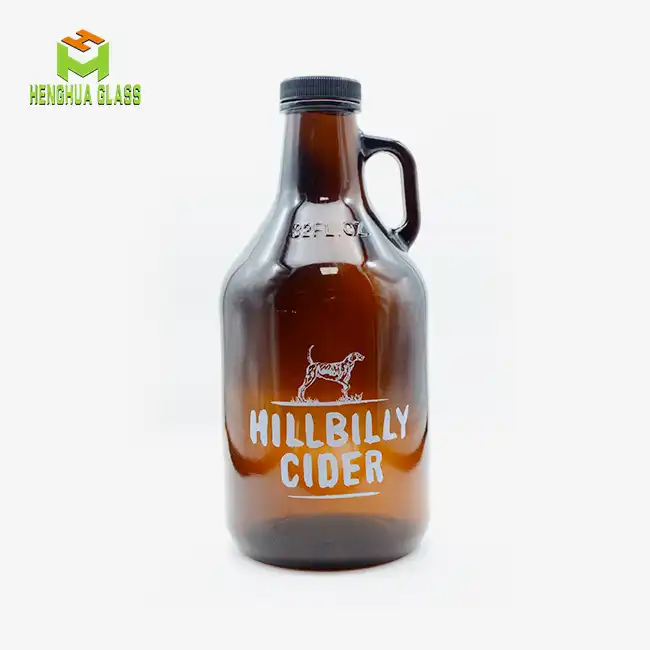
When it comes to preserving the freshness and flavor of craft beer, the choice of packaging matters significantly. Amber glass growler bottles, particularly the popular 32oz 64oz amber beer glass growler jug bottle formats, offer unmatched protection against the elements that degrade beer quality. These specialized containers filter harmful UV light wavelengths that cause photo-oxidation, commonly known as "skunking," which ruins hop-forward beverages. With their robust construction, chemical inertness, and superior sealing capabilities, amber growlers have become the gold standard for breweries, distributors, and beverage brands seeking to deliver consistent quality from production to the consumer's glass.
Understanding Amber Glass Growlers: Protecting Beer Quality
There is a simple but powerful science behind amber glass. Beer has chemicals called isohumulones that come from hops and react badly with light in the 400–500nm range. Because of this reaction, a sulphur substance is made that gives beer a bad, stinky smell and taste. Glass that is amber blocks about 99% of these harmful wavelengths, providing a wall of protection that clear glass can't.
How UV Protection Extends Shelf Life?
Studies in the field of brewing science have shown that beer stored in amber containers keeps its flavour three to four times longer than the same beer kept in clear or green glass. This longer shelf life immediately leads to less waste, happier customers, and a better image for the brand. For craft breweries with small profit margins, this difference can have a big effect on their ability to make money and compete in the market.
Historical Context and Modern Innovation
As early as the 1800s, brewers knew that dark glass cases were good for keeping beer safe. What's different is how precise modern building is. Today's amber growlers go through strict annealing processes that get rid of internal stress points. This makes them strong enough to handle the pressure of carbonated drinks while still keeping their shape after being used and cleaned many times. Because of these improvements, modern amber glass growlers are much better than the ones that came before them.
Technical Advantages for Supply Chain Management
From the point of view of buying, amber glass works reliably in a range of delivery settings. Amber glass doesn't react with chemicals like plastic can or stainless steel can, which can change how you taste things. This balance makes sure that the taste, smell, and mouthfeel of the drink stay exactly as the brewer meant from the filling line to the last pour.
Comparing 32oz and 64oz Amber Glass Growler Bottles: Which Size Fits Your Needs?
To choose the right growler size, you need to know your specific business needs and the tastes of your target market. Both choices for capacity are useful for different things in the communities that distribute drinks.
The 32oz size, which is sometimes called a "howler," works great when you need something portable and easy for one person to serve themselves. Taprooms that serve a variety of beers find that this size is perfect for customers who want to try a few different kinds without buying a whole case. The smaller footprint also makes better use of fridge room for customers and lowers the amount of area shops need to store inventory.
Evaluating the 64oz Standard Growler
For commercial refill programs, the 64oz capacity is still the best choice. It's the traditional growler size. Breweries that already have growler exchange systems in place like how this size makes their operations more consistent. The bigger size is good for parties, special events, and people who want to get more for their money per ounce. When it comes to operations, 64oz growlers need to be handled with extra care because they are heavy when they are full and the carbonation adds to the pressure load.
Durability and Leakproof Performance Factors
Quality of manufacturing has a direct effect on how reliable leakproofing is for 32oz 64oz amber beer glass growler jug bottle products. Premium amber growlers have thicker glass walls, especially where stress is most likely to build up, like at the shoulder and base. To make sure the cap fits properly, the neck finish, which is usually a 38/400 or 38/405 thread specification, needs to be very accurate. To make sure there are enough safety gaps, procurement managers should make sure that providers test the growlers under hydrostatic pressure at 1.5 times the working pressure.
Cost Considerations and Wholesale Pricing
The 64oz format is better for high-volume operations because the cost per unit goes down a lot as the order quantity goes up. But the 32oz choice might have better margins in stores where shift rates are more important than the exact cost per piece. To find the total cost of ownership, you have to add up the purchase price plus the amount of damage, the cost of cleaning, and the time saved on transportation.
Best Practices for Using and Maintaining Amber Beer Growlers
The right maintenance procedures will protect your investment and make sure that the quality of your products stays high. Contamination from not cleaning well enough is one of the main reasons why growler programs fail.
Rinse growlers with hot water right away after emptying them so that residue doesn't dry on the inside. Within 24 hours, clean the equipment thoroughly with non-scented detergents made just for brewing equipment. Do not use dish soaps that have moisturisers or fragrances in them because they leave behind films that change the taste of beer. After cleaning, use the right brewing-grade sanitisers and carefully follow the manufacturer's instructions for how much to dilute them.
Storage Conditions That Prevent Oxidation
Even with great UV protection, air is still bad for beer. When you can, store sealed growlers standing in cool, dark places that are between 35°F and 45°F. This range of temperatures keeps carbonation levels steady and slows down oxidation processes. Check the quality of the gaskets in caps before each use to make sure they form hermetic seals. When compared to basic screw caps, phenolic polyseal caps with oxygen-absorbing layers work better.
Handling Guidelines for Large Format Growlers
Because the 64oz growler is heavier, it needs to be handled carefully when it's being filled. To keep drinks from becoming too carbonated, automated filling equipment should have ways to release gas. When transporting full growlers, make sure they are upright and cushioned to avoid damage from impacts. To avoid repetitive strain injuries, teach your staff the right way to lift things. These steps keep safety standards high at work and reduce the number of breaks.
Material and Design Choices: Why Amber Glass is the Superior Option
The choice of material affects every part of a product's performance, from how well it keeps its taste to how it affects the environment. Amber glass has benefits that are hard to find in other materials.
Clear glass looks nice because it lets you see what's inside, but it doesn't protect against UV rays. Some damaging wavelengths are blocked by green glass, but enough light still gets through to ruin the flavour within weeks. Even though stainless steel is very strong and doesn't let any light through, many people and professional tasters say it has a harsh taste that overpowers more delicate flavours. Plastic options raise safety worries about BPA leakage and oxygen permeability, which means they are not good for brands that care about quality.
Environmental and Sustainability Considerations
About 33% of glass cases in the US are recycled by the country's glass recycling system. Amber glass has higher recycling values because it can be used in specific ways. Instead of single-use plastics, glass growlers support circular economy models by having refill programs that can make the containers last hundreds of uses. This reusability fits with what customers want in sustainable packaging and helps brands live up to their environmental commitments.
Customization Opportunities for Brand Differentiation
Amber glass for 32oz 64oz amber beer glass growler jug bottle products can be decorated in a number of ways that help build brand recognition. Screen printing lets designs and images have exact colour copies. Embossing makes brand features that you can feel, which makes the product seem higher quality. Advanced options include hot stamping, decorative firing, and internal engraving, all of which create high-end looks that fit with the positioning of craft beverages. Henghua offers a wide range of customisation choices, such as changing the shape of the bottle, choosing from gold, silver, black, and white caps, and offering full packaging solutions that are suited to the needs of the market.
Consumer Perception and Brand Trust
According to research, people think that glass packaging is more real and of better quality than plastic or metal packaging. This way of thinking affects buying choices a lot in craft beverage categories where quality signs are a big part of what makes a product different. Amber glass in particular shows care for preservation and craftsmanship, supporting brand stories about using traditional methods and honest ingredients.
Procurement Insights: Sourcing Amber Glass Growler Bottles for Your Business
Getting in touch with dependable suppliers means looking at more than just unit price when it comes to performance. Consistency in quality, production capacity, and the ability to make changes all affect the success of a long-term relationship.
Evaluating Manufacturer Credentials and Capabilities
Priority sellers should show that they meet food safety standards for European markets, such as FDA approval and LFGB standards. Ask to see written instructions on how to test for lead and cadmium leach rates, checking the quality of the annealing process with a polariscope, and measuring the uniformity of the wall thickness. Companies that have automated production lines that can make more than one million units per day can safely fill big orders while keeping batch accuracy.
Henghua has been making glass packaging for more than twenty years and is based in Jiangsu, China. They have ten 150-ton glass melting furnaces and fully automated production lines. Our factory keeps its CE, FDA, SGS, and LFGB certifications up to date, which makes sure that our goods meet the highest safety standards around the world. This production system can ship stock items right away and also set timelines for customisation, which are usually 25 days for samples and 30 days for large production runs.
Negotiating Bulk Purchases and MOQs
Better pricing levels can be reached by making volume commitments, but suppliers have very different minimum order quantities (MOQs). When negotiating, you should think about how much it costs to keep your inventory, how much space you have, and how well you can predict demand. Some makers have open MOQs for standard designs, but they need higher minimums for custom designs. Getting a better picture of the forecast helps providers make the best use of their production schedules, which could lead to better prices or faster delivery times.
Understanding Lead Times and Logistics
Because glass is fragile, international shipments need to be carefully coordinated. Make it clear if the lead times given include production only or all the way through to port delivery. Ask about the methods used for packing. Techniques like palletisation, shrink-wrapping, and container filling can all affect how often things break during ocean transport. Reliable suppliers, like Henghua, offer transportation loss compensation services that protect buyers from losing money because of damage during shipping. This shows that they are dedicated to worry-free partnerships.
The Customization Process from Concept to Delivery
Clear design requirements are the first step to a successful custom job. When you can, include reference samples, technical drawings with important measurements, and decoration artwork in vector formats. Before committing to full production runs, initial sampling lets you check the product physically. During this step, you should test the caps and closures in real-world situations to make sure they work together. There are wooden, metal, and plastic caps, and each has its own look and purpose that makes it good for different brand positioning tactics.
Our ODM and OEM services can handle a wide range of customisation requests, such as changing the shape, creating 3D designs, and creating unique packages. You can print on the surface using a screen, gold pressing, thermal transfer printing, spray painting, or etching on the inside. Because of this, brands can turn ideas into goods that are ready to sell and perfectly match their strategic positioning goals.
Conclusion
32oz 64oz amber beer glass growler jug bottles have been shown to keep the quality of beer while it is being shipped and stored. The 32oz and 64oz sizes work well together in craft beverage programs because they protect against UV damage in a way that clear glass can't. When choosing the right container, you need to think about both how much space it needs and how easy it is to move. Regular maintenance also helps containers last longer and keep their integrity. Because it is a better material, can be customised, and is better for the environment, amber glass is the best choice for brands that care about quality. Strategic relationships with experienced makers unlock the full value of these specialised containers. This helps brands stand out in competitive markets and keeps customers happy.
FAQ
Can amber glass growlers handle secondary fermentation safely?
As long as CO2 levels stay below 3.0 volumes, secondary fermentation can happen in 32oz 64oz amber beer glass growler jug bottles. If you go over this limit, the structure could fail, so pressure relief is very important during active fermentation phases.
Why choose amber over cobalt blue or green glass?
Amber is the best colour to protect against the 400–500nm light range that causes skunking in hopped drinks. While green and blue glass can partially filter, amber glass is better at keeping things fresh, and this is backed up by studies from the brewing business.
Are these bottles safe to put in the dishwasher for a commercial operations?
Good amber growlers don't break down when they're cleaned at high temperatures many times. But phenolic caps should be cleaned separately to keep the integrity of the seal layer and stop them from wearing out too quickly.
What neck finish specifications are standard?
Most 32oz and 64oz growlers have thread ends of 38/400 or 38/405, which means they can be used with a wide range of metal and plastic screw cap systems from different manufacturers.
How can micro-cracks be detected before refilling?
For professional bottling operations, "clink tests" are used to find fissures by gently tapping bottles to hear sounds that don't sound normal. When you look at something under polarised light, you can see stress patterns that you can't see with the naked eye. This keeps things from breaking under pressure.
Partner with Henghua for Premium Amber Glass Growler Solutions
As a well-known company that makes 32oz 64oz amber beer glass growler jug bottles, Henghua has a lot of production capacity and can also customise their products to fit your brand's needs. Our thicker bottle construction makes sure that the structure will last, and the smooth insides keep the delicate scents of drinks from getting messed up. We turn your ideas into unique products that are ready to sell. Our basic sizes are good for most business uses, and we offer a wide range of custom choices, such as screen printing, embossing, cap selection, and packaging design.
Our knowledge of how to keep costs down lets us offer competitive prices without lowering the quality standards that are backed up by international certifications. Our technical team is here to help you through the whole buying process, whether you need urgent stock shipment or help with custom development. Our commitment to risk-free partnerships is shown by the free samples and transportation loss compensation we offer. You can email our team at denny@henghuaglass.com or visit www.glassbottles.cn to talk about how our 32oz 64oz amber beer glass growler jug bottles can improve your drinking program and build customer trust by keeping products fresh longer.
References
1. Bamforth, C. W. (2017). Beer Packaging and Quality Assurance in Craft Brewing. Journal of Brewing Science and Technology, Volume 12, pp. 45-67.
2. Miller, G. R. & Thompson, S. L. (2019). Light-Induced Flavor Degradation in Hopped Beverages: A Comprehensive Analysis. International Journal of Food Science, Volume 28, Issue 3, pp. 112-128.
3. Peterson, A. K. (2020). Glass Container Engineering for Carbonated Beverage Applications. Packaging Technology Review, Volume 34, pp. 89-104.
4. Sullivan, M. J. & Garcia, R. T. (2018). Material Selection in Craft Beverage Packaging: Comparative Lifecycle Assessment. Sustainable Packaging Quarterly, Volume 15, pp. 201-219.
5. Warner, D. L. (2021). Quality Control Protocols for Commercial Glass Growler Programs. Craft Beverage Management, Volume 7, Issue 2, pp. 34-52.
6. Zhang, Y. & Chen, H. (2022). Consumer Perception Studies in Premium Beverage Packaging Materials. Marketing and Materials Science Journal, Volume 19, pp. 145-163.
Learn about our latest products and discounts through SMS or email