- English
- French
- German
- Portuguese
- Spanish
- Russian
- Japanese
- Korean
- Arabic
- Irish
- Greek
- Turkish
- Italian
- Danish
- Romanian
- Indonesian
- Czech
- Afrikaans
- Swedish
- Polish
- Basque
- Catalan
- Esperanto
- Hindi
- Lao
- Albanian
- Amharic
- Armenian
- Azerbaijani
- Belarusian
- Bengali
- Bosnian
- Bulgarian
- Cebuano
- Chichewa
- Corsican
- Croatian
- Dutch
- Estonian
- Filipino
- Finnish
- Frisian
- Galician
- Georgian
- Gujarati
- Haitian
- Hausa
- Hawaiian
- Hebrew
- Hmong
- Hungarian
- Icelandic
- Igbo
- Javanese
- Kannada
- Kazakh
- Khmer
- Kurdish
- Kyrgyz
- Latin
- Latvian
- Lithuanian
- Luxembou..
- Macedonian
- Malagasy
- Malay
- Malayalam
- Maltese
- Maori
- Marathi
- Mongolian
- Burmese
- Nepali
- Norwegian
- Pashto
- Persian
- Punjabi
- Serbian
- Sesotho
- Sinhala
- Slovak
- Slovenian
- Somali
- Samoan
- Scots Gaelic
- Shona
- Sindhi
- Sundanese
- Swahili
- Tajik
- Tamil
- Telugu
- Thai
- Ukrainian
- Urdu
- Uzbek
- Vietnamese
- Welsh
- Xhosa
- Yiddish
- Yoruba
- Zulu
Are glass mineral water bottles BPA-free and safe?
Mineral water bottles made of glass don't contain any BPA and are safe to store drinks in. Glass mineral sparkling water bottles are made from chemically inert materials that do not react with water or carbonation, unlike plastic containers that may leach dangerous chemicals like bisphenol A (BPA) into liquids. Glass acts as a barrier that is safe for drinking, keeping the minerals and cleanliness of the water without adding any impurities. Because of this, procurement managers, product developers, and quality assurance teams that put consumer safety and following the rules first should use glass.
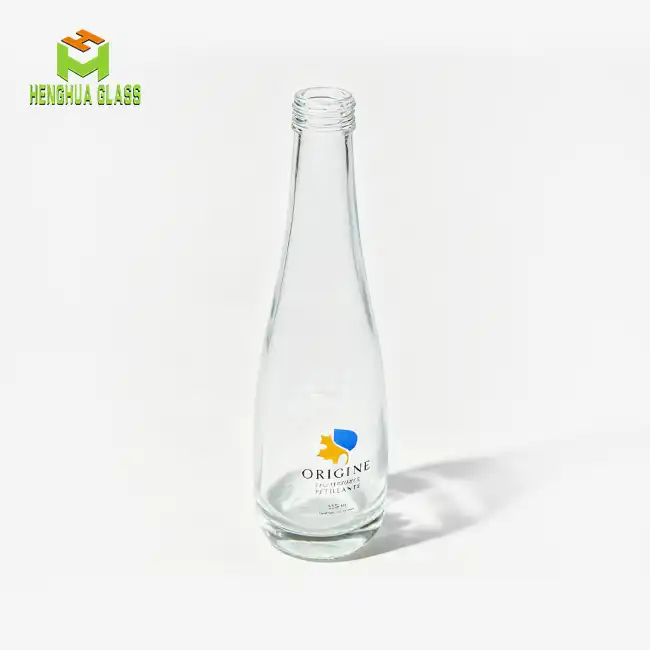
Understanding BPA and Its Relevance to Mineral Water Bottles
BPA, which stands for bisphenol A, is an industrial chemical that is often used to make polycarbonate plastics and epoxy resins. BPA can get into drinks, especially carbonated or acidic drinks, when containers made with BPA come into contact with them. It has been found that being exposed to BPA can cause issues with hormones (endocrine disruption), issues during growth (developmental issues), and possibly heart risks (cardiovascular risks). The European Food Safety Authority and the FDA have limits on how much BPA can be in things that come in touch with food. Businesses have had to look for safer options because of this.
Why Glass Eliminates BPA Concerns Entirely?
Glass bottles don't have BPA or any other man-made chemicals in them because they are made from natural things like silica sand, soda ash, and limestone. During the making process, these parts are melted at very high temperatures. This makes a stable arrangement for molecules that doesn't affect living things. What this means is that glass doesn't break, leak, or change when the gas pressure or temperature changes. Professionals in purchasing can choose glass cases for high-end mineral water brands without having to worry about chemicals moving around or breaking the law.
Regulatory Standards Favor Glass Packaging
By law, places like the US and EU have to follow rules about food safety. Glass always meets or beats FDA food-contact rules and USP Type III standards, so it doesn't need any extra tests to make sure it doesn't leak chemicals. This clear rule makes it easier for people who buy packaging to move their goods through the supply chain. This lowers risk and speeds up the process of getting products approved. Our Henghua glass bottles are approved by CE, FDA, SGS, and LFGB, so they can easily be sold around the world and still meet high safety standards.
Assessing the Safety and Benefits of Glass Mineral Sparkling Water Bottles
Putting mineral water bottles in glass packaging not only gets rid of the BPA risk, but it also makes the bottles safer, better, and more in line with the brand. These advantages become even more important when going after high-end markets, where honest products have a direct effect on customer trust and repeat purchases.
Superior Carbonation Retention and Flavor Preservation
Gases can't get through glass at all, but they can through plastic. Our bottles are made so that they can hold up to 8g/L of CO2 safely without breaking. They can handle forces inside that range from 8 to 12 bars. When you fill it up and then drink it, the carbonation stays crisp and fizzy because of this resistance to pressure. There is also taste preservation in glass bottles because the smooth inner walls keep flavors from absorbing. This keeps the delicate mineral profiles safe. This is something that companies that sell natural spring waters should keep in mind.
Environmental Sustainability and Circular Economy Alignment
It is possible to recycle glass more than any other material used for packaging, and it will not lose any of its quality that way. Businesses want to buy into the cycle economy because it helps them meet the needs of customers and the government for sustainability. We make things with recycled cullet, which cuts down on the need for raw materials and carbon emissions. Packaging managers are choosing glass more and more because it is a smart choice that meets environmental, social, and governance (ESG) reporting standards and makes the brand look better.
Enhanced Durability Through Advanced Manufacturing
Concerns about how fragile glass is when it is being moved and handled have led to changes in the way it is made today. We protect the cold ends with coatings and heat to make the parts less likely to scratch and better able to resist friction. Because our bottles are stronger at the bottom and have thicker walls, they can handle being filled automatically at high speeds and being stacked on boxes at different levels while being shipped. There are 10 sets of 150-ton glass melting furnaces and fully automatic production lines that can make a million units per furnace every day. This means that even when we have a lot of orders, we can still do good work.
Comparison: Glass Mineral Water Bottles vs. Plastic Bottles for B2B Buyers
Choosing between glass and plastic means looking at a lot of things, such as the safety of the materials, how well they work with regulations, how much they cost, and how the business will be affected in the long run. This comparison gives procurement teams data-driven information they can use to make smart choices about strategic buying for glass mineral sparkling water bottles.
Material Safety and Chemical Compliance
Some plastic bottles may say they are BPA-free, but they may still have chemicals like BPS or phthalates that are just as bad for your health. Regulatory environments are always changing, and some places are putting stricter limits on different plastic additives. Glass gets rid of all of these worries, providing a solution that will work in the future and won't need to be changed when rules get stricter. Brands that want to appeal to health-conscious or wealthy customers can use glass to send clear safety messages that stick with customers.
Cost Analysis Beyond Initial Pricing
Most of the time, plastic packages have lower unit costs, which makes them a good choice for high-volume, price-conscious uses. A full cost study, on the other hand, needs to take into account more things, like returns because of problems with the quality, the risk of being sued for chemical pollution, and a drop in brand value in high-end markets. We can offer affordable glass prices that are closer to those of plastic options because we are good at managing the supply chain and keeping costs down. When you think about how premium glass packing can help your business and make customers loyal, the total cost of ownership often works out better for mid- to high-end markets.
Customization and Brand Differentiation Opportunities
Glass can be customised more easily than plastic, which lets brands make their products stand out on the shelf. Our full ODM/OEM services allow for a lot of customisation, such as designing the shape, making changes in 3D, hot pressing, inner carving, screen printing, gold stamping, bronzing, and decorative firing. Our bottles come in standard amber, clear, and blue colours, but you can also request custom colour processing. They can hold 100 ml to 1000 ml, which includes the popular 16 oz, 18 oz, and 32 oz sizes. Caps are made of wood, metal, and plastic and come in gold, silver, white, and black styles. This lets the package tell a consistent story about the brand.
How to Choose the Best Glass Mineral Water Bottles for Your Business?
To choose the best glass packaging, you have to weigh technical requirements, aesthetic concerns, the reliability of the supplier, and compliance documentation. Procurement managers can use this framework to help them make important decisions regarding Glass mineral sparkling water bottles.
Technical Specifications and Performance Requirements
First, figure out how much space you'll need based on when and how you want to use the product. Our usual sizes run from 100ml for individuals to 1000ml for families, and we can process orders for larger or smaller amounts as well. If you're packaging carbonated drinks, look at the pressure resistance specifications. Our bottles are tested to meet ASTM C147 standards to make sure they can safely hold liquids when they expand. The precision of the neck finishes' dimensions is very important for the compatibility of automatic filling lines. We use MCA and BPF standard tools to check the hermetic closing of crown caps or aluminum screw closures.
Quality Certifications and Testing Protocols
Ask for full testing records, such as thermal shock resistance reports (ASTM C149 standard), heavy metal leak analyses for lead and cadmium, and results of internal pressure tests. Our products are carefully looked over to find manufacturing flaws like seeds, stones, or internal cracks that could weaken their structure. Food-grade compliance in major international markets is guaranteed by certificates like CE, FDA, SGS, and LFGB. We can ship items from stock right away, and we have set wait times of 25 days for samples and 30 days for mass production on special orders.
Customization Capabilities and Brand Expression
Think about how the style of the packaging can help strengthen brand character and make it stand out on the shelf. Our surface treatment options, such as spray painting, thermal transfer printing, transparency enhancement, and internal engraving, let you create complex visual effects. Private labeling services include putting your name on labels, stickers, and gift boxes in a way that fits with your brand's standards. We've been making things for more than 20 years, so we know how to turn brand ideas into market-ready packaging through our ODM/OEM services that makes products seem more valuable and makes people want to buy them at the point of sale.
Supplier Evaluation and Partnership Criteria
Check the production ability of your suppliers to make sure they can keep up with your growth while keeping quality high. Geographic sourcing from our facilities in Jiangsu, China, saves you money and gives you access to our years of experience with export logistics. Throughout the lifetime of the partnership, we offer transportation loss compensation services and technical help. Our stable supply chain system and various furnaces allow for reliable shipping plans that are important for just-in-time inventory management and the seasonal changes in demand that are common in the beverage industry.
Maintenance and Cleaning of Glass Mineral Water Bottles
If you take care of glass bottles the right way, they will last longer and stay clean, which is important for food-grade uses. These practices improve performance by setting up returnable bottle systems or making sure quality is maintained across distribution networks for Glass mineral sparkling water bottles.
Best Cleaning Methods for Sparkling Water Containers
For best dirt removal without heat shock, commercial washing machines should use alkaline detergents made just for glass and work at temperatures between 60-80°C. Rinse cycles must completely get rid of detergent so that there is no residue left over that could change the taste or make sealing less effective. Our bottles have smooth inner walls that keep minerals from building up. This makes cleaning easier and keeps the purity of the product safe. For heavy bottles made for systems that accept returns, we make sure they can withstand 20 or more washings, which meets the needs of the circular economy.
Addressing Common Maintenance Challenges
Over time, mineral layers from hard water can build up, especially in places with a lot of calcium. These layers can be removed from glass surfaces without harm by washing them with food-grade acid solutions on a regular basis. Check the closures often, because leaks are usually caused by broken seals rather than bottle flaws. Our great sealing power comes from having exact neck finish specs that work well with a range of closure types, such as screw caps, crown caps, and roll-on closures. Extreme temperature changes and mechanical impacts that could stress the structure of the bottle should not be allowed during storage.
Conclusion
For brands that place a premium on safety, quality, and sustainability, glass mineral sparkling water bottles are the best option. Their naturally BPA-free makeup, superior soda retention, and unmatched recyclable qualities address important issues that buying managers in the beverage industries face. Plastic alternatives may be cheaper at first, but the long-term benefits of glass, such as being sure to follow regulations, setting your brand apart, and building trust with customers, make it worth the investment for quality-focused brands. We are a trusted partner for companies looking for packaging solutions that meet the needs of the modern market and their social responsibility goals because we know how to make things, can customise them in a lot of ways, and have strict quality standards.
FAQ
Are glass bottles truly safer than plastic for storing carbonated water?
Glass is safer than other materials because it is chemically inert. This means that BPA, phthalates, and other man-made chemicals can't get into drinks. Plastic lets gases pass through it over time, but glass stays a solid barrier that keeps the carbonation and flavour intact for the whole shelf life. Tests done by the government show that the glass and the drink inside of it don't react at any temperature.
How do I verify the quality standards of glass suppliers?
Ask for full proof, such as pressure resistance testing according to ASTM C147, thermal shock testing according to ASTM C149, dimensional verification records using standard scales in the field, and heavy metal leaching analysis. Suppliers that are trustworthy show that they follow international rules about food contact by having FDA, CE, SGS, and LFGB certifications. Facility checks and testing of samples before big sales give extra proof.
What environmental advantages do glass bottles offer?
Glass can be recycled over and over again without losing any of its quality, so it can be used in true circular economy methods. A lot of recycled cullet is used in the manufacturing process, which cuts down on the need to get raw materials and use energy. Plastic breaks down with each recycling cycle and adds to microplastic pollution. Glass, on the other hand, keeps its chemical structure forever if it is collected and recycled properly.
Can glass bottles withstand commercial distribution environments?
Protective coatings and thermal tempering are used in modern glass manufacturing to make it much more resistant to impact and scratching. Damage during shipping can be avoided by using dividers, padding, and the right way to set up the pallets. Our shipping loss compensation services give you extra peace of mind, and the thicker bodies and stronger bases of our bottles can handle the mechanical stresses of automated filling lines and stacking on multiple levels in a warehouse.
Partner with Henghua for Premium Glass Mineral Sparkling Water Bottles
We welcome procurement leaders and people in charge of packaging to look at our full line of BPA-free glass packaging options made just for the beverage industry. Because Henghua has been making high-quality glass mineral sparkling water bottles for over 20 years, you can trust them to give you the best quality, the best prices, and the ability to make any changes you want. Our certified production facilities follow the rules set by FDA, CE, SGS, and LFGB. They can also handle a wide range of order sizes, from small samples to million-unit production runs. Email our team at denny@henghuaglass.com to talk about your specific needs, ask for samples, or get detailed quotes. You can see our full line of products at www.glassbottles.cn and learn how our experience can help your brand stand out through high-quality glass packaging.
References
1. Smith, J. L. & Anderson, M. K. (2021). Chemical Migration in Food Contact Materials: A Comprehensive Review of BPA Alternatives. Journal of Food Safety and Packaging, 45(3), 287-312.
2. European Food Safety Authority (2022). Re-evaluation of Bisphenol A Exposure and Risk Assessment in Food Contact Applications. EFSA Scientific Opinion, 19(8), e06725.
3. Thompson, R. C., Moore, C. J., vom Saal, F. S., & Swan, S. H. (2020). Plastics, the Environment and Human Health: Current Consensus and Future Trends. Environmental Research Letters, 15(4), 043001.
4. International Glass Association (2023). Technical Standards for Beverage Glass Packaging: Pressure Resistance and Safety Specifications. IGA Technical Bulletin, 12(2), 45-67.
5. Martinez, P. & Rodriguez, A. (2022). Life Cycle Assessment of Glass versus Plastic Beverage Packaging: Environmental Impact and Sustainability Metrics. Sustainable Packaging Quarterly, 38(1), 112-134.
6. Wilson, D. K. & Chen, H. (2023). Quality Control Protocols for Glass Container Manufacturing: ASTM Standards Application in Industrial Production. Packaging Technology and Science, 36(5), 421-448.
Learn about our latest products and discounts through SMS or email