- English
- French
- German
- Portuguese
- Spanish
- Russian
- Japanese
- Korean
- Arabic
- Irish
- Greek
- Turkish
- Italian
- Danish
- Romanian
- Indonesian
- Czech
- Afrikaans
- Swedish
- Polish
- Basque
- Catalan
- Esperanto
- Hindi
- Lao
- Albanian
- Amharic
- Armenian
- Azerbaijani
- Belarusian
- Bengali
- Bosnian
- Bulgarian
- Cebuano
- Chichewa
- Corsican
- Croatian
- Dutch
- Estonian
- Filipino
- Finnish
- Frisian
- Galician
- Georgian
- Gujarati
- Haitian
- Hausa
- Hawaiian
- Hebrew
- Hmong
- Hungarian
- Icelandic
- Igbo
- Javanese
- Kannada
- Kazakh
- Khmer
- Kurdish
- Kyrgyz
- Latin
- Latvian
- Lithuanian
- Luxembou..
- Macedonian
- Malagasy
- Malay
- Malayalam
- Maltese
- Maori
- Marathi
- Mongolian
- Burmese
- Nepali
- Norwegian
- Pashto
- Persian
- Punjabi
- Serbian
- Sesotho
- Sinhala
- Slovak
- Slovenian
- Somali
- Samoan
- Scots Gaelic
- Shona
- Sindhi
- Sundanese
- Swahili
- Tajik
- Tamil
- Telugu
- Thai
- Ukrainian
- Urdu
- Uzbek
- Vietnamese
- Welsh
- Xhosa
- Yiddish
- Yoruba
- Zulu
Amber Boston Glass Bottle vs Clear Glass Bottle: Which Is Better?
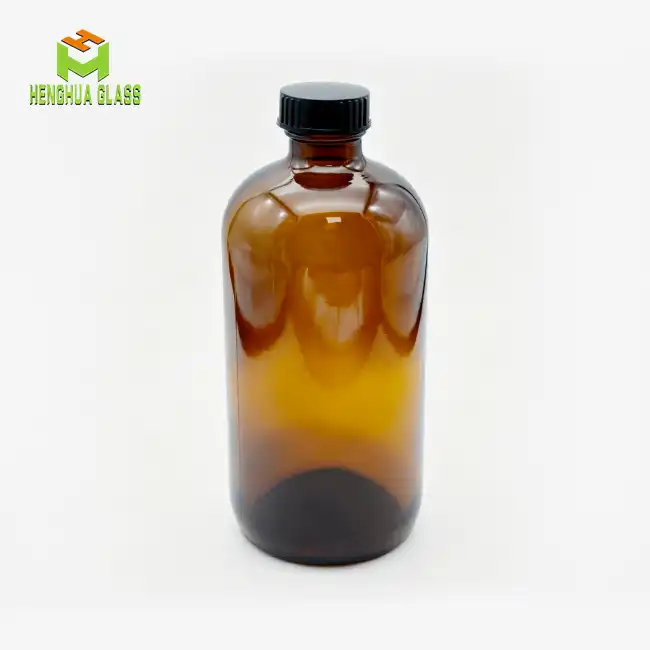
The choice between clear glass bottles and amber Boston glass bottles depends on how sensitive your product is to light. Amber Boston glass bottles block 99% of UV rays, which makes them perfect for keeping essential oils, medicines, and drinks that go bad quickly in the sun. Clear glass, on the other hand, lets you see your brand and product better, which makes it more appealing to customers. To make the best choice, you need to weigh your needs for product protection against your marketing goals and the cost of the product in your industry.
Introduction
Boston glass bottles are popular in the cosmetics, craft beverage, specialty food, and pharmaceutical businesses because they keep their shape well and seal well. Businesses that buy things on a large scale have to choose between clear and amber Boston glass bottles when they need to package things. What you choose affects how long a product lasts, how people feel about the brand, and how much it costs to own everything. UV rays can't pass through amber glass, and customers can see through clear glass to see how good the product is. When people in charge of the supply chain know about these differences, they can make sure that the packaging they pick is in line with rules, how they place their products in the market, and their promises to be environmentally friendly. This helps them build long-term relationships with their suppliers.
Understanding Amber and Clear Boston Glass Bottles
Material Composition and Manufacturing
Adding iron, sulphur, and carbon molecules to the glass while it melts is how amber Boston glass bottles are made. Because of this, the whole thing is colored, and ultraviolet rays between 200 nm and 450 nm can't get through. The soda-lime glass used to make clear glass bottles, on the other hand, has no color added to it. Because of this, they are very clear and let a lot of light through. It has a basic Boston round shoulder shape and a standard neck finish, such as 18-400 or 22-400. This means they can be used with many different types of closing systems, like PE-lined caps and drip assemblies.
Physical and Chemical Properties
The bigger body of the bottle, which comes in both clear and amber colors, keeps the structure strong while it's being shipped and filled automatically. When it comes to resistance to water, amber glass meets the standards set by the USP <660>. This means that pH transfer can't happen, which could hurt medicine formulas. There are no chemicals that are different between clear and coloured glass. However, clear glass doesn't block light as well. The walls of both types are the same thickness, which lets them be vacuum-filled and sterilized normally at 121°C. The smooth walls on the inside keep flammable aromatic compounds from oxidising, which is important for many fields where the product needs to stay pure.
Capacity Ranges and Customization Options
Boston glass bottles come in many sizes, from 0.5 oz sample jars to 32 oz bulk cases. This means that they can be used for many business-to-business tasks, from perfume testers to big blocks of essential oil. Full ODM/OEM services let you change the shape, add 3D stamping, and change the colors to fit your needs. For example, you can add gold, silver, or black metallic features or frosted finishes for high-end branding. Some craft breweries want bottles with unique shapes, and some cosmetic brands need unique packaging to stand out in a crowded market. This gives them more choices.
Protection and Preservation: Amber vs. Clear Glass
UV Protection and Product Stability
About 99% of UV rays below 450 nm are blocked by amber Boston glass bottles. This protects photosensitive ingredients such as vitamin C serums, hop oils in craft beers, and prescription drugs. Stopping photodegradation, which changes the colour, loses its effectiveness, and gives foods off-tastes, makes the shelf life much longer. There is a need for pharmaceutical-grade glass that lets less than 10% of UV light through. Spectrophotometric tests show that amber glass does not meet this requirement. The chemicals in clear glass aren't dangerous, but they don't block UV light, which means that things inside can break down when they are stored or shown off in a store and are exposed to natural or artificial light.
Real-World Industry Applications
More and more, whisky makers are putting old spirits in amber glass to keep the rich flavours that develop in barrels. Terpene compounds are kept safe in amber Boston glass bottles by people who sell essential oils because they break down quickly in light. At this point, the healing effects of aromatherapy items are still strong. APIs that are sensitive to light should be kept in amber-boston glass bottles because that's what the government says should be done. High-end vodka and gin are also stored in clear glass, which shows that the drink is pure. As a sign of quality, juice makers like clear bottles because they let the juice's natural color shine through. However, these bottles don't last as long.
Cost-Benefit Analysis for Protection
Amber Boston glass bottles usually cost 5–15% more than clear glass when bought in bulk. This is because they need more raw materials to make them. For light-sensitive formulations, this investment does, however, cut the rate of product spoilage by 40–60%. This directly cuts down on waste and customer returns. The longer shelf life also means that you don't have to keep buying new stock, and the product can reach more people without losing any of its quality. Clear glass is still a cheap choice for items that are used up quickly or kept in secondary packaging that is not see-through. This makes it a good choice for cosmetic samples and hotel amenity bottles that don't need to be kept safe for long periods of time.
Procurement Considerations for B2B Buyers
Pricing Structures and Volume Discounts
Depending on capacity, order number, and customization complexity, Amber Boston glass bottles cost between $0.15 and $2.50 per bottle. Tiered pricing lets you save 20–35% on each unit when you buy more than 50,000 of them at once. This helps resellers and contract makers make more money. Clear glass has slightly lower starting prices but the same savings for buying in bulk. Manufacturers with integrated supply chains can keep costs low without sacrificing quality, so prices stay competitive. To get a good idea of the total cost of the project, purchasing managers should ask for thorough quotes that compare FOB terms, tooling fees for custom moulds, and decoration costs like screen printing or hot pressing.
Quality Assurance and Certifications
Reliable providers give full testing records, such as reports on the accuracy of the dimensions, quality checks for heating using a polariscope, and certifications for hydrolytic resistance. When products meet the standards set by CE, FDA, SGS, and LFGB, they are safe for use in international markets like the US, EU, and Australian territories. Impact resistance tests and vertical load capacity data show that the bottles can handle the pressures of automatic filling equipment and being stacked on pallets during shipping. Manufacturers with more than 20 years of experience show process growth by maintaining quality across all production runs. This is important for keeping a brand's image when you're getting millions of units every year.
Supplier Selection Criteria
When looking for a long-term provider, you need to look at more than just price. You need to look at things like production capacity, customization options, and service efficiency. Manufacturers who run 10 sets of 150-ton glass melting furnaces and make up to 1 million units a day make sure that high-volume contracts have a steady supply. Having the ability to offer free samples, pay for transportation losses, and offer expert help lowers the risks of procurement. Suppliers with sample lead times of 25 days and mass production lead times of 30 days make it possible for new products to hit the market faster. Cross-border purchasing is made easier by checking for export experience and established logistics partnerships. This includes issues like customs compliance and shipping coordination, which have an effect on the total landed costs.
Environmental and Sustainability Factors
Recyclability and Circular Economy Benefits
Clear and amber Boston glass bottles can be returned over and over again without losing any of their quality. This backs up the circle economy ideas that businesses are asking for more and more as part of their efforts to be more environmentally friendly. Making new glass takes 30% more energy than recycling old glass. Recycling also gets rid of trash that would have gone to a dump. Amber Boston glass bottles retain their defensive qualities after numerous recycling cycles, but mixed-color recycling streams make clear glass less clear. Brands that use recycled glass in their packaging show that they care about the environment and appeal to both B2B and end customers who want to buy things that are good for the environment.
Waste Reduction Through Product Protection
Because it blocks UV rays, amber glass indirectly helps the environment by stopping food from going bad, which would have caused waste all along the supply chain. When light-sensitive formulas are switched from clear to Amber Boston glass bottles, 50% fewer batches are refused, according to the companies that make medicines. This cut down on waste includes more than just the loss of goods. This also includes the trash from packaging, the pollution caused by shipping, and the money spent on getting rid of old stock. The longer shelf life also means you don't have to restock as often. This helps green buying strategies that are in line with ISO 14001 environmental management standards and lowers your carbon footprint from making multiple orders.
Innovative Eco-Friendly Manufacturing
Up to 80% post-consumer recovered (PCR) glass is now used by top manufacturers in their products. These products still meet standards for UV protection and structural stability. Recycling systems for water and furnace technologies that use less energy make output even better for the environment. Designs for lightweight bottles use less material without making them less durable. This makes shipping lighter, which in turn lowers the pollution caused by movement. These innovations, which strike a balance between environmental stewardship and the practical performance needs of quality-conscious brands, have elevated Amber Boston glass bottles to the status of high-end sustainable packaging options.
How to Choose Between Amber and Clear Boston Glass Bottles?
Assessing Product Sensitivity Requirements
Seeing how sensitive your product is to light by holding it still and introducing it to controlled light is the most important thing that you need to do. Amber Boston glass bottles are typically required to protect goods that contain vitamins, volatile compounds, or natural extracts. The law says that packaging must be amber because it has pharmaceutical-grade ingredients and essential oils that are sensitive to UV light. But UV protection doesn't help much with steady mixtures or clear liquids, so it's cheaper to use clear glass. Accelerated aging tests let you compare amber and clear packaging over a short period of time. This gives buyers real-world information that helps them make decisions that balance the need for protection against the need for product purity.
Evaluating Market Positioning and Branding
Packing choices are affected by more than just practical needs. Brand image also plays a big role. To show that their skin care lines are high-end and luxurious, they use things like frosted amber bottles with gold caps that shine. On the other hand, craft beverage brands might pick clear glass with a unique design on it to show that their drinks are clear, which is a sign of quality. Different ways to decorate, like hot stamping, screen printing, and laser etching, help brands stand out in stores that are already full. Procurement teams and marketing departments should work together to make sure that the packaging choices support the stories behind brands, whether that means emphasizing scientific credibility with Amber Boston glass bottles or handmade authenticity with clear glass that reveals natural ingredients.
Balancing Functionality and Budget Constraints
To make things easier to use, think about dropper functionality for accurate pouring, close compatibility, and standard vs. custom size, which changes how much space is used and how much it costs to ship. Standard GPI neck finishes make sure they work with many different types of closures. This makes it less likely that you will run out of supplies over time. Good manufacturers make sure that the thread tolerances on dropper assemblies are correct by testing the sizes very carefully. People who want to save money might pick clear glass with a second layer of thick wrapping. This is a simple way to protect the product and save them money at the same time. The need for protection, the desire for customisation, the number of orders, and the budget limits can all be taken into account in a weighted decision matrix. This helps procurement managers compare options in a structured way that meets their operational needs.
Conclusion
When choosing between Amber Boston glass bottles and clear glass alternatives, product safety, brand presentation, cost effectiveness, and environmental goals must all be taken into account. Because it blocks UV rays better, amber glass is better for recipes that go bad quickly. This keeps them fresh longer and reduces waste. People are more interested in stable things that are made of clear glass because it lets more light through. Chemicals don't hurt either option, and they can both be customised and recycled, which is good for the environment. They should think about how stable the product needs to be, how they want to place it in the market, and what the seller can do when making this smart package choice. In the end, the best choice is one that balances how helpful the packaging is with the values of the brand and the store's resources. This gives them an edge over their competitors by letting them form smart partnerships with suppliers and make sourcing plans that focus on quality.
FAQ
Can amber Boston glass bottles be used for acidic beverages?
Type III soda-lime glass used to make amber bottles is strong enough to protect most acidic drinks, like citrus juices and vinegar-based drinks. Products that need to last as long as possible should ask for Type I borosilicate glass when they are being bought. This type of glass is more resistant to harmful chemicals while still protecting against UV light. Testing for hydrolytic resistance shows that it works in certain pH levels.
What are typical minimum order quantities for custom amber bottles?
For simple customizations like printing a logo, the standard minimum order quantity is between 10,000 and 50,000 units. For complex changes like special moulds or colours, you may need to commit to selling 100,000 or more units to cover the cost of the tools. A lot of companies keep standard sizes in stock so they can ship smaller test orders right away before they commit to large-scale customisation.
How should glass bottles be cleaned before first use?
To get rid of dust and other surface contaminants, industrial cleaning procedures include washing with an alkaline soap at 60–80°C, rinsing with deionized water, and drying with hot air. For pharmaceutical uses, autoclaving sterilisation processes are needed. Manufacturers often send bottles that have already been cleaned to meet certain standards of cleanliness. This cuts down on the steps needed to handle them for buyers whose cleaning needs have been proven and speeds up the production process.
Partner with Henghua for Premium Amber Boston Glass Bottle Solutions
Amber boston glass bottles that meet the high standards of international drug, cosmetics, and beverage names are produced by Henghua with more than 20 years of specialised production experience. Our wide range of products includes bottles that can be customized in different sizes and with a variety of advanced decoration choices. All of these products are backed by CE, FDA, SGS, and LFGB certifications, which make sure they are legal in all foreign markets. With 10 sets of high-capacity glass melting furnaces that can make up to 1 million units per day, we can meet all of your largest purchasing needs and keep our prices low through integrated supply chain management. Get free samples from our team by emailing denny@henghuaglass.com. Learn how our ODM/OEM services, quick 30-day production cycles, and full technical support can help you protect your products better. Visit www.glassbottles.cn to see our full selection and get in touch with a reliable Amber boston glass bottle supplier who cares about your long-term success.
References
1. United States Pharmacopeia Convention. (2021). Glass Containers for Pharmaceutical Use: USP General Chapter 660. USP-NF Standards.
2. Glass Packaging Institute. (2022). Technical Standards for Glass Container Neck Finishes and Closures. GPI Industry Guidelines.
3. American Society for Testing and Materials. (2020). ASTM C148: Standard Test Method for Polariscopic Examination of Glass Containers. ASTM International Standards.
4. European Medicines Agency. (2019). Guideline on Plastic Immediate Packaging Materials and Primary Container Closure Systems for Pharmaceutical Products. EMA Quality Guidelines.
5. Society of Cosmetic Chemists. (2021). Photostability Testing and UV Protection in Cosmetic Packaging. SCC Technical Journal, Volume 72.
6. International Organization for Standardization. (2018). ISO 14001:2015 Environmental Management Systems - Requirements with Guidance for Use. ISO Standards Catalog.
Learn about our latest products and discounts through SMS or email