- English
- French
- German
- Portuguese
- Spanish
- Russian
- Japanese
- Korean
- Arabic
- Irish
- Greek
- Turkish
- Italian
- Danish
- Romanian
- Indonesian
- Czech
- Afrikaans
- Swedish
- Polish
- Basque
- Catalan
- Esperanto
- Hindi
- Lao
- Albanian
- Amharic
- Armenian
- Azerbaijani
- Belarusian
- Bengali
- Bosnian
- Bulgarian
- Cebuano
- Chichewa
- Corsican
- Croatian
- Dutch
- Estonian
- Filipino
- Finnish
- Frisian
- Galician
- Georgian
- Gujarati
- Haitian
- Hausa
- Hawaiian
- Hebrew
- Hmong
- Hungarian
- Icelandic
- Igbo
- Javanese
- Kannada
- Kazakh
- Khmer
- Kurdish
- Kyrgyz
- Latin
- Latvian
- Lithuanian
- Luxembou..
- Macedonian
- Malagasy
- Malay
- Malayalam
- Maltese
- Maori
- Marathi
- Mongolian
- Burmese
- Nepali
- Norwegian
- Pashto
- Persian
- Punjabi
- Serbian
- Sesotho
- Sinhala
- Slovak
- Slovenian
- Somali
- Samoan
- Scots Gaelic
- Shona
- Sindhi
- Sundanese
- Swahili
- Tajik
- Tamil
- Telugu
- Thai
- Ukrainian
- Urdu
- Uzbek
- Vietnamese
- Welsh
- Xhosa
- Yiddish
- Yoruba
- Zulu
What You Need to Know about Custom Glass Bottles for Liquor?
Custom glass bottles for liquor are more than just cases; they show off a brand's personality and quality to customers before they even try the product. In addition to standard designs, these custom main package options offer mold engineering that isn't found anywhere else, special glass formulations like Extra Flint, and surface treatments that are made to fit whiskey, vodka, gin, and other spirits. Understanding customization options, seller selection criteria, and quality standards is important for B2B procurement pros who have to work in competitive markets. This makes sure that packing becomes a strategic asset that protects product integrity and improves shelf appearance.
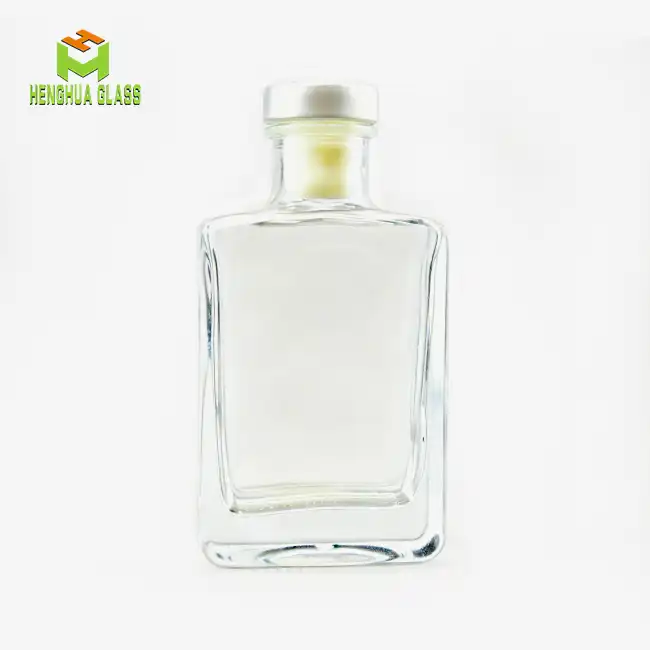
Understanding Custom Glass Bottles for Liquor
What Makes Custom Glass Bottles Essential for Spirit Brands
Custom glass bottles for liquor solve important image and practical problems that ready-made options can't. Companies that make high-end booze need bottles that don't react chemically with the high-proof ethanol substance so that the flavors don't get ruined. Low iron content in Super Flint glass formulas makes the glass as clear as possible, giving it a look that is both true and well-made. The thicker body of the bottle makes it last longer in distribution networks, and the smooth walls inside protect the fragrance chemicals while they age for a long time.
Types of Spirits and Corresponding Bottle Designs
Whiskey bottles often have strong bases and broad shoulders that show history and steadiness. Vodka brands often choose tall, thin models to show how pure and classy their products are. More and more, gin makers like forms that are sharp or geometric to show how complicated the botanicals are. Flask-style bottles make people think of travel and excitement, while round shapes make people think of tradition and warmth. Finishes on the bottleneck range from standard GPI threads to specialty cork finishes. Each affects how the seal works and how the liquid pours.
Core Advantages for B2B Procurement Professionals
Custom glass bottles for liquor help with a lot of different buying goals in a measured way. When competitors can't copy your brand's bottle forms, you can really tell them apart. Consumers' ideas change a lot—research consistently shows that expensive packaging is seen as more valuable and supports higher prices. Better safety for the product comes from evenly distributing the wall thickness, which stops weak spots during filling line operations and shipping stresses. Sustainability benefits get stronger because glass can be recycled over and over again without losing any of its quality. This is in line with business responsibility requirements and supports efforts to create a circular economy.
How to Design Custom Liquor Bottles That Stand Out
Critical Design Considerations for Market Impact
A good bottle design starts with making sure that the style of the bottle fits with the story of the brand. Craft distilleries that focus on small-batch accuracy benefit from surfaces that aren't smooth or look like they were finished by hand, while well-known heritage brands use classic sizes that are based on old designs. Different market needs can be met by choices with capacities ranging from 100ml sample sizes to 750ml standard forms. Choosing the right color has practical implications: amber glass covers drinks that are sensitive to light, while clear glass shows off the clarity and jewel-like look of the product. Cobalt blue stands out on the shelf, but you need to be aware of the risks of UV radiation.
Advanced Customization Technologies and Surface Treatments
With today's decorating methods, simple shapes made of glass can be turned into unique brand assets. Metallic foils are applied by hot pressing, making ornaments that look expensive and won't wear down easily from handling. Screen printing creates vivid, multicolored images that stick well, as shown by tests that use alcohol and rubbing alcohol. Internal etching creates three-dimensional effects inside glass that won't fade or scratch. Decorative firing at high temperatures forever bonds ceramic prints together, making the design dishwasher-safe and good for programs that use bottles more than once. Closure systems like metal closures with custom stamping or wooden caps that look natural add useful design elements that make unpacking more enjoyable.
Balancing Aesthetics with Production Realities
When setting design goals, it's important to think about how to make them and how much they will cost. Embossed names and patterns require precise molds, but they provide tactile marking that supports the idea of quality. Extreme undercuts or thin protrusions make it more likely that something will break during automatic handling. For high-speed filling lines, where even small tilts can cause rejection rates, vertical precision is very important. Expert suppliers help improve designs by matching creative vision with production efficiency. They often offer digital prototypes and physical models before committing to making a full mold.
Comparing Custom Glass Bottles: Making the Best Choice for Your Brand
Glass Versus Plastic: Material Performance Analysis
Glass doesn't react with any chemicals, which is important for keeping complex taste combinations over a long period of time. Instead of plastic options that let air pass through and cause possible leaching, glass forms hermetic walls that keep the product's purity. It's easy to follow the rules when you use food-grade glass because it meets FDA, SGS, and foreign safety standards without having to go through complicated migration tests. According to poll data, people strongly prefer glass packing for expensive spirits. This is because custom glass bottles for liquor are seen as higher quality than plastic packaging by large amounts.
Understanding Quality Tiers and Pricing Structures
Economy-tier bottles use standard shapes and don't have much design. They're good for value brands that want to save money. Most of the time, MOQs are between 10,000 and 30,000 units, and production takes about 30 days. Mid-range products come with some customization options, like private label stamping, custom colors, or special closing, that make them stand out while still being affordable. Luxury-level solutions use their own cast engineering, heavyweight glass formulations that weigh more than 500g per bottle, and multiple painting steps to make packaging that is truly one of a kind. These high-end projects have longer development times and higher MOQs, but they offer unique brand differentiation.
Evaluating Supplier Capabilities and Certifications
Reliable suppliers show that they have the output ability and modern equipment to back it up. Multiple 150-ton glass melting furnaces with automatic making lines show stable output of up to 1 million units per furnace per day. Quality certificates like ISO, CE, LFGB, and FDA compliance paperwork show that the company is committed to meeting foreign standards. Technical skills like measurement accuracy testing, polariscope stress analysis, and impact resistance proof make sure that the bottle always works well. When suppliers offer both ODM and OEM services, they form a valuable relationship that goes beyond basic manufacturing and includes things like improving designs and making changes to fit specific markets.
Purchasing Custom Glass Bottles for Liquor: What B2B Buyers Need to Know
Minimum Order Quantities and Production Scheduling
MOQ levels are based on how much it costs to make a mold and how efficiently it needs to be made. Simple bottle designs with standard decoration may be able to handle minimum orders of 10,000 units, but complicated unique molds need orders of 30,000 units or more to be worth the money spent on the tools. It's easy to plan when to make something: making a sample mold takes 15 to 20 days, making a mold for mass production takes 25 to 30 days, and making more molds takes 30 days after the mold is approved. Price breaks for large orders usually happen at 50,000 and 100,000 units, lowering costs by 8 to 15% as the number of units sold rises.
Logistics Coordination and Quality Assurance
The success rates of shipments are based on the protective packing rules. Individual dividers, corrugated inner packing, and ISTA 1A drop-tested outer boxes are used in export-grade solutions to keep breakage below 1% to 2% during foreign transport. Labeling must follow the rules of the target market, such as TTB rules for bringing alcohol into the US, EU packaging rules, and language rules that are special to each country. Setting up clear sample approval processes stops mistakes that cost a lot of money during production. Three stages of checking the size, quality of the decoration, and usefulness of the close ensure that everything is in line before starting full-scale production.
Managing Supplier Relationships for Long-Term Success
Clear standards and working together to solve problems are both important parts of good buying relationships. Technical sketches with lots of information, like thread sizes, finishing, and weight limits, keep things clear. Project momentum is kept up by regular contact lines that take into account different time zones. Suppliers who offer free samples and transportation loss pay show that they want the partnership to work. Technical support that goes beyond just fulfilling orders, like help with integrating filling lines, fixing problems with decoration, or changing designs for new markets, adds strategic value that makes supplier trust worth it.
Sustainability and Future Trends in Custom Glass Bottles for Liquor
Environmental Performance and Circular Economy Integration
Custom glass bottles for liquor naturally support sustainability goals because they can be recycled over and over again without losing any of its quality. When cullet is used in production, fewer raw materials are needed and heating temperatures are lowered. This means that up to 25% less energy is needed than when pure glass is made. New developments in lightweight glass technology make it possible to cut weight by 15–20% while keeping the structure strong. This lowers the amount of pollution released during shipping and distribution. Refillable bottle programs, which are becoming more popular in the premium drinks market, make containers last longer by focusing on sturdiness and classic looks that keep customers coming back.
Emerging Technologies Reshaping Packaging Experiences
Smart package integration uses NFC chips or QR codes that are built into closures or labels. This lets consumers interact directly with brands by verifying their identity, getting drink recipe ideas, or reading brand stories. New developments in digital printing make short-run decoration possible for test markets and limited runs, which wasn't possible with standard screen printing minimums. When triggered by smartphone cameras, augmented reality features turn plain bottles into engaging brand experiences. This works especially well for millennials and Gen Zers who value digital integration.
Preparing for Regulatory Evolution and Market Shifts
As standards get stricter, brands that plan ahead for changes in regulations will be in a better position. End-of-life product management is getting more attention as laws about extended producer duty spread to more places. Maintaining certifications across various foreign standards by suppliers makes compliance easier as brands grow their distribution areas. Using modular design strategies that allow for changes in regional closures or label adaptations lowers the number of SKUs needed to serve a wide range of markets. By putting innovation first in your relationships with providers, you can make sure you have access to new technologies and keep your competitive edge as customer tastes and rules change.
Conclusion
When choosing the right custom glass bottles for liquor for booze brands, you have to think about how they look, how well they work, and how much it will cost. Knowing the benefits of glass materials, customization technologies, quality control methods, and seller evaluation criteria lets you make smart choices that turn packaging from a cost center to a strategic brand asset. Sustainability concerns and new technology trends will continue to change the packaging scene. This means that partnerships with suppliers that focus on innovation and flexibility will become more valuable. Professionals in procurement who have a lot of knowledge can easily go through the customization processes. This makes sure that investments in packaging give measurable returns by improving brand differentiation, customer appeal, and business efficiency across all global spirits markets.
FAQ
What is the typical lead time for custom liquor bottle orders?
Design and making a sample model usually take 15 to 20 days. Making a mold for mass production then takes 25 to 30 days. Once the mold is approved, production runs are finished in 30 days. From the first concept to delivery, the whole project takes about 70 to 90 days. However, stock bottle decoration can ship within 15 to 20 days if mold development is not needed.
How do you ensure glass bottles meet food-safety standards?
Every batch of food is put through a lot of tests by SGS- or FDA-approved labs that do leaking tests to make sure it meets international food safety standards. The lead-free glass makeup makes sure that the ethanol content has no chemical interactions. Also, the manufacturing method keeps environments under control, which keeps contamination from happening during production cycles.
What customization options are available for logos and decoration?
Some ways to decorate something are screen printing, hot pressing, internal engraving, thermal transfer printing, spray painting, and artistic firing. Embossing can be done straight into the glass while it is being formed, or it can be done on the surface using a number of different decoration technologies. Customization options for caps include choosing from wood, metal, or plastic, as well as end colors like gold, silver, black, and white. Closures can be embossed or printed to match your brand's look.
Partner with Henghua for Premium Custom Glass Bottle Solutions
With more than 20 years of experience in specialized manufacturing, Henghua is a renowned provider of custom glass bottles for liquor to global spirits names. Our production facility has 10 sets of 150-ton glass melting furnaces and fully automated lines that can make 1 million units per furnace every day. This makes sure that both stock and custom orders are delivered on time. Our dedication to meeting world quality standards at every stage of production is shown by our many certifications, such as CE, FDA, SGS, and LFGB.
We offer full ODM and OEM services that turn brand ideas into packaging that is ready for the market. We do this by using 3D design, creating our own molds, and giving you a lot of different ways to decorate your packaging, such as hot stamping, screen printing, and internal engraving. Our wide range of customization choices includes sizes ranging from 100ml samples to 750ml standard forms, colors such as amber, clear, and blue, and closure systems that match the look and function needs of your brand.
Visit www.glassbottles.cn or email denny@henghuaglass.com to get free samples, talk about the details of your project, or get full quotes. We provide shipping loss compensation and technical help to make sure that you can buy from us without worrying. This will turn your liquor packaging into strong brand assets that give you a competitive edge.
References
1. Anderson, M. (2022). Glass Packaging Technology and Design Innovations for Premium Spirits. Beverage Industry Publishing Group.
2. Chen, L. & Roberts, D. (2023). Sustainable Packaging Solutions in the Global Alcohol Industry. International Journal of Supply Chain Management, 18(3), 145-162.
3. Martinez, R. (2021). The Psychology of Packaging: Consumer Perception Studies in Luxury Spirits Markets. Brand Strategy Quarterly, 12(2), 78-94.
4. Peterson, J. (2023). Manufacturing Standards and Quality Control in Glass Bottle Production. Industrial Packaging Review, 29(4), 201-218.
5. Thompson, K. & Wu, H. (2022). B2B Procurement Best Practices for Custom Packaging Solutions. Supply Chain Management Journal, 34(1), 56-73.
6. Williams, S. (2023). Emerging Technologies in Smart Packaging for Alcoholic Beverages. Packaging Innovation Review, 15(2), 112-128.
Learn about our latest products and discounts through SMS or email