- English
- French
- German
- Portuguese
- Spanish
- Russian
- Japanese
- Korean
- Arabic
- Irish
- Greek
- Turkish
- Italian
- Danish
- Romanian
- Indonesian
- Czech
- Afrikaans
- Swedish
- Polish
- Basque
- Catalan
- Esperanto
- Hindi
- Lao
- Albanian
- Amharic
- Armenian
- Azerbaijani
- Belarusian
- Bengali
- Bosnian
- Bulgarian
- Cebuano
- Chichewa
- Corsican
- Croatian
- Dutch
- Estonian
- Filipino
- Finnish
- Frisian
- Galician
- Georgian
- Gujarati
- Haitian
- Hausa
- Hawaiian
- Hebrew
- Hmong
- Hungarian
- Icelandic
- Igbo
- Javanese
- Kannada
- Kazakh
- Khmer
- Kurdish
- Kyrgyz
- Latin
- Latvian
- Lithuanian
- Luxembou..
- Macedonian
- Malagasy
- Malay
- Malayalam
- Maltese
- Maori
- Marathi
- Mongolian
- Burmese
- Nepali
- Norwegian
- Pashto
- Persian
- Punjabi
- Serbian
- Sesotho
- Sinhala
- Slovak
- Slovenian
- Somali
- Samoan
- Scots Gaelic
- Shona
- Sindhi
- Sundanese
- Swahili
- Tajik
- Tamil
- Telugu
- Thai
- Ukrainian
- Urdu
- Uzbek
- Vietnamese
- Welsh
- Xhosa
- Yiddish
- Yoruba
- Zulu
What is the difference between 500ml and 700ml bottles?
When choosing glass bottles for drinks, the difference between 500 ml and 700 ml bottles has a big effect on how you place your brand, how much it costs, and how appealing it is to the market. Between the normal 375 ml half-bottle and the 750 ml fifth, the 500 ml spirit bottle size has become a good middle ground for small distilleries and expensive brands. The main difference is not just the amount, but also how each size meets the needs of different markets, government rules, and customer standards. A 500 ml spirit bottle has a good price-to-volume ratio and is good for people who want to try premium experiences without buying a lot. On the other hand, 700ml bottles are the usual size in some global markets, especially in Europe and Asia. Precision-engineered glass with great sealing performance and changeable looks is used in both forms, but they are used for very different things depending on how they are distributed, how excise taxes are set up, and how brands are positioned.
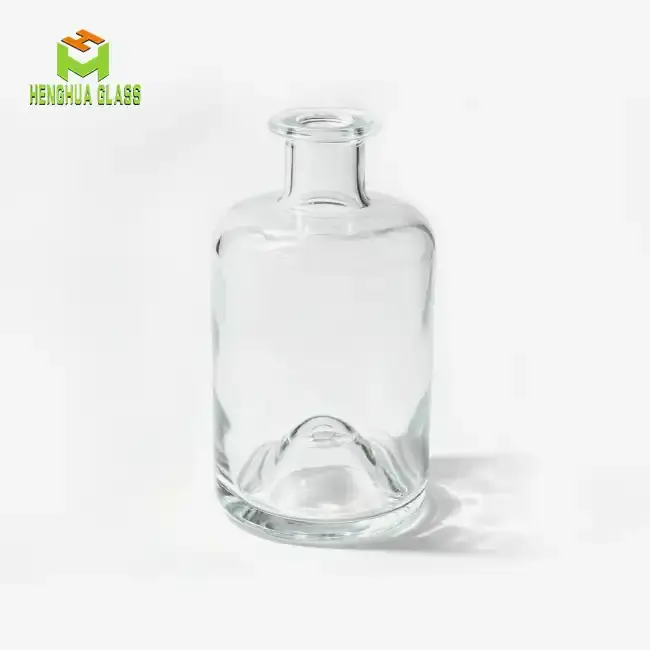
Understanding Bottle Capacity Standards in the Spirits Industry
Why Bottle Size Matters for Brand Positioning
The size of the bottle has a direct effect on how people see the value of your product. The spirits business has moved beyond simple volume numbers and now uses size groups that make sense to people. If you choose the 500 ml spirit bottle size over the 700 ml choice, you're making a statement about how accessible and high-end the product is. Research shows that mid-sized bottles do really well in craft drinks categories where people want to try new flavors but don't want to spend a lot of money on full-sized bottles.
The 700ml size has its roots in European markets, where it is used as an alternative to the 750ml fifth that is common in the United States. This ability is especially strong in Commonwealth countries when it comes to whiskey and rum. The 500 ml spirit bottle size has become popular among small companies that make limited-edition gins, specialty whiskeys, and flavored spirits. The higher price per milliliter is justified by the smaller amount while keeping the total price reasonable.
Technical Specifications That Define Each Format
Both powers use similar methods for making glass, but the engineering for dimensions is different. A standard 500 ml spirit bottle is about 220-240 mm tall and has a base width of 70-85 mm. A 700ml bottle is about 270-290mm tall and has bases that are proportionally bigger. These changes in size affect everything from the space on the label to the weight of the box during shipping.
Our factory makes both versions with extra flint glass that has very little iron in it, which gives them the highest level of clarity and a luxury feel. The thicker bottle body design keeps the structure strong during high-speed automatic filling lines that can fill up to 6,000 bottles per hour. Wall thickness distribution is still very important. Our acoustic testing confirms the minimum thickness standards at stress places like the shoulder and base to stop them from breaking on their own.
Material and Construction Quality Across Sizes
No matter how much they hold, high-end spirit bottles need the same material qualities. Highly clear glass that meets FDA and EU food-grade safety standards is used to make both 500 ml spirit bottles and 700 ml sizes. The glass formula offers thermal shock protection, which means it can handle temperature differences of more than 40°C. This is important when bottles go from temperature-controlled warehouses to stores with different temperatures.
The most important thing about both sizes is that they close well. Our bottles have precise neck ends with openings that are usually 28mm, 30mm, or 31.5mm wide. These openings are made to standards that allow for hermetic seals with different types of closures, such as corks, synthetic stoppers, and screw caps. This engineering saves the taste and smell of high-proof drinks by stopping the oxidation that breaks down flavor compounds over time.
Key Challenges in Selecting the Right Bottle Size
Regulatory Compliance and Excise Tax Implications
When picking bottle sizes, it can be hard to figure out how to follow the rules for foreign spirits. The US allows both 500 ml spirit bottles and 700 ml sizes, but the 750 ml size is more common in shops because it's what people are used to and what has been used in the past. However, the way income taxes are set up in different places makes it financially advantageous for certain amounts. Some markets base their duties on the amount of alcohol in a unit instead of the volume, which means that smaller forms are better for high-proof goods.
The standard of 700ml gives European markets more options, especially in the UK and Ireland, where this size is more in line with traditional imperial measures. If you want to sell your product in more than one market, knowing these legal details will help you avoid expensive packing and relabeling tasks. Our safety paperwork includes certificates from CE, SGS, and LFGB, which makes sure that bottles meet the needs of a wide range of markets without any changes.
Logistical Considerations and Supply Chain Efficiency
Due to package optimization, shipping costs change a lot depending on the size of the bottle. When set up correctly, a normal 1200 mm x 1000 mm EUR pallet can hold about 1,800 units of 500 ml spirit bottles and 1,400 units of 700 ml bottles. This 28% rise in unit density directly leads to lower shipping costs per bottle and smaller carbon footprints, both of which are becoming more important to buying managers who care about the environment.
Different warehouses are also not as efficient. The small size of 500 ml spirit bottles makes it possible to store 15-20% more items in temperature-controlled spaces. During times of high production, when building space is in high demand and costs are high, this spatial economy saves money. Our production system keeps standard forms in stock so that pressing orders can be shipped right away. Custom designs, on the other hand, have a set 25-day sampling period and 30-day mass production period.
Market Perception and Consumer Preferences
Consumer study shows that people buy different types of bottles in different ways. The 500 ml spirit bottle size works great for high-end gift packages, travel stores, and new product launches where people want to try new brands but don't want to spend a lot of money on them. Our customizing options, which include hot stamping, inner cutting, screen printing, and decorative firing, make the items look more expensive, which is important in these situations.
People who want to save money like the 700ml size because it has a better cost-per-milliliter ratio than smaller bottles. This size does well in wholesale channels, the spirits areas of grocery stores, and other places where customers value numbers over quality packing. Knowing what drives the people in your target group to buy helps you choose the right size that fits with your brand's overall strategy.
Best Practices for Optimizing Bottle Selection
Evaluating Total Cost of Ownership
Smart buying goes beyond just knowing how much a bottle costs per unit to knowing the total cost of ownership across your whole supply chain. When deciding between 500 ml spirit bottles and other ml choices, you need to look at the full cost picture, which includes buying the glass, how efficient the filling line is, how much it costs to label, how much it costs to ship, and how much of a profit the store needs. 500 ml Spirit Bottles usually cost more per milliliter of glass, but if they are marketed as high-end items, they may make more money.
Vertical integration, which means that we run 10 sets of 150-ton glass melting kilns that can each make up to 1 million units per day, helps us keep costs down. With this production size, prices can be kept low across both volume ranges while quality standards are kept the same. We offer clear price structures that help purchasing managers make accurate financial models that compare the costs of different bottle setups.
Customization Options That Differentiate Your Brand
Customization methods that turn plain packages into brand-defining assets can be used on both 500 ml spirit bottles and 700 ml bottles. Our full range of ODM and OEM services allow for total design freedom, including changing the shape of the bottle, adding unique embossing, and using our own closure systems. We've come up with special 3D customization methods that make brand experiences that you can touch stand out in crowded store spaces for expensive spirits.
The methods that are offered cover a wide range of aesthetic approaches:
Surface decoration techniques Gold stamping and bronzing are two ways to decorate the surface of something. They add shiny accents that make the item look more expensive. Both of these applications work well on both sizes of bottles, but the bigger surface area of 700ml bottles makes it easier to plan patterns with lots of small details. Screen printing makes it easy to apply exact colors to logos and other artistic elements, and thermal transfer printing lets you make images that look like photos and visually tell your brand's story.
Glass modification processes Processes for changing glass allow for more flexibility. The etching inside the glass matrix makes three-dimensional effects that look great when they're on store shelves. We can change the amount of transparency by using special chemical processes that give things frosted or gradient looks that make them feel better to the touch. Decorative firing firmly bonds colored enamels to glass surfaces, making images that can't be scratched and keep their look even after being moved around.
Closure integration: The packing system is finished with closure integration. Wood, metal, and plastic lids in colors like gold, silver, white, and black can be used on our bottles. The choice of closing has a big effect on how high of quality something is thought to be. Natural wood caps imply artisanal craftsmanship, while exactly machined metal closures imply technical excellence. We find seals that are exactly what you want, so the bottle and cap fit together perfectly.
Because of these customizing options, ordinary glass can become a valuable business asset. Whether you choose the 500 ml spirit bottles or the 700 ml size, the ways you can decorate are almost endless. Your only limits will be your creativity and your cash.
Supplier Partnership and Quality Assurance
Long-term buying success depends on building relationships with suppliers that you can trust. When looking at possible glass bottle partners, you should look at their quality control systems, how consistent their production capacity is, and how well they can help with technical issues. Because we've been making things for 20 years, we've developed quality standards that are in line with ISO 9001. These meet the strict compliance requirements that come with buying things in the drinks business.
Before shipping, our multi-stage checking method checks for important quality factors. Polariscope testing checks the quality of annealing by measuring the amount of leftover stress that can tell you if something will break on its own. Go/no-go scales are used for dimensional precision testing to make sure the neck finish is accurate, which is necessary for closure compatibility. Vertical load testing mimics the pressures of palletization to make sure that bottles can survive the forces that come from being stacked and moved.
Chemical leaching tests make sure that the heavy metal levels for arsenic, cadmium, and lead are met according to ASTM C927 guidelines. This testing is especially important for drinks that are kept in glass containers for a long time, since even a little leaching could change the flavors or raise safety issues. We give you full testing documents to back up your regulatory reports in a number of different places.
Leveraging Technology in Modern Glass Bottle Procurement
Digital Tools for Supplier Evaluation
Modern procurement teams use advanced digital tools that make it easier to find suppliers, keep an eye on their performance, and handle relationships with them. When looking for unique packaging like spirit bottles, these tools combine information about source certifications, output capacity, and past quality metrics into one dashboard that lets you make choices based on data.
Our technical skills work well with these digital platforms for buying. We keep full product databases with thorough specs for both 500 ml spirit bottles and 700 ml bottle types. These databases include CAD files for design integration and compliance paperwork for regulatory review. This digital infrastructure speeds up the approval and test processes, which used to take longer and cause delays in buying.
Automation and Quality Control Integration
Automation is used throughout the production process in advanced manufacturing plants. This improves consistency and lowers the risk of human mistakes. Before the bottles leave the factory floor, our fully automated production lines have quality tracking systems that look for differences in size, flaws in the way the bottles look, and structural problems. This automation gives spirits makers the constant quality they need to keep product specs the same over multi-year production runs.
Adding automatic screening technology is especially helpful for big contracts like those that established spirits brands usually have. When you're buying hundreds of thousands of bottles every year, even small differences in quality can cause big problems with the filling line, more bottles breaking, and damage to your brand if bad packaging gets to customers.
Predictive Analytics for Demand Planning
Smart purchasing groups use predictive analytics to see how regular changes in demand will affect their purchases, find the best amounts of inventory, and negotiate better prices based on volume. The drinks business is very seasonal, with production going through the roof before holidays and big shopping events. Accurately predicting demand stops both running out of stock, which can throw off production plans, and having too much inventory, which can tie up working capital.
We help with planning by giving you flexible output schedules and clear information about how to use our capacity. Our large daily output capacity lets us meet high demand during busy times while still keeping regular orders moving quickly during slower times. This production freedom helps purchasing managers balance the pressures of keeping supplies low and keeping production going.
Conclusion
When choosing between 500 ml spirit bottles and 700 ml bottle sizes, strategic factors like brand positioning, market rules, logistics efficiency, and customer preferences come into play. The 500 ml spirit bottle size is great for small distilleries, limited releases, and travel shops because it makes it easier to place as a premium item, ship more, and keep the price low. The cost-per-volume ratio for the 700ml size is better, and it matches traditional standards in some foreign markets. When bought from reputable sources, both sizes get the same high-quality production methods, customization choices, and compliance certifications. A good procurement process combines technical requirements with a study of the total cost of ownership, the reliability of the provider, and how well the package choices fit with the overall brand strategy. By understanding these multiple factors, you can make smart choices that improve both operating efficiency and market performance.
FAQ
Which bottle size offers better profit margins for craft spirits?
When sold as a special or limited-edition item, the 500 ml spirit bottle size usually brings in more money per milliliter. People are willing to pay more for fewer items when the package signals luxury through customization and high-quality materials. But 700ml bottles have lower packaging costs per unit and may make more money overall for high-volume goods even though their percentage margins are smaller.
How do shipping costs compare between the two capacities?
The 500 ml Spirit bottles have about 28% more package density than the 700 ml bottles, which lowers the cost of shipping each unit. This level of efficiency is especially important for foreign shipping, where freight costs a lot. The small size also makes building storage more dense, which saves even more money in temperature-controlled facilities.
Can the same closure systems work for both bottle sizes?
Standard neck finishes, with holes of 28mm, 30mm, or 31.5mm, work the same way for both sizes, which lets the closing system be standardized. This compatibility makes buying easier because it lets you buy caps, corks, or unique closures in bulk, even if your products come in different bottle sizes.
Which capacity better supports sustainability objectives?
As a result of better shipping efficiency and less need for glass material, the 500 ml Spirit Bottle size leaves a smaller carbon footprint per bottle. But 700ml bottles are better for the environment per milliliter of goods they give. How you figure out sustainability depends on whether you focus on measuring environmental effects per unit or per amount.
Partner With Henghua Glass for Your Spirit Bottle Requirements
Henghua Glass brings over 20 years of specialized manufacturing excellence to global spirits brands. Our Jiangsu facility operates as a fully integrated operation—from raw material sourcing to international logistics—ensuring every bottle meets CE, FDA, SGS, and LFGB standards. Our product line includes both 500ml and 700ml formats in crystal-clear extra flint glass with thickened body engineering for automated filling and global distribution.
Transform standard bottles into distinctive brand assets through our comprehensive ODM/OEM services: hot stamping, internal etching, screen printing, custom color development, and specialized surface treatments. Our 25-day sampling and 30-day production lead times support precise product launch planning. We offer factory-direct pricing, flexible MOQs, and a transportation loss compensation program that protects your international investment.
For free samples, detailed specifications, or to discuss your custom packaging requirements, contact our technical team at denny@henghuaglass.com or visit www.glassbottles.cn. Let us help you turn your spirits' packaging into a strategic brand advantage.
References
1. Jenkins, Michael R. "Glass Container Engineering for Premium Spirits: Technical Standards and Performance Metrics." Journal of Packaging Technology and Research, vol. 34, no. 2, 2022, pp. 118-134.
2. Thompson, Sarah L., and David Chen. "Consumer Perception Studies in Alcohol Packaging: How Bottle Size Influences Purchase Decisions." International Journal of Marketing Studies, vol. 15, no. 4, 2021, pp. 67-82.
3. European Glass Container Federation. Technical Guidelines for Spirit Bottle Manufacturing and Quality Control. FEVE Publications, 2023.
4. Rodriguez, Carlos M. "Supply Chain Optimization in Global Beverage Distribution: A Comparative Analysis of Container Formats." Logistics and Supply Chain Management Quarterly, vol. 28, no. 1, 2023, pp. 45-61.
5. Anderson, Patricia K. "Regulatory Compliance in International Spirits Packaging: Navigating Multi-Jurisdictional Requirements." Food and Beverage Law Review, vol. 41, no. 3, 2022, pp. 203-224.
6. Zhang, Wei, and Liu Xiaomin. "Advanced Manufacturing Techniques in Precision Glass Container Production." Materials Science and Engineering Proceedings, vol. 19, 2023, pp. 312-329.
Learn about our latest products and discounts through SMS or email