- English
- French
- German
- Portuguese
- Spanish
- Russian
- Japanese
- Korean
- Arabic
- Irish
- Greek
- Turkish
- Italian
- Danish
- Romanian
- Indonesian
- Czech
- Afrikaans
- Swedish
- Polish
- Basque
- Catalan
- Esperanto
- Hindi
- Lao
- Albanian
- Amharic
- Armenian
- Azerbaijani
- Belarusian
- Bengali
- Bosnian
- Bulgarian
- Cebuano
- Chichewa
- Corsican
- Croatian
- Dutch
- Estonian
- Filipino
- Finnish
- Frisian
- Galician
- Georgian
- Gujarati
- Haitian
- Hausa
- Hawaiian
- Hebrew
- Hmong
- Hungarian
- Icelandic
- Igbo
- Javanese
- Kannada
- Kazakh
- Khmer
- Kurdish
- Kyrgyz
- Latin
- Latvian
- Lithuanian
- Luxembou..
- Macedonian
- Malagasy
- Malay
- Malayalam
- Maltese
- Maori
- Marathi
- Mongolian
- Burmese
- Nepali
- Norwegian
- Pashto
- Persian
- Punjabi
- Serbian
- Sesotho
- Sinhala
- Slovak
- Slovenian
- Somali
- Samoan
- Scots Gaelic
- Shona
- Sindhi
- Sundanese
- Swahili
- Tajik
- Tamil
- Telugu
- Thai
- Ukrainian
- Urdu
- Uzbek
- Vietnamese
- Welsh
- Xhosa
- Yiddish
- Yoruba
- Zulu
The Complete Guide to Flat Glass Rum Bottle: Trends, Benefits & Applications
In today's competitive spirits market, packaging is one of the most important ways to tell elite names from mass-market ones. It has become clear that the flat glass rum bottle is a smart way to package things that look great and work well. Unlike regular bottles that are round, these oblong or flask-shaped containers have more surface area, which makes them stand out more on the shelf and helps with shipping and branding. Made from high-quality glass and offered in sizes that can be changed from 100ml to 1000ml, these bottles help distilleries improve the image of their brand. This article talks about how flat-profile spirits cases solve current problems with buying things and meet the needs of picky customers.
Understanding Flat Glass Rum Bottles: Definitions, History & Manufacturing
What Defines a Flat Glass Rum Bottle?
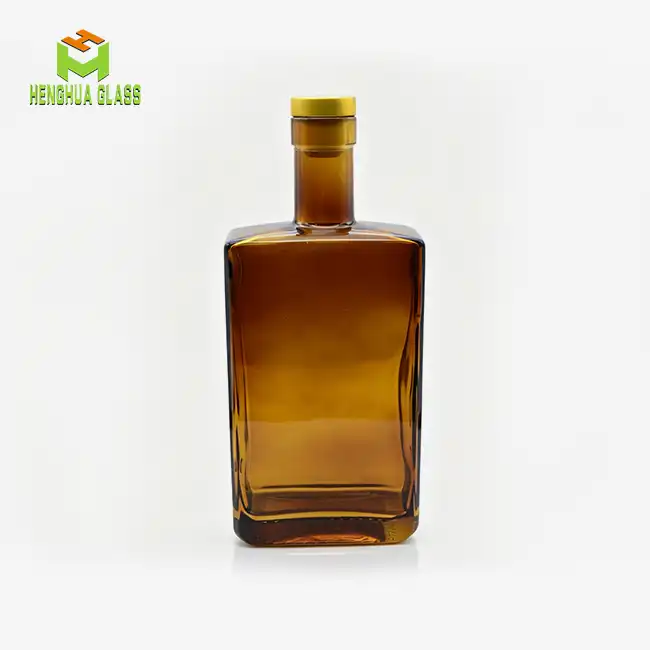
A flat glass rum bottle has a thin, rectangular shape that is designed to look good in stores and be easy to hold. The design focuses on making the front and back pieces bigger instead of round, which gives about 30% more printable surface area than round options. The standard sizes for these containers are 500ml to 750ml, but special sizes from 100ml to 1000ml are available to meet the needs of a wide range of markets. These bottles are made from extra flint glass, which lets more than 90% of light through. They show off the amber colors of old drinks while keeping their structural integrity with walls that are at least 2.0 mm thick.
Evolution of Flat Bottle Design in Spirits Packaging
Around the middle of the 20th century, companies started to see that unique forms could help them sell more bottles, which sped up the move toward flat-profile bottles. Retail stores that sell things for travelers could benefit from flask-style cases that look expensive and fit easily in carry-on bags. Precision molding with flatness limits within ±0.5mm is now possible thanks to modern manufacturing methods. This makes sure that labels are applied consistently across production runs. This change is a reflection of a larger trend in the industry toward packaging that is both a container and a storyteller for the brand.
Manufacturing Process and Technical Specifications
The first step in production is choosing the right glass formulas. Soda-lime is good for most uses, while borosilicate is better for handling high temperatures. Ten sets of 150-ton melting furnaces are used at our sites. Large flat panels are refined with vacuum-assisted methods that get rid of any optical flaws. During the shaping stage, precise CNC tools are used to make sure that the walls are evenly distributed. This is especially important at the corners and base sections, where stress builds up. The annealing processes lower the internal stress to Grade 1 or 2 levels, which can be confirmed by polariscope tests to keep the material from breaking on its own. Each bottle is tested for hydrostatic pressure up to 0.4MPa to make sure it will hold up when the temperature or gas changes.
Customization Capabilities for Brand Differentiation
Screen printing, internal engraving, gold pressing, and thermal transfer printing are just a few of the surface techniques that can be used to make modern flat bottles very unique. You can get closures made of wood, metal, or plastic, and the caps come in a range of colors, from classic gold and silver to modern black and white. The wider flat surfaces can hold intricate artwork, names that are raised, and marking techniques that use multiple layers, which are not possible on narrow cylindrical bodies. Customers can choose how their packages are arranged, and the amount of protected shipping materials used is based on their order. Our sample response time of 25 days and production cycle of 30 days combine the level of customization with how quickly we can respond to the market.
Key Benefits and Applications of Flat Glass Rum Bottles
Enhanced Shelf Visibility and Brand Recognition
There is always competition for customers' interest in stores. Flat-profile bottles get more "facings" on busy shelves because their oblong shape makes them easier to see from all sides. The bigger front panel can hold more detailed historical stories or artistic patterns than cylindrical bottles can, making it a great place to tell a brand's story. According to research in the field of packing psychology, people think that flat glass rum bottles are more expensive because they associate the unique shape with hand-made goods and limited editions.
Practical Advantages in Logistics and Storage
Purchasing managers who deal with large orders care a lot about how efficiently the goods are transported. When compared to round cases of the same volume, flat bottles take up about 25% less room in shipping boxes because they are rectangular. This increase in density directly leads to lower freight costs per unit and lower carbon emissions throughout supply lines. Stable stacking is good for warehouses because the flat base keeps things from moving and makes vertical storage better. Standardized sizes make automatic handling systems easier to use, which makes palletization more efficient.
Environmental Sustainability and Cost Considerations
Glass can be recycled over and over again without losing any of its quality. This helps companies keep their sustainability promises, which are being looked at more closely by both customers and lawmakers. When we make things, we follow strict rules to protect the earth. In normal production runs, 40% of the glass used is recycled. Custom flat bottles have higher beginning tooling costs than stock round bottles, but the long-term brand differentiation and shelf performance make it worth the investment for middle- to premium-market groups. When you buy more than 50,000 units, economies of scale take care of the costs of making unique molds, allowing you to set prices that are competitive.
Application Across Premium Spirits Categories
Not only can rum be stored in flat glass bottles, but so can whiskey, gin, vodka, and other specialty liquors. Craft distilleries use these containers to show that they are real and value craft values. Because these bottles make limited-edition releases feel like special things, they often become collectibles that keep people interested in the brand beyond consumption. Travel store groups like 375 ml and 500 ml flat bottles the most because they are portable and have a high-end look. Cross-category uses include olive oil, specialty vinegars, and fancy sauces, showing that packing can be used in a variety of food and drink industries.
Comparing Flat Glass Rum Bottles with Alternative Packaging Options
Flat Profile Versus Traditional Cylindrical Bottles
When looking at different types of packages, buying teams have to weigh how they look against how useful they are. Standardized tools and a wide range of suppliers make it easier to make traditional round bottles quickly. But their small surface area makes it harder to be creative and makes it harder for them to stand out on the shelf. Flat glass rum bottles are great for telling stories about a brand, but they need to be labeled with tools that can work with surfaces that aren't circular. Both forms are pretty durable when handled normally, but edge safety is more important for flat versions when they are being distributed. Consumer perception studies show that people think flat bottles are worth 15-20% more, which supports price tactics that charge more.
Glass Versus Plastic Packaging Solutions
Material choice has a big impact on how a brand is positioned and how environmentally friendly it is. Compared to glass, plastic options are less likely to break and lighter, which cuts shipping costs by about 40%. But people who buy expensive spirits are skeptical about the quality and validity of spirits that come in plastic containers. Glass acts as a better barrier than other materials, keeping air out and destroying taste profiles over long periods of time. The weight and temperature retention of glass express wealth through touch, providing a sensory experience that plastic can't match. Glass is also better for regulatory reasons, since many approvals for expensive spirits require glass packaging to uphold claims of product purity.
Closure Systems and Their Impact on User Experience
The choice of closure has a big effect on both how well it works and how people feel about the brand. Traditional artistry is evoked by cork closures, which allow controlled micro-oxygenation during aging. However, they need careful quality control to avoid taint or leaks. Screw caps are efficient at sealing and fail less often, which helps keep products consistent across delivery networks. When used with threaded liners, wooden cap pieces add warmth to the look and seal well at the same time. Metal locks with gold or silver finishes make the product look more expensive and make sure that the seal stays tight for long-term keeping. Our ability to work with standard neck finishes, such as Guala and cork specs, makes it easy to connect to current filling equipment.
How to Source Flat Glass Rum Bottles: Procurement and Supplier Insights
Evaluating Supplier Credentials and Certifications
Thoroughly screening suppliers is the first step to successful buying. Manufacturers should have the right quality certificates, such as FDA compliance for products that come into contact with food, CE marking for European markets, and SGS proof of their production capabilities. Our plant keeps its LFGB license, which shows that it follows German food safety standards that are known all over the world. In addition to certificates, site surveys or virtual facility tours can be used to figure out how much can be produced. Reaching a daily output of 1 million units per furnace shows that the company can grow to meet the needs of growing brands. Ask for proof of quality control procedures, such as polariscope tests for stress analysis and readings of flatness deviation, to make sure the label placement goes well.
Understanding MOQs, Pricing Models, and Lead Times
Minimum order amounts vary a lot from one provider to the next, but they are usually between 10,000 and 100,000 units, depending on how complicated the customization is. Stock bottles with standard sizes usually have lower MOQs, while fully custom molds need bigger pledges to spread out the cost of the tools. Unit costs should be kept separate from mold fees, shipping plans, and customization services in clear price structures. Our mature supply chain and cost control systems allow us to offer factory-direct prices that are cheap without lowering the quality of our products. Lead times are broken up into sample stages, which take about 25 days for prototypes, and mass production processes, which start 30 days after approval. Inventory items can be shipped right away, giving you the freedom to test the market before committing to big special runs.
Negotiation Strategies and Contract Considerations
Negotiations that work well match the need to cut costs with the need to ensure the quality and dependability of service. Before finalizing deals, make sure there are clear rules about the glass's weight range, optical clarity standards, and the number of defects that are accepted. Payment terms usually include a 30% deposit when the order is confirmed, and the rest of the payment is due before the shipment or via letter of credit for bigger deals. Include promises to buy in bulk in contracts to get better prices. You can still be flexible by setting up staged delivery schedules that work with yearly demand patterns. Ask for sample batches from real production runs instead of hand-finished prototypes to make sure the quality is realistic. Our transportation loss compensation program lowers the risk of international shipping by replacing damaged goods that meet certain requirements for paperwork.
Customization Services and Technical Support
Instead of being routine sellers, comprehensive suppliers act as strategic partners. Check out the different ways you can customize it, such as changing the shape, choosing colors other than amber and clear, and changing the way the surface looks. From idea sketches to 3D prototypes and final production, our full ODM/OEM services help brands grow. In addition to fulfilling orders, technical support should include testing to see if it works with filling equipment, suggesting marking materials, and helping with regulatory paperwork. Dedicated account management makes sure that communication stays constant across time zones and language barriers in long-term relationships. This speeds up the reordering process and allows for changes in the needs of the product line.
Current Trends and Future Prospects for Flat Glass Rum Bottles in the Spirits Industry
Sustainability Imperatives Driving Material Choices
Consumers and companies' supply lines are now affected by people's concerns about the environment when they make purchases. Glass packaging is in line with the ideas of the circular economy because it can be recycled over and over again and doesn't produce as many microplastics as other materials. In their marketing, distilleries are focusing more and more on sustainable packaging. Flat glass rum bottles are a clear way to show that they care about the earth. Regulatory forces in markets like California and the EU require packaging that can be recycled or programs that extend producer responsibility, which favors glass options. Our production methods put energy efficiency first and use post-consumer recycled material, which helps clients with their sustainability reporting while still meeting quality standards.
Premiumization and Design Innovation
People are always upgrading their drinks to better ones with more interesting packages, which is called "premiumization." Flat bottles help this trend along by making things stand out visually and giving artists more room to express themselves. New ways of designing include etching on the inside, which makes three-dimensional effects that can be seen through clear glass and makes the design seem more handcrafted. You can change colors other than amber, like blues, greens, and transition effects that make your brand stand out. Unique bottle forms are used as collectibles in limited-edition drops, and some distilleries name each bottle to make them even more exclusive. Packaging providers that can do fast prototyping and flexible production will benefit from this circle of innovation.
Market Drivers and Consumer Preferences
Nowadays, marketing for spirits is all about being real and sharing stories. The package is the main way that brands communicate with their customers. More and more, people look into where products come from, how they are made, and what the brand stands for before they buy them. This makes packing an important way to deliver information. Labels on flat bottles can have longer, more detailed stories because they can have multi-panel patterns that can't be done on narrow cylindrical forms. Demand patterns are also affected by regional tastes. For example, markets in North America like bold, modern designs, while customers in Europe react to traditional styles with a modern twist. By understanding these subtleties, buying teams can choose packaging that appeals to target groups while still keeping production costs low.
Strategic Considerations for Future-Proofing Packaging Investments
Making choices about packaging has long-lasting effects, like mold investments and building a brand's personality. By choosing flat bottle designs with label areas and closing systems that can be changed, you can add new products to your line without having to remake the whole thing. Think about flexibility when working with suppliers to make sure that production capacity grows as the brand does. Take a look at new technologies like smart stickers with NFC chips or QR codes that can turn boxes into interactive brand experiences. We can help our clients from the time they first enter a market until they are ready to expand. Our large capacity and technical know-how allow us to provide consistency that makes supply chain management easier while still being able to adapt to changing product strategies.
Conclusion
Flat glass rum bottles are a smart choice for packaging because they have both practical benefits and strong brand differentiation. Their larger surface areas, better shelf appearance, and ease of logistics meet important buying goals and support premium positioning strategies. As concerns about ecology and new design continue to change the spirits business, these unique cases offer flexible solutions that meet the changing needs of the market. To successfully source products, you need to work with makers who can show they have the technical know-how, production scalability, and full customization capabilities. By reading this guide and understanding the benefits, uses, and buying factors explained, executives can easily choose flat bottle options that raise the value of the brand and meet operational needs.
FAQ
What lead times should we expect for custom flat glass rum bottle orders?
Custom orders usually take 25 days for the first samples and acceptance of the prototype, and then 30 days for mass production once the specs are set. Standard-sized stock bottles can be shipped right away, giving you options for pressing needs or testing the market before committing to full customization. The schedule for production varies depending on the number of units ordered and how complicated the surface processes are. For example, if you order more than 100,000 units, you may need more time to make sure the quality is consistent.
Are flat glass bottles suitable for carbonated beverages?
Yes, flat bottles that are made correctly can handle carbonation pressures because they are structurally strengthened and tested hydrostatically up to 0.4 MPa. Maintaining the right wall thickness (at least 2.0 mm) and even spread of glass during shaping is very important. Choosing the right closure also affects how well the carbonation stays in. Screw caps work better than cork options for closing. Based on the level of carbonation and the amount of time needed for keeping, our engineering team can suggest the best specs.
How do sustainability practices integrate into flat bottle manufacturing?
Up to 40% of the glass we use in our production comes from recycled sources, but it still looks clear and is strong. Energy-efficient melting ovens cut down on carbon emissions, and tight production tolerances and quality control cut down on waste. Glass is good for the earth because it can be recycled over and over again without losing any of its quality. This is in line with the ideas of the circular economy. Shipping boxes are made of cardboard that can be recycled and are made of protected materials that break down naturally. This lowers the environmental effect throughout the supply chain.
Partner with Henghua for Premium Flat Glass Rum Bottle Solutions
Every time Henghua works with a flat glass rum bottle provider, they bring more than 20 years of experience in making unique products. Our cutting-edge factory in Jiangsu has 10 large ovens that can make up to a million units per day, making sure that growing names always have enough products. We keep a lot of certifications, like FDA, CE, SGS, and LFGB, which ensure that we follow the rules in all global markets. You can choose the shape of the bottle, the color, the surface treatment (like interior engraving and screen printing), and the closing system, which can be made of wood, metal, or plastic. Competitive factory-direct pricing reflects our mature supply chain and cost control expertise, delivering exceptional value without compromising quality. Our expert team is here to help you make your package ideas come to life, from the first idea to production and shipping. You can email us at denny@henghuaglass.com to discuss your specific requirements and receive free samples demonstrating our craftsmanship. Let's build a partnership that elevates your brand through distinctive packaging solutions.
References
1. Smith, J. & Anderson, K. (2022). "Packaging Innovation in Premium Spirits: Design Trends and Consumer Perception." Journal of Beverage Marketing, 18(3), 45-62.
2. Thompson, R. (2021). "Glass Manufacturing Technologies: Advances in Flat-Profile Container Production." International Glass Review, 29(2), 112-128.
3. Martinez, L. (2023). "Sustainable Packaging Solutions in the Global Spirits Industry." Environmental Packaging Quarterly, 15(1), 34-51.
4. Chen, W. & Roberts, D. (2022). "Logistics Optimization Through Container Geometry: A Comparative Analysis." Supply Chain Management Review, 26(4), 78-95.
5. Williams, P. (2023). "Consumer Psychology and Premium Beverage Packaging: Shape, Color, and Perceived Value." Marketing Science Journal, 41(2), 203-221.
6. European Glass Container Federation. (2022). "Quality Standards and Testing Protocols for Spirits Packaging." Industry Technical Report, Brussels, Belgium.
Learn about our latest products and discounts through SMS or email