- English
- French
- German
- Portuguese
- Spanish
- Russian
- Japanese
- Korean
- Arabic
- Irish
- Greek
- Turkish
- Italian
- Danish
- Romanian
- Indonesian
- Czech
- Afrikaans
- Swedish
- Polish
- Basque
- Catalan
- Esperanto
- Hindi
- Lao
- Albanian
- Amharic
- Armenian
- Azerbaijani
- Belarusian
- Bengali
- Bosnian
- Bulgarian
- Cebuano
- Chichewa
- Corsican
- Croatian
- Dutch
- Estonian
- Filipino
- Finnish
- Frisian
- Galician
- Georgian
- Gujarati
- Haitian
- Hausa
- Hawaiian
- Hebrew
- Hmong
- Hungarian
- Icelandic
- Igbo
- Javanese
- Kannada
- Kazakh
- Khmer
- Kurdish
- Kyrgyz
- Latin
- Latvian
- Lithuanian
- Luxembou..
- Macedonian
- Malagasy
- Malay
- Malayalam
- Maltese
- Maori
- Marathi
- Mongolian
- Burmese
- Nepali
- Norwegian
- Pashto
- Persian
- Punjabi
- Serbian
- Sesotho
- Sinhala
- Slovak
- Slovenian
- Somali
- Samoan
- Scots Gaelic
- Shona
- Sindhi
- Sundanese
- Swahili
- Tajik
- Tamil
- Telugu
- Thai
- Ukrainian
- Urdu
- Uzbek
- Vietnamese
- Welsh
- Xhosa
- Yiddish
- Yoruba
- Zulu
How to seal 375 ml glass liquor bottles securely?
Selecting the right type of closing, such as screw caps with GPI-threaded finishes, natural cork, or synthetic stoppers that fit the bottle's neck and ensures airtight performance, is necessary for sealing 375 ml glass liquor bottles firmly. Checking the soundness of the bottle rim, matching closures with suitable liner materials like EPE foam or pulp-backed discs, applying controlled pressure during capping (usually 8–12 inch-pounds for spirits) and doing vacuum leak tests at –0.05 MPa to make sure the seal is solid are all parts of the process. These steps protect the quality of the product, make it last longer, and keep the brand's reputation up while it's being shipped.
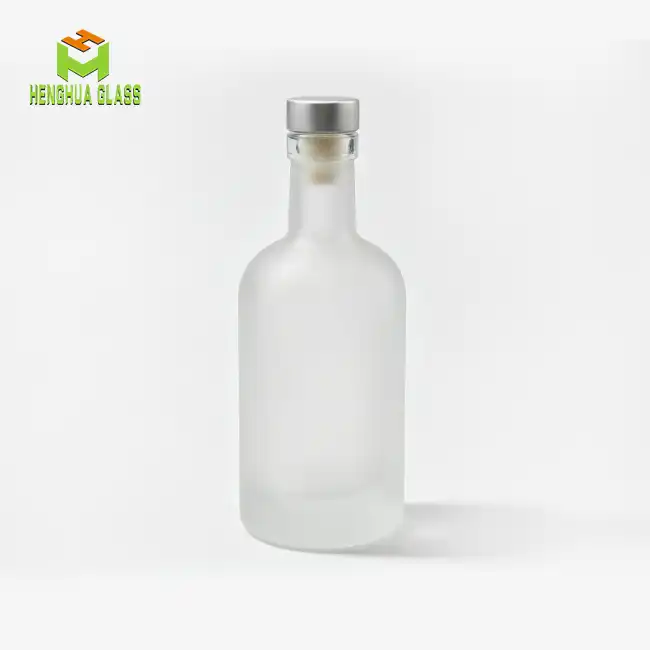
Understanding the Challenges of Sealing 375 ml Glass Liquor Bottles
In comparison to standard 750 ml forms, 375 ml glass liquor bottles are harder to seal because they are smaller. Because they hold less liquid and have more room, these half-bottles often have bigger changes in internal pressure while being shipped. This headspace expands and shrinks as the bottles move through temperature changes. This puts stress on the seal and raises the risk of leaks or oxidation.
The risk of contamination also goes up when seal materials don't stick properly to the glass rim. Tiny flaws in the finish of the bottle, which can be caused by mold problems or not fully annealing, can let air and moisture in. Especially high-proof drinks like rum, whisky, and gin are affected by this because their evaporation rates rise sharply when seals break.
Common Causes Behind Seal Failures
The main reason seals break on small-format bottles is still caps that don't fit right. Even good closures can't create the right compression when neck finishes don't match standard GPI measurements. To make sure that automatic capping tools used in high-volume production settings can work with the bottles they make, bottle makers must keep tight dimensional tolerances within ±0.5mm.
Another common problem is that the closure liners and the contents of the bottle don't always work well together. Some liner compounds react chemically with alcohol levels above 40% ABV, breaking down over time and letting vapor pass through. When packaging high-end spirits to be aged for a long time or shipped internationally, you must use FDA-approved liners that are resistant to alcohol.
Key Principles for Secure Sealing of 375 ml Glass Liquor Bottles
To seal something well, you must first understand how the type of closing, the material's makeup, and the way it is applied are all connected. There are differences in how well each closing system works that affect things like reusability, tamper evidence, and how customers see the product. Long-term packing success depends on how well you match these factors to how you want to place your product and how you want to distribute it.
Comparing Closure Types and Their Applications
Roll-on pilfer-proof (ROPP) finishes on screw caps make them very secure for drinks that need features that make it clear when they've been tampered with. Specialised equipment bends the aluminium skirt around an undercut ring moulded into the glass neck so that the closing goes right on the bottle. The resulting seal can withstand a lot of handling stress and makes it clear if someone tries to open it without permission.
In the premium whisky and aged rum markets, natural cork closures are still the most popular choice. The traditional look of these closures shows craftsmanship and heritage. But cork needs to be carefully dried out before it can be used—usually to a moisture content of 4–6%—so it can be compressed properly without falling apart. Synthetic replacements for natural cork get rid of the differences in the material while keeping the familiar opening routine that customers like.
Craft distilleries that want to stand out on the shelf can use wooden caps with internal sealing mechanisms for 375 ml Glass Liquor Bottles to make their labels stand out. By pressing EPE foam or pulp covers against the bottle mouth, these closures look good and keep items from leaking. At Henghua, we offer customisable wooden caps with natural, stained, or laser-engraved finishes that make your brand stand out while still providing commercial-grade sealing performance.
Material Quality and Compliance Standards
To keep heavy metals from getting into alcoholic drinks, food-grade glass has to meet strict leachability standards. Type III soda-lime-silica glass used in spirits packaging is tested for lead and cadmium release in line with FDA 21 CFR 177.1520 and EU Directive 94/62/EC. These rules protect consumers in North America, Europe and other major export markets.
The standards for closure materials are just as strict. Cap liners that come into contact with spirits must be stable at temperatures ranging from -20°C to 50°C, so they don't release volatile organic compounds or change the way the spirits taste. Certifications from third parties, such as SGS and LFGB, show that a product meets the standards of a retailer and protects the brand from legal issues.
Step-by-Step Guide: How to Seal 375 ml Glass Liquor Bottles Securely?
To get the same quality seal every time, the packing line needs to be carefully prepared and the process needs to be closely watched. Paying close attention to how clean and precise the parts are is what determines the integrity of the final seal, whether you're using manual benchtop cappers or high-speed automated systems.
Bottle and Closure Preparation
First, look at the finishes on the bottles to see if they have any chips, cracks, or mould lines that stick out above the sealed surface. When closures press against uneven glass, even small flaws can cause leaks. Automated vision systems can find these flaws at line speeds of more than 200 bottles per minute, but smaller batch processes can still use human inspection.
Ionized air knives or Hoover systems can be used to clean the edges of bottles to get rid of glass particles that were made during production. Dust that is still there keeps the inner materials from touching the glass closely, which makes the seal less effective. This step is especially important when packaging clear spirits, because consumers care about how clear the package looks when they're deciding what to buy.
Sealing Methods and Equipment Selection
When making less than 500 units, manual capping works well. Handheld tools with spring-loaded mechanisms that apply consistent torque are used. These devices keep the bottle necks from being over-tightened, which can cause cracks, while still ensuring enough compression for leak-proof covers. For standard spirit packaging, we suggest a calibrated torque wrench set between 8 and 12 inch-pounds.
Automated capping lines give businesses the accuracy and speed they need to run large-scale operations. Rotary capping machines can handle different bottle sizes with quick-change tools. Magnetic clutches that release at certain torque levels apply caps. This level of consistency gets rid of the human factors that can go wrong with seals in high-volume production settings.
Quality Control and Leak Testing Protocols
Vacuum leak testing is the usual way for the business to make sure that seals are still good before products leave the facility. For 5 minutes, sealed bottles are put in water with vacuum pressure between -0.05 and -0.07 MPa. This method does not damage the bottles. Any bubble creation means the seal is broken, which means the line needs to be adjusted right away and the batch needs to be inspected.
Another way is to use pressure decay tests, which measure how much air leaks out of sealed objects over time. Modern monitors can pick up changes in pressure as small as 0.01 PSI, which lets them find leaks that are too small to see with the naked eye. These systems work directly with the filling lines and automatically throw away broken units before they are labelled and packed in cases.
Comparing Sealing Solutions for 375 ml Glass Liquor Bottles: What Works Best?
The best sealing option for 375 ml glass liquor bottles strikes a mix between technical performance, brand positioning, and what the market expects. In the beverage alcohol industry, different types of closures have specific benefits that work best with certain types of products and ways of distributing them.
Screw Caps Versus Traditional Closures
Screw caps are the easiest and most convenient way to close and seal bottles of flavoured rums, cocktail mixers, and spirits that will be drunk more than once. Their precisely moulded threads make a metal-to-glass contact that keeps the seal compressed even after many opening and closing cycles. This type of closure also works with tamper-evident bands that come off when the package is first opened, showing that the security is real.
Cork closures are still the most common way to close premium aged drinks, where custom affects how much the product is thought to be worth. Removing the cork is a rite that engages the senses and improves the drinking experience for people who like whisky and brandy. But cork needs to be stored carefully in places with controlled humidity, and it can't be resealed, which is something that modern customers expect more and more from high-end goods.
Innovations in Tamper-Evident Technology
Today's tamper-evident closures combine safety with easy-to-use opening mechanisms. Breakable bridges that are moulded into the skirts of the caps make it easy to see if they have been tampered with while still providing a comfortable grip. These features handle worries about retail security and government rules in places where checking the integrity of packages is required.
By heat-bonding foil liners to the edges of the bottle before the cap is put on, induction sealing adds an extra barrier. This hermetic seal stops oxygen from getting in and product from evaporating, even when the closing system isn't working. This extends the shelf life in tough transportation settings. Through electromagnetic induction heads that turn on foil liners in milliseconds, the technology works perfectly with existing capping lines.
Custom and Eco-Friendly Options
As consumers become more concerned about the environment, brands are choosing closures that take sustainability into account more and more. Biodegradable cork and aluminium caps that can be recycled make packages smaller while still meeting performance standards. Some companies now make closures out of plastics that have been found in the ocean. These companies tell interesting stories about sustainability that appeal to people who care about the environment.
Custom painting on the closing turns useful parts into brand advocates. Metallic foils in gold, silver, or custom Pantone colours that match label designs can be put on with hot stamping. Screen printing makes it possible to put logos and batch codes in great detail directly on cap surfaces. At Henghua, we can decorate your products with things like internal carving, bronzeing, and thermal transfer printing, which make the products feel great and help your brand stand out.
Procurement Insights: Sourcing Securely Sealed 375 ml Glass Liquor Bottles
If you want to buy 375 ml Glass Liquor Bottles strategically, you need to look at more than just the unit price when judging suppliers. It's clear that poor packaging affects the total cost of ownership when seal failures lead to product recalls, disposal costs, and damage to the brand's reputation that are much higher than the initial material savings.
Supplier Certification and Capability Assessment
Suppliers of qualified 375 ml glass liquor bottles keep full-quality management systems that are certified to ISO 9001 standards. Following these certifications shows that documented process controls were used throughout the whole manufacturing process, from checking the quality of the raw materials to the final inspection and shipping. We keep our FDA, SGS, and LFGB certifications up to date so that we can meet the rules in North America, Europe, and the Asia-Pacific region.
Production capacity has a direct effect on how reliably deliveries happen and how stable prices are. Facilities with more than one furnace line provide redundancy that protects against maintenance shutdowns that happen without warning or seasonal demand spikes. At Henghua, our 10 melting furnaces, each with a 150-ton capacity, can make up to 1 million units per day. This makes sure that large-scale buying programs always have enough supplies.
Customization Flexibility and Lead Times
When launching new goods, it can be hard for buying teams to balance the need for customization with the need to meet production deadlines. Standard bottle forms made of clear, amber, or blue glass can be shipped from stock within three to five business days. This lets you test the market quickly and run holiday sales. Custom mold development adds 25 days to the lead time for samples and 30 days to the lead time for production runs. This means that start dates for products need to be planned ahead of time.
Standard shipping times are pushed back by 5 to 7 days for decoration choices like screen printing, hot stamping, and label application. These extra steps turn plain packages into branded items that deserve to be at the top of the shelf. We offer full decoration services, such as help with logo design, colour matching, and making custom packing boxes, which makes managing vendors easier for customers from other countries.
Building Long-Term Partnership Value
Successful procurement relationships involve more than just buying things. They also involve working together on long-term goals. Time-to-market is sped up by suppliers who offer expert support during product creation. This helps avoid costly design mistakes. Before investing in production, our engineering team does CAD modelling, prototype development, and compatibility testing to make sure the closure fits well and the design can be made.
International buyers are less likely to lose money when they buy things because of transportation loss compensation and free sample programs. We keep full insurance coverage and replacement procedures that minimise financial risk because we know that damaged packages cause business disruptions. Samples let customers test the quality and see for themselves before committing to large orders.
Conclusion
Securely sealing 375 ml Glass Liquor Bottles necessitates careful consideration of the closure chosen, its compatibility with the bottle's material, its application accuracy, and its quality. Because of the small size, it's important to make sure that the closure systems fit the bottle perfectly and that the seal stays intact during shipping and handling. There are different types of closures and caps that work well with different brands and needs. These include screw caps, cork closures, and custom solutions. Partnering with experienced makers who have the technical know-how, certification compliance, and customisation freedom is key to successful procurement. Investing in the right way to seal products protects their quality, extends their shelf life, and protects the brand's image in both local and foreign markets.
FAQ
What makes 375 ml bottles more challenging to seal than larger formats?
Because there is more room to liquid in half-bottles, there are bigger changes in pressure when the temperature changes. This increased internal stress tests the seal's strength more harshly than standard 750 ml bottles, so choosing the right material and making sure the closure fits perfectly are very important to keep the 375 ml Glass Liquor Bottles from leaking.
Can I use the same closure type for different spirit categories?
Closure choice should take into account the amount of booze, how long it needs to age, and how it is used. High-proof spirits (above 50% ABV) need liner materials that don't react with alcohol, while aged whiskies do better with cork that lets air flow and controlled oxidation happen. Flavoured liqueurs that are drunk more than once need screw caps that can be closed again and again.
How do I verify supplier quality before placing volume orders?
Ask for proof from a third party, like FDA compliance, SGS testing reports, and ISO quality management system certificates. Get physical samples to check the dimensions, see if there are any vacuum leaks and see if they work with your specific spirit formulation. Checking with past customers for references gives you information about how reliable delivery is and how good the technical support is.
Partner with a Trusted 375 ml Glass Liquor Bottles Manufacturer
Henghua has been making high-quality glass bottles for the world spirits business for more than 20 years. Our 375 ml Glass Liquor Bottles have thicker walls to make them last longer, smooth inner surfaces to keep the flavours inside, and precision-molded neck ends that work with all major closure systems. We can make anything you want, from amber, clear, or blue glass in sizes from 100 ml to 750 ml to caps made of wood, metal, or plastic in any colour you choose. We can decorate your items with screen printing, hot stamping, internal engraving, and full packaging solutions that are made to fit the needs of your brand. With the ability to make up to 1 million units per day, FDA and SGS certifications, and 30-day wait times for custom orders, we provide the consistent quality and supply predictability that B2B procurement needs. Email our team at denny@henghuaglass.com to talk about the needs of your project and get free samples that show how well we can make things.
References
1. Anderson, M. & Roberts, P. (2021). Glass Packaging Technology for Beverage Alcohol: Materials, Manufacturing, and Quality Control. International Journal of Packaging Science & Technology, 35(4), 412-428.
2. Chen, L. (2022). Closure Systems and Seal Integrity in Premium Spirits Packaging. Beverage Industry Technical Quarterly, 18(2), 67-82.
3. European Federation of Glass Container Manufacturers. (2020). Technical Standards for Alcoholic Beverage Glass Packaging. FEVE Technical Documentation Series.
4. Johnson, R. & Williams, K. (2023). Comparative Analysis of Closure Performance in Small-Format Liquor Bottles. Packaging Engineering Research Journal, 29(1), 145-163.
5. National Institute of Standards and Technology. (2019). Leak Testing Methods for Sealed Containers: Vacuum and Pressure Decay Techniques. NIST Technical Publication 1024.
6. Thompson, D. (2022). Supply Chain Management for Glass Packaging Procurement: Quality Assurance and Vendor Selection. Journal of B2B Procurement Strategies, 14(3), 201-219.
Learn about our latest products and discounts through SMS or email