- English
- French
- German
- Portuguese
- Spanish
- Russian
- Japanese
- Korean
- Arabic
- Irish
- Greek
- Turkish
- Italian
- Danish
- Romanian
- Indonesian
- Czech
- Afrikaans
- Swedish
- Polish
- Basque
- Catalan
- Esperanto
- Hindi
- Lao
- Albanian
- Amharic
- Armenian
- Azerbaijani
- Belarusian
- Bengali
- Bosnian
- Bulgarian
- Cebuano
- Chichewa
- Corsican
- Croatian
- Dutch
- Estonian
- Filipino
- Finnish
- Frisian
- Galician
- Georgian
- Gujarati
- Haitian
- Hausa
- Hawaiian
- Hebrew
- Hmong
- Hungarian
- Icelandic
- Igbo
- Javanese
- Kannada
- Kazakh
- Khmer
- Kurdish
- Kyrgyz
- Latin
- Latvian
- Lithuanian
- Luxembou..
- Macedonian
- Malagasy
- Malay
- Malayalam
- Maltese
- Maori
- Marathi
- Mongolian
- Burmese
- Nepali
- Norwegian
- Pashto
- Persian
- Punjabi
- Serbian
- Sesotho
- Sinhala
- Slovak
- Slovenian
- Somali
- Samoan
- Scots Gaelic
- Shona
- Sindhi
- Sundanese
- Swahili
- Tajik
- Tamil
- Telugu
- Thai
- Ukrainian
- Urdu
- Uzbek
- Vietnamese
- Welsh
- Xhosa
- Yiddish
- Yoruba
- Zulu
Custom Glass Bottles for Liquor What Are Your Best Options
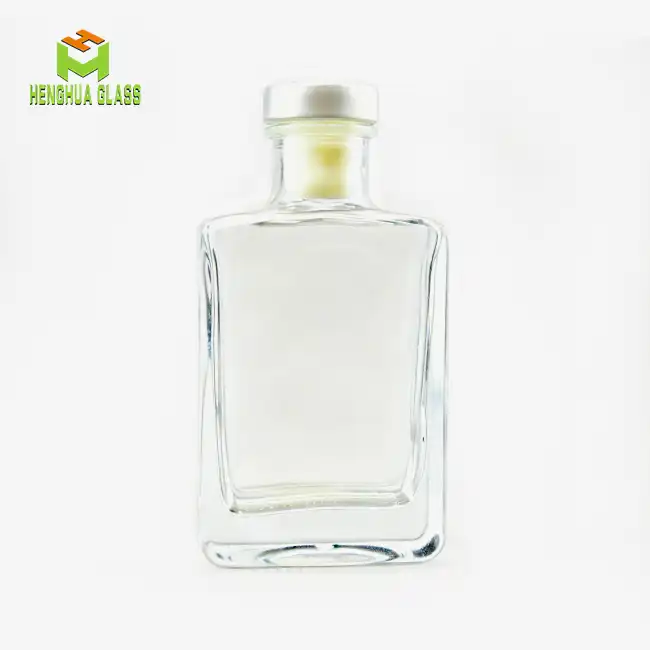
When you're making a fine booze brand, the packaging isn't just there to keep the liquor safe; it tells a story. Custom glass bottles for liquor are one-of-a-kind containers made to perfectly capture the essence of your brand, right down to the way they feel and look. When you're starting a craft whiskey or expanding your vodka line, picking the right bottle is a smart move that affects how customers see the product, how it looks on the shelf, and even how it gets to customers. The perfect custom bottle has features like embossed names, weighted bases, and tamper-evident seals that make it stand out both aesthetically and structurally. Procurement managers and brand owners can make choices that meet quality standards, output timelines, and market positioning if they know what their options are.
Understanding Custom Glass Bottles for Liquor
What Makes Custom Glass Bottles Different from Standard Packaging
Custom glass bottles for liquor are made from the ground up to fit the personality of your brand. These designs are different from stock bottles you can get from wholesaler catalogs because they use custom molds, glass formulas, and surface treatments that are just right for them. This method solves common problems like brand uniformity in busy stores, not enough anti-counterfeiting measures, and bottles that don't fit the products they're meant for.
Most of the time, manufacturers use Super Flint or Extra Flint glass, which are low-iron mixes that give the glass great brightness and a smooth feel. The glass stays completely neutral and doesn't have any pores, so high-proof spirits can't react with oxygen or other chemicals. The bodies of the bottles are thickened to make them more durable during shipping and handling, and the smooth inner walls protect the scents inside. These technology advantages have real-world business benefits, such as fewer broken items, better brand recognition, and longer shelf life.
Why Liquor Brands Choose Customization
Customization makes a business more valuable. When people see a bottle with a unique design or a shape that doesn't look like any other bottle, they think it is more valuable and well-made. This is what makes people decide to buy, especially in the premium and ultra-premium segments where packaging expresses history and quality.
There is a lot of competition in the drinks business, with hundreds of names all trying to get people's attention. A custom glass bottle for liquor design effectively promotes your product at the point of sale and encourages people to try it. Custom glass bottles for liquor serve practical purposes as well as beautiful ones. For example, accurate wall thickness distribution stops weak spots during automatic filling, and high verticality accuracy makes sure that the conveyor runs smoothly. Operations managers who are in charge of high-speed bottling lines care a lot about these traits.
Glass Types and Their Impact on Quality
It's important to choose the right type of glass. Soda-lime glass is cost-effective and flexible, making it a good choice for mid-range brands that want to focus on volume. Borosilicate glass is very good at resisting thermal shock, which makes it perfect for things that need to be sterilized or that will be exposed to changes in temperature. Flint glass is very clear because it has a high refractive index. This is important for clear drinks like gin or vodka, where clarity is very important.
Colored glass, like amber or blue, is both useful and nice to look at. Light-sensitive liquors don't go bad because amber bottles block UV light that is bad for them. Blue glass has oceanic or plant themes that fit with brand stories about natural or pure materials. These choices aren't just for looks; they affect how long a product lasts and how customers feel about it.
Exploring Customization Options for Liquor Bottles
Shape, Size, and Structural Design
Bottle design says a lot. Brands of whiskey like heavy, angular shapes that make you think of power and history. Vodka makers often choose barrels that are clean and simple, which makes them feel current. Customizable sizes for custom glass bottles for liquor, from 100ml samplers to 750ml standards, let brands meet the needs of a wide range of customers, from those looking for travel gear to those who want to give gifts.
Structures with weighted bottoms and long necks make pouring easier and increase the perceived value. The form of the base also affects how stable the shelves are and how easy they are to move around without falling over. Teams in charge of buying things should look at how the shape of the bottles fits with the tools they already have and decide if any changes need to be paid for with money.
Surface Treatments and Decoration Techniques
Treatments on the surface turn basic glass into unique items. Here are some well-known methods that get great results:
- Hot Stamping and Gold Stamping: Metallic foils are heated and attached to the glass, making beautiful gold, silver, or copper details that shine and stand out on store shelves.
- Screen Printing: Strong colors are cured onto the surface of the bottle, allowing for detailed images, logos, and text that won't fade when the bottle is handled or washed.
- Internal Engraving: Laser technology cuts patterns into the glass, giving it a three-dimensional look that feels unique and impossible to change.
- Frosted and Acid-Etched Finishes: These processes make matte surfaces that look classy and feel good to the touch. They are often used for high-end makeup products.
- Decorative Firing and Thermal Transfer Printing: are high-tech ways to print vivid, lifelike pictures directly on glass that last for a long time.
Each method has its own benefits. Screen printing lets you use bright color choices, and internal stamping protects against wear and fakes. When brands release limited versions, they often use more than one treatment to make each item stand out. To make sure that the designs are workable and that production can be scaled up, these customization layers need to be closely coordinated with the makers.
Cap and Closure Solutions
Closures keep people out and let people interact with your brand. Different brand values are shown by the materials used, such as wood, metal, or plastic. Craft distillers like wooden caps because they make the product look handmade and long-lasting. Metal locks, which come in gold, silver, black, or white, make items look more expensive and are strong proof that they have not been tampered with. Plastic caps are cost-effective and light, making them good for value-oriented lines.
Screw caps are the most common because they are reliable and easy to use. However, cork closures are still the most common way to seal traditional drinks like brandy or high-end whiskey. Roll-on pilfer-proof (ROPP) caps have security features that make cheating obvious, which is important for following the rules and building trust with customers. To avoid expensive mistakes, procurement managers should check that the closure works with the bottleneck finishing and threading requirements.
Sustainability and Eco-Friendly Practices
Being able to recycle glass is a big plus for the environment. Glass, unlike plastic, can be recycled over and over again without losing any of its quality. This is in line with growing consumer and government requests for environmental duty. Using cullet (recycled glass) in furnace charges is one way that responsible industrial methods cut down on energy use and carbon emissions.
Brands are putting more and more emphasis on these qualifications by getting certifications like ISO 14001 or teaming up with carbon-neutral logistics companies. For environmentally friendly bottle designs, lightweight glass that keeps its power while using less material could be used, or water-based inks and solvent-free glue could be used. These options work well for buying teams that want to build LEED-certified buildings or meet ESG (Environmental, Social, and Governance) goals.
How Custom Glass Bottles Are Made: From Concept to Production
Design Finalization and Mold Creation
The first step is turning the brand's idea into technical models. CAD software is used by experienced artists to model bottle sizes, weight distribution, and where to put decorations. Before committing to steel molds, samples are often made with 3D printing or fast prototyping to test how well they work and how they look.
Making molds is a very precise engineering job. Design and sample mold production usually take 15 to 20 days, which gives people time to check the fit and look. Once accepted, mass production molds are made in 25 to 30 days. They include cooling channels and ejection devices that make sure the quality of every bottle is the same. This lead time is very important for planning the supply chain, especially for restricted or seasonal sales.
Glass Forming and Finishing Processes
Furnaces that hit 1,500°C heat molten glass, which is then fed into tools that shape it automatically. With the press-and-blow method, a lump of liquid glass is pressed into a mold, and then it is blown out with compressed air to make it the right size. This method guarantees even wall thickness and reduces flaws to a minimum.
After being shaped, bottles go through annealing, which is a controlled cooling process that lowers the stress inside and stops them from breaking. Polariscope research finds leftover stress points that keep the structure strong. The bottles are then put through quality checks. Digital tools are used to make sure the dimensions are correct, verticality tests are done to make sure the center of gravity is in the right place, and drop tests are used to make sure the bottles can withstand impact.
The next steps are decoration steps. Bottles with screen printing go through ovens that cure them, while bottles with hot-stamped images are pressed with hot dies. Laser devices that go through the glass without weakening it are used for internal etching. To meet wait times—usually 30 days from the start of production to when the goods are ready to ship—each step needs to be carefully planned out.
Minimum Order Quantities and Lead Times
Depending on the difficulty of the mold and the size of the bottle, the MOQ for custom glass bottles for liquor is usually between 10,000 and 30,000 units. When MOQs are higher, the cost of the tools is spread out over more units, which lowers the price per unit. When a brand first enters a test market, it might be able to get smaller initial amounts from experienced sources who are willing to work with phased scaling.
Lead times need to include changes to the plan, making the mold, production, and shipping. For procurement teams that have to work with tight start windows, clear contact with providers is a must. Reliable makers give reports on milestones and Gantt charts, which lets you make changes ahead of time if delays happen.
Quality Control and Regulatory Compliance
Bottles are proven to meet safety and efficiency standards through rigorous testing. Leaching tests, allowed by SGS or FDA, make sure that glass is free of lead and safe for food. This is very important for sending glass to countries with strict rules, like the US and EU. Vacuum leak tests make sure that the seals are strong, which stops rust that lowers the quality of the liquor.
For painted bottles, cross-hatch adhesion tests check how long the coating will last, and alcohol-rub resistance tests make it seem like the coating is being exposed to high-proof spirits and dampness. With export-grade packaging like foam dividers and ISTA 1A drop-tested boxes, damage rates during shipping are kept below 2%, which is the lowest possible level.
Certifications like CE, FDA, SGS, and LFGB show that a product meets foreign standards, which gives buyers and customers peace of mind. To make customs clearance and regulatory checks go more smoothly, suppliers should give all the necessary paperwork, such as material makeup reports and test certificates.
Comparing Custom Glass Bottles: Finding the Best Fit for Your Brand
Custom vs. Standard Bottles: Strategic Differentiation
Standard bottles do their job, but they don't say much about the brand. Custom designs stand out in a crowded market, turning packing into an edge over the competition. People remember unique bottles, which leads to brand memory and return purchases. This makes the product stand out, which supports higher prices and bigger profits, especially when bottles become rare or giftable.
Cost is an important factor. Custom models cost more up front, but the price per unit goes down as more are made. When brands make more than 50,000 units a year, they often find that custom glass bottles for liquor are just as cheap as decorated stock bottles. This is especially true when they consider the marketing benefits and lower advertising costs that come from having strong store presence.
Glass vs. Plastic: Performance and Perception
Glass is better than plastic at keeping the consistency of drinks. It doesn't let air through, which keeps tastes and smells from becoming dull. Glass doesn't let chemicals pass through, so no off-flavors get into the spirit, which is a must for high-end goods. In key areas, regulations support glass. For example, some places don't let you use plastic for alcoholic drinks, so glass is the better choice for compliance.
Glass is strongly favored by consumers. Buyers think that glass packing means better quality, authenticity, and caring for the earth, according to surveys. This impression leads to a desire to buy, especially among environmentally conscious millennials and Gen Zers. Plastic is lightweight, which lowers the cost of shipping, but the damage to brand value often outweighs the saves in time and money.
Supplier Evaluation: Cost, Quality, and Reliability
When choosing a seller, you have to weigh a lot of factors. Being competitive on price is important, but the lowest price doesn't always mean the best value. Look at the total cost of ownership, which includes the number of defects, broken items during shipping, and the supplier's ability to meet schedules. Not releasing products on time or having quality problems can hurt a brand's image and use up resources.
A quality guarantee is what sets professional makers apart from dishonest sellers. Ask for sample batches and check them for bubbles, surface flaws, and correct measurements. If you can, go to the production sites and look at how clean they are, how well the equipment is maintained, and how well the staff is trained. Suppliers who have ISO 9001 certification show that they are dedicated to quality management systems.
Dependability in delivery is very important. Suppliers who have export teams and have worked with US markets before know what paperwork is needed, how to ship goods, and how to calculate duties. Transportation loss reimbursement services give you extra peace of mind by making sure that broken goods don't mess up your supply chain.
Procurement Guide: How to Buy Custom Glass Bottles for Liquor
Navigating MOQs and Pricing Structures
Minimum order numbers show how quickly tools wear out and how efficiently production works. You can get lower MOQs by showing that you can produce a lot of products in the future or by combining several SKUs into a single production run. Some makers offer tiered prices, which means that if you commit to buying a certain amount each year, you can get lower per-unit costs and better scheduling.
Glass weight, design complexity, and finish processes are some of the things that affect the price. A bottle with just screen printing on it costs less than one with multiple layers of hot pressing and embossing on the inside. Asking for itemized prices helps you figure out what costs the most and where you can save money without lowering the effect on your brand.
Managing Production and Shipping Timelines
Clear communication is the first step to managing deadlines well. Give thorough briefs that include measurements, requirements for decoration, and quality standards. Suppliers should reply with production plans that list each step, such as making the mold, getting approval for the model, mass production, decorating, and packing.
Shipping processes need to be planned ahead of time. It takes 25 to 35 days for goods to travel by sea from China to ports in the US. Air freight is faster, but costs more. To get the best deals on freight and storage handling, work with providers that offer a variety of packing choices, such as palletized shipments, custom carton sizes, or containerized loads.
Ensuring Certification and Compliance
The paperwork for exporting must meet the needs of US customs and the FDA. Commercial bills, packing lists, certificates of origin, and material safety data sheets should all be given by suppliers. FDA clearance letters or SGS test reports prove that food-contact glass meets safety guidelines.
Landed prices are affected by tariff numbers and duty rates. If you want to avoid misclassifications that could lead to audits or fines, work with providers who know about HTS classifications for glass bottles. Freight forwarders and experienced providers often work together to handle customs trading, which makes the import process easier.
Conclusion
Investing in Custom Glass Bottles for Liquor for your booze brand is a smart move that will change how customers see it, protect the quality of the product, and set you apart in a crowded market. The right bottle is one that looks good and is strong, and it comes from a production relationship that you can count on to deliver consistent quality and on time. You can set your brand up for success by learning about the different ways to customize, how things are made, and the best ways to buy things. Custom glass packaging makes your story stronger and helps you connect with discerning customers, whether you're starting a craft spirit or expanding an old name.
FAQ
Why Are Custom Glass Bottles Better Than Standard Ones?
Custom glass bottles for liquor give your brand a unique look that regular packaging can't match. Unique forms, stamping, or finishes that are only available with proprietary designs make items stand out on the shelf and show that they are high-quality. This makes the product stand out, which helps customers remember it and allows for higher prices, which over time increases profits and brand value.
What Is the Typical Production Timeline?
It takes 15 to 20 days to design and make a sample model. After that, it takes 25 to 30 days to make a mold for mass production. Once the models are ready, it takes about 30 days to make and decorate the product. Shipping takes an extra 25–35 days by sea freight or 5–7 days by air. From the time of the order to the time of arrival, it usually takes 90 to 110 days.
Can Eco-Friendly Materials Be Incorporated?
Of course. Glass is naturally sustainable because it can be recycled over and over again without losing any of its quality. More and more, manufacturers are using cullet (recycled glass) in their products, which cuts down on energy use and pollution. Water-based inks and solvent-free glue can be used in decorative processes, which makes them even better for the earth. Certifications like ISO 14001 prove that a business is using sustainable practices that are in line with its ESG goals.
Partner with Henghua: Your Trusted Manufacturer for Custom Glass Bottles for Liquor
To make your booze brand stand out, you need packaging that matches your idea and meets the highest quality standards. Henghua has been making things for more than 20 years and specializes in custom glass solutions for distilleries, wholesalers, and OEM partners. In our factories in Jiangsu, China, we have 10 sets of 150-ton glass melting furnaces and fully automatic production lines. Each furnace can make up to 1 million units per day. We are certified by CE, FDA, SGS, and LFGB, which means we follow all international safety rules. Our full ODM/OEM services support flexible design development, from 3D customization to personalized package solutions, which means we can take your ideas and turn them into goods that are ready to sell.
We offer reasonable prices without lowering the quality because our factory-direct pricing is backed by a strong supply chain. The sizes of our products run from 100ml to 750ml, and they come in amber, clear, and blue. The lids can be made of wood, metal, or plastic. Hot pressing, internal engraving, screen printing, and thermal transfer are some of the more advanced design methods that let brands express themselves in endless ways. We make sure that working together is safe and stress-free by offering organized lead times (25 days for samples and 30 days for mass production), free samples, and compensation for shipping loss. Visit www.glassbottles.cn or email denny@henghuaglass.com to learn more about how our Custom Glass Bottles for Liquor can help your brand stand out and attract your ideal customers.
References
1. Johnson, R. & Martinez, L. (2021). Premium Packaging Strategies for the Spirits Industry. New York: Beverage Marketing Press.
2. Chen, W. (2020). Glass Manufacturing Technology: Principles and Applications. Oxford: Industrial Materials Publishing.
3. Thompson, K. (2022). Brand Differentiation Through Packaging Design. London: Marketing Insights Group.
4. International Glass Alliance. (2023). Sustainability Standards in Glass Production: A Global Overview. Geneva: IGA Publications.
5. Davidson, M. & Park, S. (2021). Supply Chain Management in Beverage Packaging. Chicago: Logistics and Operations Review.
6. United States Food and Drug Administration. (2022). Compliance Guidelines for Food-Contact Glass Packaging. Washington, D.C.: FDA Regulatory Documents.
Learn about our latest products and discounts through SMS or email