- English
- French
- German
- Portuguese
- Spanish
- Russian
- Japanese
- Korean
- Arabic
- Irish
- Greek
- Turkish
- Italian
- Danish
- Romanian
- Indonesian
- Czech
- Afrikaans
- Swedish
- Polish
- Basque
- Catalan
- Esperanto
- Hindi
- Lao
- Albanian
- Amharic
- Armenian
- Azerbaijani
- Belarusian
- Bengali
- Bosnian
- Bulgarian
- Cebuano
- Chichewa
- Corsican
- Croatian
- Dutch
- Estonian
- Filipino
- Finnish
- Frisian
- Galician
- Georgian
- Gujarati
- Haitian
- Hausa
- Hawaiian
- Hebrew
- Hmong
- Hungarian
- Icelandic
- Igbo
- Javanese
- Kannada
- Kazakh
- Khmer
- Kurdish
- Kyrgyz
- Latin
- Latvian
- Lithuanian
- Luxembou..
- Macedonian
- Malagasy
- Malay
- Malayalam
- Maltese
- Maori
- Marathi
- Mongolian
- Burmese
- Nepali
- Norwegian
- Pashto
- Persian
- Punjabi
- Serbian
- Sesotho
- Sinhala
- Slovak
- Slovenian
- Somali
- Samoan
- Scots Gaelic
- Shona
- Sindhi
- Sundanese
- Swahili
- Tajik
- Tamil
- Telugu
- Thai
- Ukrainian
- Urdu
- Uzbek
- Vietnamese
- Welsh
- Xhosa
- Yiddish
- Yoruba
- Zulu
Can I put logos on personalized beverage bottles?
Putting logos on a personalized beverage bottle is not only possible but highly recommended if you're looking to build brand awareness and create lasting impressions. Glass beverage bottles offer exceptional versatility when it comes to branding, supporting multiple decoration techniques like screen printing, hot stamping, internal engraving, and laser etching. Whether you're a spirits brand, juice manufacturer, or corporate event planner, customizing your bottles with logos transforms standard packaging into powerful marketing tools that capture attention and build emotional connections with your audience.
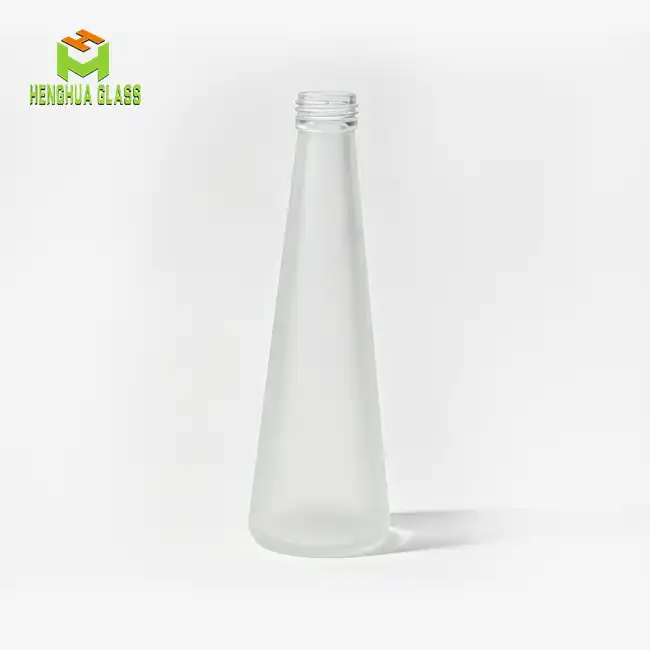
Understanding Logo Customization on Glass Beverage Bottles
It's good for business to put your branding on the drink package, not because it looks good. You should use glass bottles to show off your style and good taste. Really ones that are made for drinks like olive oil, whisky, gin, and rum. People who use "personalized beverage bottle" refer to containers that show off your brand in unique ways that work with the bottle's material and purpose.
Why Glass Bottles Excel for Logo Applications?
When it comes to packing materials, glass is the best because it is smooth and doesn't have pores, which makes it great for cutting and writing. Glass is clear, so it can be used for creative layering techniques like internal engraving, which makes logos look like they float inside the bottle, giving it a striking three-dimensional look. Brands can stand out with amber or blue glass, and light-sensitive goods can be kept safe. Your logo will stay bright on the glass product from the store shelf to the user's hands because glass is so strong.
Core Customization Methods for Brand Visibility
It's possible to decorate glass in many beautiful ways. Because screen printing can be used for large amounts, brands that need thousands of bottles can save money by going this route. The colours are bright and solid. Hot stamping and bronzering add a bit of class to these things, which makes them great for business gifts and high-end drinks. When you engrave a name on the inside of something, it stays there and can't be changed or washed off. You can print names that are hard to understand because of their curves and small details that make them look like photos with thermal transfer printing. If you know how you want to place your brand and how much money you have, each way has its own pros.
Technical Considerations for Logo Placement on Glass Containers
You need to carefully plan around technical needs if you want to make branding bottles that look good. The best ways to decorate glass depend on its shape, thickness, and how it has been treated on the outside. This is because glass is made of different materials.
Material Selection and Surface Preparation
What makes your idea work depends on how good the base is. The best surface for putting logos on is glass that is very clear and doesn't have many spots or other flaws. When bottle bodies are strengthened, they stay solid while they are being decorated with heat or pressure. A frosting or acid etching process on the surface creates backgrounds with different textures that make names stand out. The way Henghua makes glass bottles gives them smooth walls on the inside that keep the drink inside fresh, and the outside is very good for printing.
Choosing the Right Decoration Technique
There are different best ways to print for each business goal. It's great for easy logos with one to three shades because it lasts a long time and doesn't wash off or wear down. Hot stamping adds shiny metal details that stand out and look great in high-end settings, but the foil has to stick to flat surfaces. Engraving something on the inside is a lasting way to mark it as real and high-quality, but it costs more to set up. UV printing is fast and lets you make copies in full colour, so it's great for limited runs or sales during certain times of the year.
Design Constraints and Logo Optimization
The name can't go in every spot on the Personalized beverage bottle because of its shape. Bottles that are round have the most room for printing. On the other hand, bottles that are tapered or have a special shape may need smaller logos placed at odd angles. Narrow necks and rounded shoulders make it harder to design, but they can fit batch numbers or taglines that are used for secondary marking. It's very important to choose the right color. Lighter colors look great on yellow bottles, while darker colors look better on clear glass. Getting help from people who have made things like this before can help you figure these things out before you commit to large production runs.
Types of Glass Bottles Most Suitable for Logo Customization
Not every bottle is good for everything. To get the most out of your branding investment, you should know which styles work best in different fields.
Premium Spirit and Liquor Bottles
People who make whisky, rum, gin, and vodka want their bottles to have experience and skill built into them. The best sizes for high-end brands are 500ml, 750ml, and 1000ml glass bottles. Thick walls make the item look strong and high-quality, and unique shapes help it stand out on store tables that are already crowded with other items. For example, gold printing on amber glass gives it a classic, high-end look. Lettering on the inside of the bottle tells brand stories that buyers learn as the bottle is empty. Custom-colored, wood, or metal caps finish off the high-end look that makes people want to buy in markets where prices are high.
Food and Beverage Packaging Solutions
Gourmet sauce, olive oil, and juice brands should use glass containers because they keep the product's quality and show off the brand. When something is in clear glass, people can see its colour and brightness, which makes them more sure that it is fresh and pure. Different sizes, from 100ml sample sizes to 1 litre family forms, can meet the needs of the market. If you print on a screen, make sure you follow the rules and use food-safe inks to give your brand bright colours. Good packing keeps the product pure while it's being shipped and stops leaks. This protects both the goods and your reputation.
Corporate Gifting and Promotional Bottles
Some companies want to give out promotional items or gifts to seniors that people will remember. Glass bottles are a good choice because they are useful and last a long time. You can choose from different sizes, like 16 oz and 18 oz, so it can be used in the office or outside. Laser-etched business names look professional, last a long time, and can be washed many times. Things look much more valuable than they are when they are packed in fancy show boxes with labels inside. These bottles can hold drinks and keep the company in your mind at work, in meetings, and on your way to and from work.
How to Procure Custom Logo Bottles for Business Needs?
You need to know how customization works, how prices are set, and how partnerships work in order to do a good job of procurement.
Minimum Order Quantities and Volume Pricing
When you customize glass bottles, you usually need to buy a certain number of them in order to cover the costs of the tools and the setup. For standard ways of decorating, like screen printing, it usually takes between 5,000 and 10,000 units to break even. With more specific methods, like internal cutting, you might need between 10,000 and 20,000 units to get a good deal. If you order 50,000 bottles instead of the amount you need, you can save 30 to 40 percent on the price. The price per unit goes down by a lot when you use volume pricing. You can stick to your budget and still have a lot of choices for your goods if you plan your purchases around what you really need each year and when sales are happening.
The Customization Process from Concept to Delivery
In order to keep quality and deadlines in mind, professional suppliers set up structured workflows for Personalized beverage bottle products. Send in your art as the first thing to do. That way, the images will be able to be printed clearly no matter what size they are. Then, suppliers make digital models that show, in terms of shape and colour, how your brand will appear on the real bottle. After that, you'll get actual samples in 25 days. You can look at them to make sure the design is good, the colors are accurate, and they look good in general before going to production. Mass production can take up to 30 days, depending on how complicated the order is and how many of them there are. Mistakes don't cost a lot of money, and standards are always met when there is clear contact at every step.
Quality Control and Compliance Verification
Manufacturers with a good reputation use checking methods that include a number of quality checks. That way, you can be sure that logos won't fade or peel when they are handled and washed normally. This stops leaks by making sure that the finishes on the necks meet the standards for caps and that the measurements are correct. Colour matching makes sure that the brand colours are used the same way all the way through the production process. Bottles that hold drinks must meet FDA and SGS safety standards for food-grade materials. This keeps the decorations out of the drinks. International certificates, like CE and LFGB, show that a supplier is dedicated to meeting the high quality standards needed by large markets.
Real-World Applications Across Industries
If you look at how custom glass bottles are used in other fields, you can learn how to make your brand stand out.
Spirits Brands Building Premium Identity
Brands of craft beers and well-known drinks use fancy bottle shapes and decorations to stand out in stores that are already full. A small-batch whisky maker might engrave the inside to tell the story of how they got started. This makes the whisky more valuable as a gift, which is why it costs more. Collectors are interested in limited editions, which get a lot of attention on social media thanks to their silver hot stamping and sequential numbers. These ways of branding make things interesting to look at and talk about, even after people have bought something.
Beverage Companies Driving Consumer Connection
Boxes are becoming a more important way for juice and drink makers to connect with customers. People are drawn to custom bottles with brightly coloured screen printing in cold stores, and colour psychology can be used to talk about flavour profiles. Companies that make specialised goods, like cold-pressed juice, use clear glass and simple logos to draw attention to how pure their products are and what ingredients they use. Good glass packing makes you think of good things, which makes you want to buy from that brand again and again.
Corporate Programs Strengthening Company Culture
Customised glass bottles are given to employees as gifts, to mark an event, or to show appreciation for clients. A tech company could order laser-etched bottles with their brand and the names of all of their employees on them. This would let you make unique keepsakes that mark important points in your service. People who put on conferences are given branded bottles that they can keep as gifts and use to remember the brand after the event. With some care, these apps show how simple things can be turned into important connection points.
Conclusion
Putting your logo on Personalized beverage bottles that are both useful and nice to look at is a great way to build your brand. Screen printing, hot pressing, internal etching, and UV decoration are some of the technologies used today that make it possible to clearly show a name on a wide range of bottle types and uses. You can make smart decisions that fit your brand's image and your budget if you know about the different types of materials, how to style them, and how to buy them. When professionally put on high-quality glass bottles, logos leave a long impact that helps customers choose and stay loyal in markets that are very competitive.
FAQ
What is the typical minimum order quantity for logo-printed glass bottles?
Most of the time, the minimum order size is between 5,000 and 10,000 units, but it can be higher or lower depending on the design and the bottle specifications. Many times, the minimums for screen printing are lower than those for internal cutting or custom shape development. You can save a lot of money on each item when you buy a lot of them. The name stays the same on all of them.
How long does logo decoration last on glass bottles?
For as long as the bottle is used, details like screen printing and interior engraving that were done by a professional will look good. Screen-printed logos won't fade, peel, or wash off if they're properly dried, and internal engraving is lasting and can't be taken off. To make sure that decorations last a long time, good providers check them for sticking power and durability.
Can I customize both bottle shape and logo decoration?
Of course. It's possible to make your own models to make different bottle shapes, and then you can paint them however you like. This method works in every way and gives you truly unique packaging that makes your brand stand out. The minimums are higher, and the process takes longer (8 to 12 weeks), but it gives you a unique place in the market.
What artwork formats do manufacturers need for logo printing?
When you print them at any size, vector files (AI, EPS, or PDF) look the best. Raster files that are at least 300 DPI can be used to make photographic elements. You can be sure that the colours will fit well by giving them Pantone colour numbers. If your files need to be changed so that they can be decorated properly, services can help you improve your art.
Partner with Henghua for Custom Glass Bottle Solutions
For over 20 years, Henghua has been making fine glass bottles for well-known brands all over the world. Screen printing, hot stamping, internal engraving, and full shape change are just some of the ways that we can make your business ideas come to life. We are a trustworthy "Personalized beverage bottle" supplier. We have 10 sets of 150-ton glass-melting kilns that can make up to 1 million bottles every day. The FDA, SGS, CE, and LFGB certificates we have prove that our products are safe and meet the strictest safety rules around the world. The sizes we can handle range from 100 ml to 32 oz, and the caps we can make are out of metal, plastic, or wood. Send an email to denny@henghuaglass.com to tell us about your specific needs and get a quote that fits your job.
References
1. Johnson, M. & Richards, P. (2022). Glass Packaging Innovation: Materials, Design, and Sustainability in Modern Beverage Markets. International Journal of Packaging Technology, Volume 16, Issue 3.
2. Thompson, L. (2021). Brand Identity Through Custom Packaging: Strategic Approaches for Beverage Industry Success. Marketing and Consumer Behavior Quarterly, Issue 28.
3. Chen, W. & Martinez, R. (2023). Advanced Decoration Techniques for Glass Containers: Comparative Analysis of Screen Printing, Laser Engraving, and Digital Technologies. Packaging Engineering and Technology Review, Volume 45.
4. Williams, S. (2022). Procurement Best Practices for Custom Beverage Packaging: Managing Supplier Relationships and Quality Control. Supply Chain Management in Food and Beverage Industries, Chapter 7.
5. Anderson, K. (2021). Consumer Perception and Premium Packaging: The Impact of Glass Bottles on Brand Value in Spirits Markets. Journal of Brand Strategy, Volume 10, Number 2.
6. Roberts, T. & Singh, A. (2023). Regulatory Compliance and Safety Standards for Food-Contact Glass Packaging: Global Requirements and Testing Protocols. Food Safety and Quality Assurance Handbook, Third Edition.
Learn about our latest products and discounts through SMS or email