- English
- French
- German
- Portuguese
- Spanish
- Russian
- Japanese
- Korean
- Arabic
- Irish
- Greek
- Turkish
- Italian
- Danish
- Romanian
- Indonesian
- Czech
- Afrikaans
- Swedish
- Polish
- Basque
- Catalan
- Esperanto
- Hindi
- Lao
- Albanian
- Amharic
- Armenian
- Azerbaijani
- Belarusian
- Bengali
- Bosnian
- Bulgarian
- Cebuano
- Chichewa
- Corsican
- Croatian
- Dutch
- Estonian
- Filipino
- Finnish
- Frisian
- Galician
- Georgian
- Gujarati
- Haitian
- Hausa
- Hawaiian
- Hebrew
- Hmong
- Hungarian
- Icelandic
- Igbo
- Javanese
- Kannada
- Kazakh
- Khmer
- Kurdish
- Kyrgyz
- Latin
- Latvian
- Lithuanian
- Luxembou..
- Macedonian
- Malagasy
- Malay
- Malayalam
- Maltese
- Maori
- Marathi
- Mongolian
- Burmese
- Nepali
- Norwegian
- Pashto
- Persian
- Punjabi
- Serbian
- Sesotho
- Sinhala
- Slovak
- Slovenian
- Somali
- Samoan
- Scots Gaelic
- Shona
- Sindhi
- Sundanese
- Swahili
- Tajik
- Tamil
- Telugu
- Thai
- Ukrainian
- Urdu
- Uzbek
- Vietnamese
- Welsh
- Xhosa
- Yiddish
- Yoruba
- Zulu
Wholesale 500ml Glass Juice Bottles in Bulk: A Buyer’s Guide
If you source beverage packaging at scale, choosing the right glass container directly affects your product quality, brand perception, and bottom line. This guide covers everything a procurement professional needs to know about buying 500ml glass juice bottles in bulk — from material science and supplier evaluation to maintenance and cost planning. Whether you manage a juice brand, run a food manufacturing operation, or distribute packaging across multiple SKUs, the information here will help you make a confident, well-informed purchasing decision.send inquiry

Content Overview
This guide talks about five main topics: the materials and how long they will last, important things to think about when buying, comparing suppliers and prices, judging quality, and taking care of bottles that will be used a lot. After the FAQ, there is advice on how to get in touch.
Understanding 500ml Glass Juice Bottles: Materials, Benefits, and Sustainability
Material Types and Their Impact
Glasses used to package drinks come in two main types. Most of the time, soda-lime glass is used because it is cheap, easy to find, and can handle getting hot up to 80°C if the bottle is heated first. Borosilicate glass can handle thermal shock (Delta T up to 165°C) better and is used when temperatures need to change over and over again. Good soda-lime glass with little iron is the best choice for getting juice in bulk because it is clear and safe for food.
Why Glass Outperforms Plastic
Chemicals don't change the way glass works. People who care about their health and retail buyers in the U.S. market like that it doesn't have any BPA, BPS, or plasticizer migration risk, as PET or HDPE containers do. Because it is smooth and doesn't have pores, flavor compounds stay inside, and air can't get in. This is a big reason why cold-pressed and HPP drinks go bad so quickly. From what the Glass Packaging Institute knows, the U.S. FDA has only said that glass is "GRAS" (Generally Recognized as Safe) when it comes to direct contact with food.
Sustainability and Brand Value
The quality of glass doesn't change when it is recovered over and over again. It has always been shown in life cycle studies that reusing glass in a closed loop lowers CO2 emissions than making new glass. Companies that want to reach customers who care about the environment or supply chains that follow ESG standards don't just use glass packaging as marketing speak.
Key Factors to Consider When Buying Wholesale 500ml Glass Juice Bottles
Bottle Specifications and Finish Options
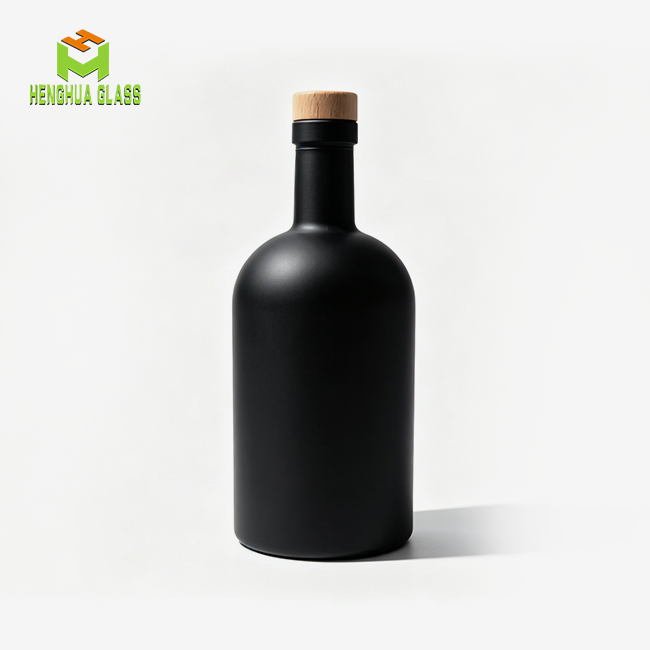
You should know the color of the 500ml glass juice bottles, the wall thickness for stacking strength (the vertical load should be more than 1.5kN for palletization), and the neck finish diameter before you place a bulk order. The neck finish diameter should be 38mm lug/twist-off for vacuum-sealed products and 28mm PCO for re-sealable consumer beverages. Amber glass is better for drinks that don't like light because it blocks UV light. Clear glass makes it easier to see what's inside. That's not all; Henghua also sells blue glass for brands that want to stand out.
Closure Types and Cap Compatibility
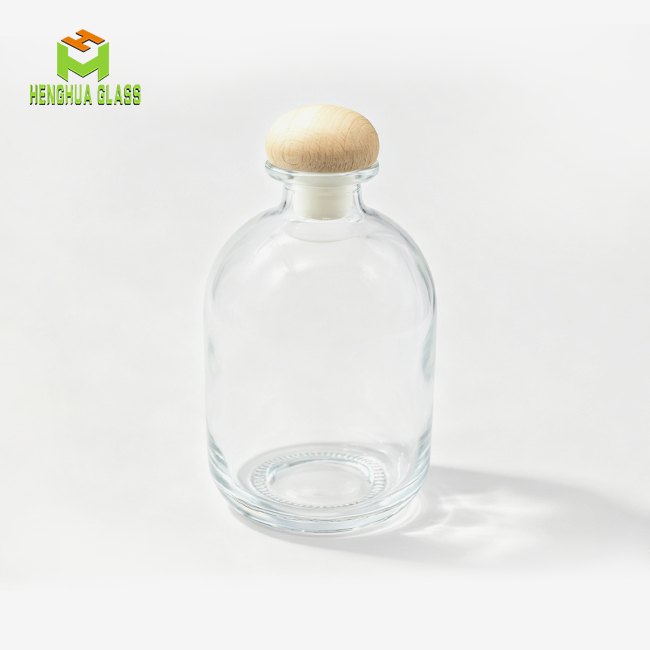
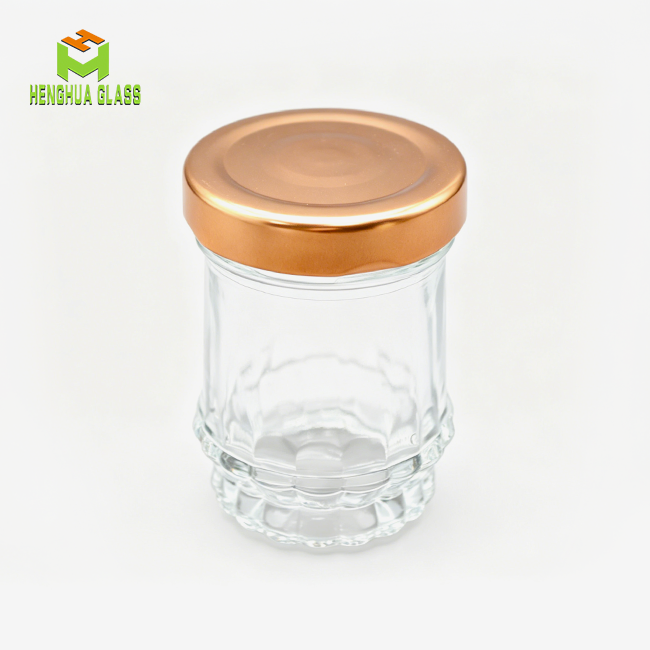
How safe the product is and how the customer feels are both affected by the choice of closure. It is always possible to close screw caps made of metal or plastic. With lug/twist-off caps, you can make a pressure seal that works great for prepared drinks. Henghua has caps in gold, silver, black, and white, as well as caps made of metal, plastic, and wood. People can match the look of their packaging this way, and they don't have to look for seals separately.
Customization and Branding Potential
On the shelf, the bottle is the first thing that makes one brand different from another. Some of the surface treatments that Henghua provides are screen printing, gold stamping, bronzing, thermal transfer printing, spray painting, and engraving on the inside. With full OEM/ODM service, you can also get branded shipping boxes, labels, and stickers made just for you. Given these options, procurement teams can pool their sources and cut down on the number of vendors they work with.
There are choices at the standard level that affect how well a bottle works with your current filling line and how your product looks on the shelf. These choices include the neck finish and the surface treatment.
Comparing Wholesale Suppliers and Pricing for 500ml Glass Juice Bottles
Manufacturer vs. Distributor: What Changes
You don't have to go through a middleman when you buy directly from a glass bottle maker. You have full control over the production details, quality standards, and wait times. Distributors might make it easier to get standard SKUs, but at factory prices, they usually can't offer deep customization or flexible MOQs. Businesses that need to buy a lot of goods every year and have specific branding needs should definitely work directly with a maker like Henghua. This is the best way to save money and get better quality.
Pricing Structure and MOQ Expectations
The cost of buying a lot of 500ml glass juice bottles depends on the type of glass, how you treat the outside, and the seal you need. When custom services like screen printing, engraving, or branded packaging are added, the cost per unit goes up. However, the total cost of the packaging goes down because there is no need for separate suppliers for label printing or secondary packaging. As a general rule, the MOQ for custom orders is a few thousand units per SKU. Henghua's tanks come in several sizes, from 100ml to 1,000ml and 500ml to 16oz. They are easy to change.
Lead Times and Supply Chain Reliability
To plan output, you need accurate information on wait times. This process at Henghua takes about 25 days, and after that, 30 days of mass production begin. With 10 furnaces that can melt 150 tons of glass each and fully automated lines that make them, each furnace can make up to 1 million units every day. Things that are in stock are sent out right away. With this much production, procurement chiefs don't have to worry about long store windows or planning campaigns that happen once a year.
How to Evaluate and Choose the Best 500ml Glass Juice Bottles for Your Business
Certifications and Compliance Requirements
In the U.S., the FDA has rules that any glass bottle that comes in contact with food must follow. EU Directive 94/62/EC limits the amount of heavy metals that can be brought into the European market. These metals include lead, cadmium, mercury, and hexavalent chromium. If a company has ISO 9001 approval, it means that they handle quality the same way for all of their products. Items from Henghua have been approved by CE, FDA, SGS, and LFGB. This means they meet the most important safety rules in the US, EU, and other places.
Quality Control During Production
If you buy from a reliable supplier, they will do many quality checks. These include annealing stress tests with polariscopes to measure residual internal stress, dimensional tolerance checks on neck finish and height, impact and vertical load tests, and automated visual inspection for flaws like stones, air bubbles (called "seeds"), and surface checks. To make sure that legal measurements for fill volume are accurately met, weight-based volume tests are used to check the capacity.
Matching Bottles to Your Filling System
Automatic machines that fill bottles don't always do a good job with all of them. Before you place a large order, make sure that your capping and labeling machine can handle the smallest neck diameter, the largest bottle height, and the smallest base diameter. Before going into full production, it is usual to ask for a sample run. Henghua offers free samples. You won't have to spend a lot of money making changes to the line after the order has been placed.
Maintaining and Caring for 500ml Glass Juice Bottles in Bulk Use
Cleaning Protocols for Food Safety
Glass surfaces can be cleaned with food-safe products that keep chemical residue from building up on reused glass bottles used in restaurants or businesses that refill large bottles. Glass bottles can be sterilized in industrial machines at temperatures between 60°C and 82°C without breaking as long as they can handle the shock of the heat. You can clean small amounts by hand with bottle brushes, but clean water needs to be used for the last rinse to get rid of mineral layers.
Handling and Storage to Reduce Breakage
A risk that can be managed is that glass will break during shipping. It doesn't always happen. The sides of the bottles don't hit each other when they're in double-walled cardboard boxes with cell dividers inside. Protect the edges of the crates with shrink wrap and put them in a box to keep them from moving during freight. When people buy things from Henghua, they can get extra peace of mind knowing that they will be sent across international borders safely.
Supporting Circular Economy Goals
Once a glass bottle is empty, it can be recycled again without losing any of its quality. But this can't be done with plastic bottles. Brands that want to be part of the circular economy can describe how much glass they recycle as part of their ESG stories. Getting this from a well-known company whose eco-friendly practices have been recorded backs up these claims with data from the supply chain that can be checked.
Conclusion
Buying 500ml glass juice bottles in bulk is a procurement decision with long-term consequences for product quality, brand positioning, and operational cost. The right bottle material, closure type, customization options, and supplier relationship all compound over time. Prioritize suppliers who offer direct factory pricing, verified certifications, and proven production capacity. Free samples, clear lead times, and compliance documentation are non-negotiable for any serious bulk buyer in the U.S. market.
FAQ
1. Are glass juice bottles safer than plastic for long-term storage?
Yes, chemicals don't mix with glass, and it doesn't have any BPA or plasticizers that could leach out. The U.S. Food and Drug Administration (FDA) says that glass is GRAS when it comes to direct food contact. If you want to store cold-pressed or HPP drinks for a long time, glass is better than PET because it keeps the flavors in and air out.
2. What is the minimum order quantity for custom-printed glass bottles?
For each type of customization and each seller, the MOQ is different. The minimum order quantity (MOQ) for screen-printed or engraved bottles is usually set at least a thousand units for each stock item. You can email Denny at henghuaglass.com to get exact MOQ limits that fit your needs.
3. Can 500ml glass bottles handle hot-fill processing?
Standard soda-lime glass can handle hot-fill temperatures of up to 80°C if it is heated up slowly first. It can handle a bigger range of temperatures than other types of glass. Before you buy a hot-fill line, talk to your supplier to make sure you have the right type of glass and wall thickness.
4. Are eco-friendly packaging options available?
There is no loss of quality when glass is recycled over and over again. Henghua helps brands that say their packaging is ESG or green by making sure they have the right paperwork for sustainable sources.
5. Do suppliers provide samples before bulk orders?
Samples of Henghua are given away for free. People can check this to make sure the sizes fit the filling tools, and the finish is good before they buy a lot of it.
Request a Quote from Henghua — Your Trusted 500ml Glass Juice Bottles Supplier
Henghua has been making things for more than 20 years, so they can handle any big order. The FDA, CE, SGS, and LFGB have all approved our 500ml glass juice bottles. With OEM/ODM, you can also make any changes you want to your order, from the shape of the bottle to how it looks on the outside. Each oven can make up to a million units a day, and we offer free trials. This makes it easy to buy in bulk. You can email us at denny@henghuaglass.com right away to get prices.
References
1. Glass Packaging Institute. Glass Packaging: Sustainability and Safety. Glass Packaging Institute, 2022.
2. European Commission. EU Directive 94/62/EC on Packaging and Packaging Waste. Official Journal of the European Union, 2018 (amended).
3. U.S. Food and Drug Administration. Guidance for Industry: Food Contact Substances and Packaging Materials. FDA, 2021.
4. Toxics in Packaging Clearinghouse (TPCH). Model Toxics in Packaging Legislation: Annual Report. TPCH, 2022.
5. International Organization for Standardization. ISO 9001:2015 Quality Management Systems — Requirements. ISO, 2015.
6. Franklin Associates. Life Cycle Inventory of Glass Containers Compared to Alternative Packaging. Prairie Village, KS: Franklin Associates, 2018.
Learn about our latest products and discounts through SMS or email