- English
- French
- German
- Portuguese
- Spanish
- Russian
- Japanese
- Korean
- Arabic
- Irish
- Greek
- Turkish
- Italian
- Danish
- Romanian
- Indonesian
- Czech
- Afrikaans
- Swedish
- Polish
- Basque
- Catalan
- Esperanto
- Hindi
- Lao
- Albanian
- Amharic
- Armenian
- Azerbaijani
- Belarusian
- Bengali
- Bosnian
- Bulgarian
- Cebuano
- Chichewa
- Corsican
- Croatian
- Dutch
- Estonian
- Filipino
- Finnish
- Frisian
- Galician
- Georgian
- Gujarati
- Haitian
- Hausa
- Hawaiian
- Hebrew
- Hmong
- Hungarian
- Icelandic
- Igbo
- Javanese
- Kannada
- Kazakh
- Khmer
- Kurdish
- Kyrgyz
- Latin
- Latvian
- Lithuanian
- Luxembou..
- Macedonian
- Malagasy
- Malay
- Malayalam
- Maltese
- Maori
- Marathi
- Mongolian
- Burmese
- Nepali
- Norwegian
- Pashto
- Persian
- Punjabi
- Serbian
- Sesotho
- Sinhala
- Slovak
- Slovenian
- Somali
- Samoan
- Scots Gaelic
- Shona
- Sindhi
- Sundanese
- Swahili
- Tajik
- Tamil
- Telugu
- Thai
- Ukrainian
- Urdu
- Uzbek
- Vietnamese
- Welsh
- Xhosa
- Yiddish
- Yoruba
- Zulu
Do elliptical crystal wine bottles provide better wine preservation?
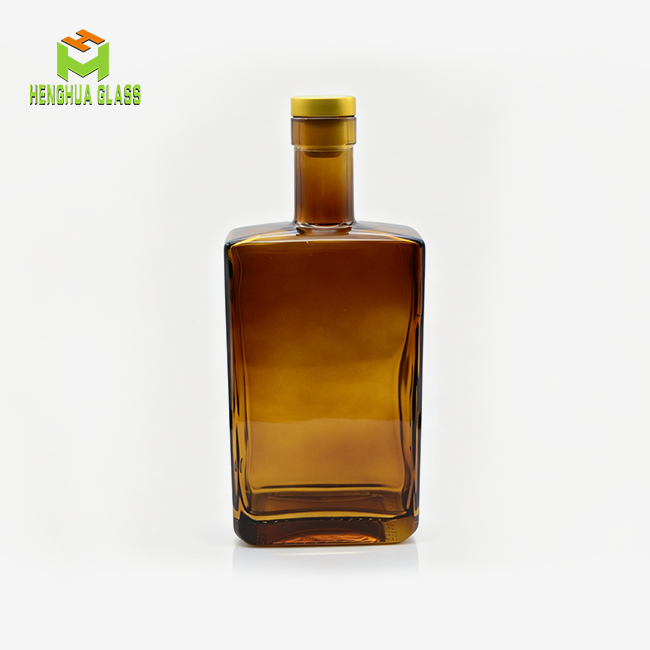
An elliptical shape does not preserve wine better on its own. A 750ml elliptical crystal white glass wine bottle protects wine the way any well-made glass bottle does: the glass blocks oxygen, and the closure controls what slowly passes through the neck. Preservation depends mainly on light exposure, closure performance, fill quality, and storage conditions. The oval profile adds shelf presence, a wider label area, and a distinct feel in the hand. In this article, I explain where the bottle helps, where it does not, and what buyers should check before placing a bulk order.send inquiry

How Bottle Material and Color Affect Wine Preservation
What Crystal White Glass Actually Is
Extra-flint glass, which is also called super-flint glass, is made with very little iron. This is why it doesn't have any color. Iron gives plain glass a slight green tint. Our 750ml elliptical crystal white glass wine bottle is made of this type of glass. It lets more than 92% of light through and has less than 0.012% iron in it. That's why the shelf is so clear: you can see the color of the wine, the sediment, and the amount of filling. But being clear is better for showing off than for keeping things safe. Buyers should ask each supplier how it defines "crystal white" and ask for optical data because different suppliers may use the term in different ways.
Light Exposure and Light-Sensitive Wines
Light is the main thing that needs to be kept out of clear glass. In wine, riboflavin takes in light, mostly violet-blue light, and can start processes that make sulfur molecules. The "light-struck" fault is what happens, and some people say it smells like cabbage that has been cooked. Most of the time, fizzy wines, light whites, and rosés show it. Dias and his colleagues looked at how different bottle colors changed when they were exposed to light in a study that came out in 2013 in the journal Food Chemistry. Light changes things, and they found that clear glass didn't protect against those changes very well. But that doesn't mean clear glass isn't good. The time of exposure is important. If wine stays in a carton or sells quickly, it's not as likely to go bad as if it's put out in bright lights for weeks.
Matching Glass Color to the Wine
Not just how the name looks, but the color should go with the wine. It's better to store wines that are sensitive to light or for long-term use in stores that use amber or dark green glass because it blocks more light. Crystal white looks good with colors that people can see, like a bright spirit, a deep red wine, or a coral rosé, as long as they sell quickly or the lighting is kept in check. I think you should ask yourself three things before you decide. How long are the racks going to hold the bottles? How well does the room light up? Do cartons or gift boxes keep the 750ml elliptical crystal white glass wine bottles safe while they're being sold or shipped? You might want to choose a colored option if the results point to long exposure. At Henghua, we have clear, blue, and amber glass. If you want, we can also make glass in any color.
Does the Elliptical Bottle Shape Improve Protection Compared with a Standard Bottle?
What the Oval Profile Really Changes
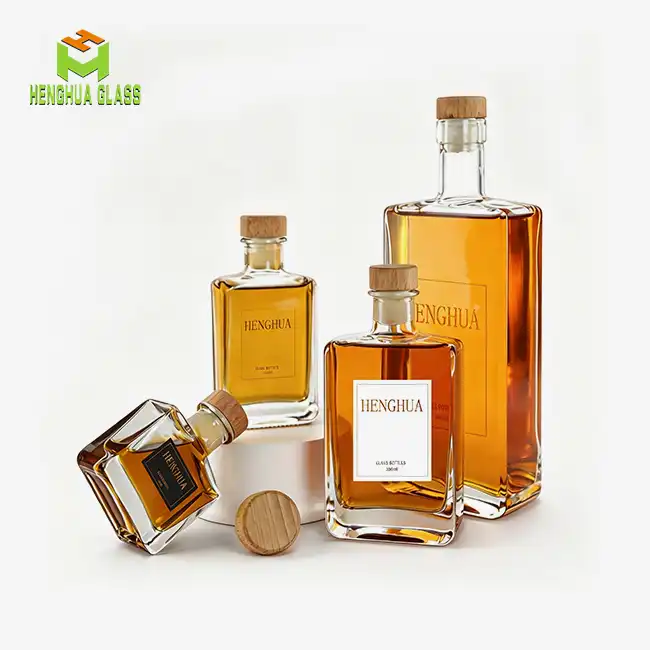
It doesn't change how the wine tastes or smells; it only changes how the bottle looks and feels. Because glass doesn't let oxygen through, the shape of the bottle doesn't change how fast it goes bad. You get a unique shape, a large front panel for labels, and a good grip in exchange. The wide face is best for screen printing and gold stamping wine and booze names because the flatter area bends art less than a tightly bent round surface. These perks have to do with how you look and your business. If the form itself keeps wine fresh, there should be test results to back it up. I haven't been able to find any that have been made public.
Effects on Filling, Labeling, and Packing
There's more work to be done on the packing line for a certain oval bottle. For labels to land on the broad face, labeling tools need devices that help them find their way. The round part of our bottle has a flat edge that lets you put pressure-sensitive labels on it quickly and without any bubbles. People who want to buy standard Bordeaux forms should plan ahead because the boxes, dividers, and pallet designs are all different. We put plastic barriers on the inside and treat both the hot end and the cold end surfaces so that they don't get damaged during shipping. If you want to fill, cap, label, and case-pack a lot of items, make sure your equipment works before you let the order go through. A manufacturing line that is stuck costs a lot more than a short test.
Structural Strength Depends on Glass Distribution
That an oval-shaped shoe is strong doesn't make it so. What makes it strong is how the wall thickness is spread out and the shape of the shoulder, heel, and base. A bottle that isn't cylindrical can get weak spots if the glass isn't spread out evenly. That's why mold creation is important. There are more walls in our bottle, and the body is thicker. Polariscope stress tests, pendulum impact tests that look like collisions on a conveyor belt, and thermal shock resistance of ΔT ≥ 42°C are all useful tests. The goal is for the annealing quality to be Grade 1 or 2. Any provider will give you the same information. It's hard to say how strong a heavy base really is without testing it.
The Technical Factors That Actually Protect Wine Quality
Closure Choice and Oxygen Ingress
Most of the air comes in through the closure, since glass doesn't let it in. Cork, technical cork, plastic closures, and screw caps are some of the different types of closures that let air through. These differences have an impact on how the wine changes in the bottle. When wine is introduced to air after it has been bottled, the smell changes. For example, Ugliano's work, which was published in the Journal of Agricultural and Food Chemistry in 2013, shows this. Screw caps don't let much oxygen in, but cork systems can let in a little more, which some winemakers like for aging reds. For each type of wine, choose a closure that fits with what people expect in the market. Next, make sure that the bottle neck fits that closure.
Neck Finish Precision and Seal Quality
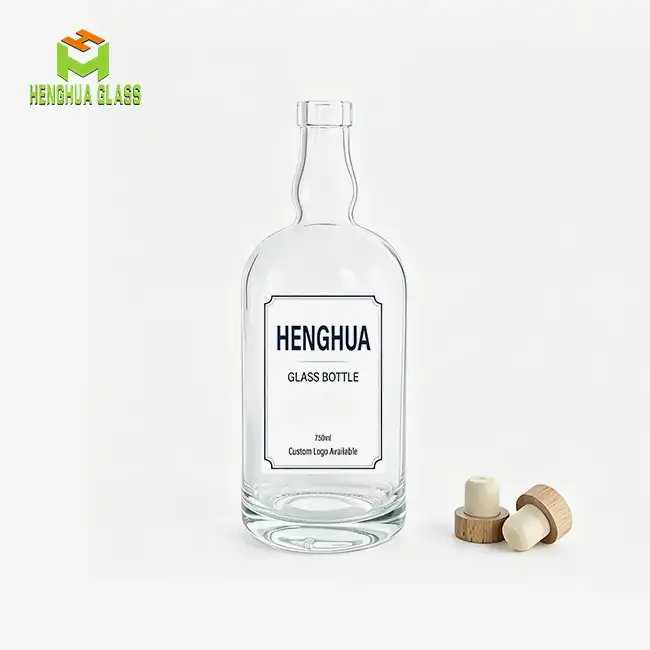
The neck finish of a good bottle can break quietly. If the bore diameter or finish size changes, the closure won't fit right, letting liquid or air pass through. To check the hole width and make sure the seal is tight, we use go/no-go gauges. Our bottle can be used with either a Guala cap or a T-cork. It's also important to have verticality. That is, 1.5 mm or less of a shift from the center line is what we look for. This helps make sure that the lines that fill in automatically don't get stuck. You should send closing samples to the source so that test bottles can be used with the real stopper and not a fake one.
Storage, Transport, and Fill Quality
Handling a bottle badly can break even the best one. Temperature changes press on closures, heat speeds up the aging process, and sunlight sets off the light-struck fault we talked about earlier. How good the fill is is also important. What happens to early oxidation depends on how much air there is and how much dissolved oxygen there is at filling. A lot of producers use inert gas and sulfur dioxide to deal with both of these problems. Put bottles in boxes that keep light out, store them away from windows or loading docks for a long time, and make sure they stay at stable, moderate temperatures. When the 750ml elliptical crystal white glass wine bottles are clear, these habits matter more. A good packing system treats the bottle, the lid, the box, and the pallet as a single unit that needs to be kept safe.
Specifications and Customization Options Buyers Should Verify
Capacity, Drawings, and Tolerances
The government of the United States says that a 750ml fill is the standard size for wine. In other words, the format is what stores want and what most filling lines use. But formal skill is only the start. Ask for a technical drawing that shows the height, gauges, label panel, base footprint, and neck finish. Make sure you write down the temperature that was used to measure the brimful capacity, fill height, and depth. We can change the size if you need us to. Our sizes are 500ml, 750ml, 16oz, and 18oz. It's very important that the sizes don't change from one order to the next, because even small changes need to be made to the lines.
Weight, Labels, and Packaging Fit
Things look and cost different amounts based on their weight. It seems and feels like a bigger bottle is more expensive, but it costs more to ship and takes more work to handle. Because of this, you should think about your shipping plan and your goals for being environmentally friendly. Check label curvature, capsule fit, adhesive performance, barcode placement, carton clearance, dividers, and pallet configuration at the sample stage. Check to see if the material is safe too. Our crystal white glass is made with potassium and barium to make it shine. It doesn't have any lead in it. The CE, FDA, SGS, and LFGB all say that our goods are safe. Ask for up-to-date certificates with your order to make sure your compliance team has the right papers.
Customization Options at HengHua
A simple bottle can become a brand asset with customization. This works best when the project is planned ahead of time: agree on the size and capacity, share models or 3D ideas, make sure the mold can be made, accept samples, test the line, and then start production. At Henghua, we can do artistic firing, hot press, gold stamp, print on screens, spray paint, engrave internally, do gold stamping, and make logos, stickers, labels, and boxes for packaging. Caps can be made from wood, metal, plastic, or other materials. They may be black, white, gold, silver, or some other color. Right away, find out how much the molds cost, how many you have to order in order to make a mold, who owns the tools, your right to make changes, and how stable the decoration is. Cross-hatch tests showed how well foiled and coated finishes stuck to the paper.
How to Choose the Right Bottle and Supplier
Matching the Bottle to Wine and Brand
A 750ml elliptical crystal white glass wine bottle works best in places where sales are driven by clear product quality and brand differentiation, such as high-end vodka or gin, gift sets, private label programs, and small wineries. It goes well with expensive reds and rosés that change quickly. Darker or standard bottles work best for wines that don't do well with light, wines that need to be shown for a long time, lines that need to stay cheap, and Bordeaux or Burgundy-style businesses. Importers, distributors, and OEM producers should care just as much about how something looks as they do about how it works, how well it's documented, and how well it works with other lines. To make your choice, look at how sensitive the wine is, where the market is, the tools, how well the wine is packed, the results of the light transmission test, and the total landing cost.
What to Check in a Supplier
Make sure the company knows how to make glass and has made shaped bottles before. Make sure you're dealing with a business or a company that sells things. Look at the inspection records to see how they rate the capacity, size, neck finish, impact, and heat shock. Henghua has 10 sets of 150-ton glass melting kilns and production lines that work on their own. We've been in business for over 20 years. We ship items that are in stock right away, but it takes 25 days for testing and 30 days for mass production for other orders. This is because we offer free samples, transportation loss compensation, ODM and OEM service, 3D customization, and technical support. Buyers can test a design with little risk.
Common Buying Mistakes to Avoid
A lot of people make these four mistakes. People who buy wine think that clear glass keeps light out, but for pricey wines, they should ask for transmission data. Plans for freight and pallets don't take bottle weight into account. Before they do tests with filling, marking, capping, and case-packing, they give the mold their OK. They also look at the unit price instead of the total landed cost, which includes things like inspection, storage, packaging, tooling, decoration, closures, and boxes. In the contract, you should list the product's size, form, color, weight, finish, acceptable flaws, packing, inspection requirements, and how to make a claim. There is safety for both the buyer and the maker when the specs are clear.
Conclusion
The shape of an elliptical crystal 750ml elliptical crystal white glass wine bottle doesn't make it better at storing wine. Any type of glass blocks oxygen, so the length of time that wine lasts depends on how it was stored, how well it was filled, and how much light it gets. Crystal clear white glass shows color and detail well, but it doesn't let in as much light as green or yellow glass. This is important for whites, rosés, and sparkling wines that are going to be put on bright shelves. The oval form makes it easier to grab, put labels on, and find their place on the shelf. How the glass is tested and spread out affects its strength. It's best for buyers to look at the specs, test-run the bottle on their own line, compare the total landing cost, and choose the glass color that goes best with the wine and how it will be sold.
FAQ
1. Does an elliptical bottle keep wine fresh longer?
The way something is stored, sealed, and filled determines how fresh it is. Glass doesn't let air through in any way.
2. Does crystal white glass protect against light?
Not as much as green or amber glass. Light can get through more than 92% of the time, so for delicate wines, use boxes, lights that can be managed, or a colored bottle.
3. Which closures fit the bottle?
It is designed to fit both T-cork and Guala caps. Metal, plastic, or wood can be used to make caps. This is to make sure the closure works well.
4. Is the glass lead-free and recyclable?
Yes, there is no lead in it, and the whole thing can be recycled. But high-purity super flint cullet is generally kept in closed-loop systems so that it stays clear.
5. Can I order custom decoration?
Yes, you can choose from gold stamping, screen printing, spray painting, and internal etching. However, there are requirements for the minimum order size and lead time.
Request a 750ml Elliptical Crystal White Glass Wine Bottle Sample from HengHua
Want to buy 750ml elliptical crystal white glass wine bottles from a business that gives free samples, does ODM and OEM work, and has goods that meet CE, FDA, SGS, and LFGB standards? Henghua can be used to close, decorate, or make something bigger. Dennis@henghuaglass.com is the email address to send your drawings or goal specs. Once our team gets back to you with samples, prices, and wait times, you can test the bottle on your own line.
References
1. Food Chemistry, 2013 – Dias et al., "Wine bottle colour and oxidative spoilage: Whole bottle light exposure experiments under controlled and uncontrolled temperature conditions"
2. Journal of Agricultural and Food Chemistry, 2013 – Ugliano, "Oxygen Contribution to Wine Aroma Evolution during bottle aging"
3. Wine Industry Journal, 2001 – Godden et al., "Towards offering wine to the consumer in optimal condition – the wine, the closures and other packaging variables"
4. Understanding Wine Chemistry (Wiley), 2016 – Waterhouse, Sacks, and Jeffery
5. Wine Science: The Application of Science in Winemaking (Mitchell Beazley), 2014 – Jamie Goode
6. The Oxford Companion to Wine (Oxford University Press), 2015 – Jancis Robinson, ed.
Learn about our latest products and discounts through SMS or email