- English
- French
- German
- Portuguese
- Spanish
- Russian
- Japanese
- Korean
- Arabic
- Irish
- Greek
- Turkish
- Italian
- Danish
- Romanian
- Indonesian
- Czech
- Afrikaans
- Swedish
- Polish
- Basque
- Catalan
- Esperanto
- Hindi
- Lao
- Albanian
- Amharic
- Armenian
- Azerbaijani
- Belarusian
- Bengali
- Bosnian
- Bulgarian
- Cebuano
- Chichewa
- Corsican
- Croatian
- Dutch
- Estonian
- Filipino
- Finnish
- Frisian
- Galician
- Georgian
- Gujarati
- Haitian
- Hausa
- Hawaiian
- Hebrew
- Hmong
- Hungarian
- Icelandic
- Igbo
- Javanese
- Kannada
- Kazakh
- Khmer
- Kurdish
- Kyrgyz
- Latin
- Latvian
- Lithuanian
- Luxembou..
- Macedonian
- Malagasy
- Malay
- Malayalam
- Maltese
- Maori
- Marathi
- Mongolian
- Burmese
- Nepali
- Norwegian
- Pashto
- Persian
- Punjabi
- Serbian
- Sesotho
- Sinhala
- Slovak
- Slovenian
- Somali
- Samoan
- Scots Gaelic
- Shona
- Sindhi
- Sundanese
- Swahili
- Tajik
- Tamil
- Telugu
- Thai
- Ukrainian
- Urdu
- Uzbek
- Vietnamese
- Welsh
- Xhosa
- Yiddish
- Yoruba
- Zulu
Best 750ml Glass Liquor Bottles for Your Global Supply Needs
Finding reliable 750 ml glass liquor bottles is a top priority when looking for high-end packing for drinks. We know that the image of your business depends on things like quality, consistency, and how it looks. For more than 20 years, Henghua has been developing glass container solutions that offer great clarity, strong structure, and complete customization. Our bottles are certified to meet worldwide standards by the FDA, SGS, and CE, so your goods can be sold all over the world without worrying about compliance. Whether you're starting a craft whiskey line or making more vodka, picking the right bottle maker has a direct effect on how well your supply chain works and how your brand is positioned.
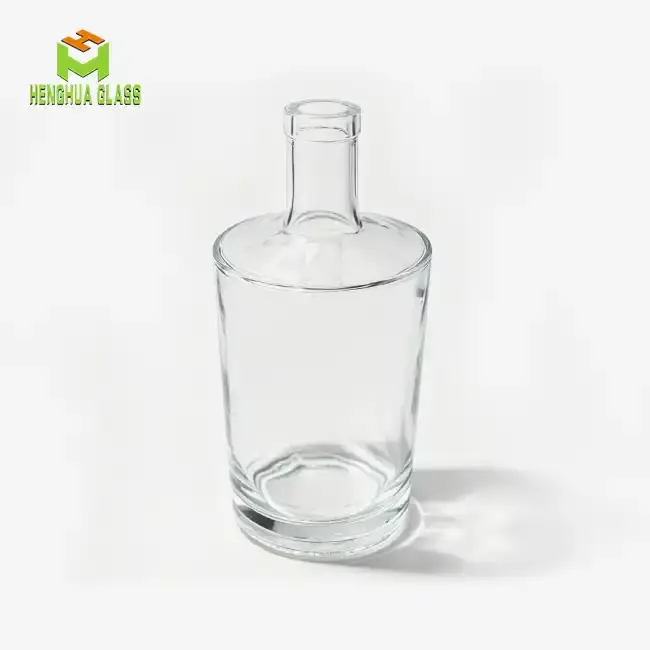
Understanding 750ml Glass Liquor Bottles: Key Features and Benefits
The 750 ml glass liquor bottle size has become the standard for packing drinks all over the world. This standardization comes from trade deals and bottling methods in the past that put an emphasis on shipping quickly and having similar displays in stores. For procurement managers and supply chain leaders, this means easier operations, regular pallet layouts, and the ability to use current filling equipment in more than one production facility.
Why the 750ml Standard Dominates Global Markets
This size of glass bottle strikes the best mix between ease of use for consumers and cost-effective production. The 750 ml glass liquor bottle size fits how whiskey, vodka, gin, and rum are usually drunk, unlike smaller sizes that make packing more expensive per unit or larger sizes that make it hard to move items off the shelf. From our experience making things, we know that this style cuts down on waste in high-speed canning lines while keeping the structure strong during shipping across continents.
When people look at spirit color and clarity, the sharpness of properly made glass can be used as a quality sign. Our Flint and Super Flint choices offer different levels of optical function. Super Flint glass, which is made with refined silica and very little iron, gives elite names the crystal-like clarity they need. This choice of material has a direct effect on how customers see it at the point of sale, where visual differences are very important.
Chemical Stability and Product Protection
Glass is a barrier that can't be broken through that plastic options can't match. The smooth, non-porous surface stops oxygen from getting in and volatile compounds from escaping, which protects the flavor profile that distillers work hard to create over years. This trait is especially useful for old spirits, where even small chemical reactions can change the way they taste. Our thicker bottle bodies can handle changes in temperature while being stored and shipped, so the seal stays intact in all climates.
Smooth inner walls keep sediment from sticking and make it easier for all the product to escape during filling. This part of the design is important for high-value drinks because waste means lost money. The thermal shock resistance we build into our bottles—which can usually handle temperature differences of 40°C—keeps them stable during hot-filling processes and the quick changes in temperature and humidity that happen a lot in warehouses.
Versatility Across Spirit Categories
Distilleries that make different kinds of spirits, like how common 750 ml glass liquor bottle forms can be used in a variety of ways. Instead of keeping separate stocks of bottles, our clients use the same base bottle shapes for their vodka, tequila, and whiskey lines. They make the goods stand out with different labels, closure types, and surface treatments. This method simplifies the buying process, lowers the difficulty of the minimum order, and speeds up the time it takes to get special products on the market.
We keep production options open to support OEM and private label relationships. Craft distilleries can buy standard shapes with lower minimum order numbers, while established brands can use all of our customization options, such as embossing, debossing, and custom mold development. This flexibility helps with both getting into a new market and meeting the needs of a growing business through a single supply relationship.
How to Choose the Best 750ml Glass Liquor Bottles for Your Business
When choosing the right 750 ml glass liquor bottles, you have to balance your goals for how they look with your needs for how they work and your budget. There is a lot of pressure on packaging managers to raise brand awareness while keeping costs low and making sure supplies are reliable. The choice process should give equal weight to material specs, closure compatibility, and provider capabilities.
Evaluating Glass Quality and Performance Characteristics
How durable and valuable you think a bottle is is directly related to how thick it is. Depending on the purpose, our normal walls are between 2.5 mm and 4 mm thick. For ultra-luxury positioning, our premium walls can reach 5 mm. Though it makes the package heavier and costs more to ship, thicker glass says "serious" and "handmade." We help our clients make this choice based on what their target market wants and how their products are distributed.
When you put Flint and Super Flint bottles next to each other on store shelves, you can see the difference in clarity. Standard Flint works well for medium-level spirits and costs less to make, while Super Flint's higher price is justified by its better ability to transmit and bend light. This visual performance makes clear drinks like vodka and silver tequila more appealing. Amber and colored glass choices protect light-sensitive products from UV rays without changing the way the structure works.
Closure System Compatibility
Which types of closures will work with your bottles depend on the neck finish specs. Natural cork closures are popular in luxury whiskey and aged rum presentations, and bar top finishes can handle them. The feeling of removing the cork provides a ritual value that marketing teams use. Roll-On Pilfer Proof (ROPP) screw caps provide a more reliable seal even when temperatures change during export, keeping air in and contaminants out.
We make bottles that can have caps made of metal, wood, or plastic. The colors of the caps are gold, silver, black, and white. Because of this, brand teams can match closes to label designs and the general style direction. During production, our engineering team checks the dimensional limits to make sure there are no capping line jams that stop bottling plans and raise costs.
Sustainability and Environmental Responsibility
Most developed markets have the means to recycle glass, which makes it a good option compared to plastic alternatives that are coming under more and more scrutiny from regulators. Our bottles have amounts of post-consumer recycled material that meet new environmental standards without weakening the structure. Our certification packages make it easier for procurement leaders to meet the sustainable requirements of their companies.
Lightweight bottle designs leave less of a carbon footprint when they are shipped while still having thick enough walls for easy handling. We've come up with our own special ways to shape glass that get rid of extra mass without making weak spots that are likely to break. This new idea helps the environment and lowers freight costs at the same time, meeting two important needs in modern supply chain management.
The Procurement Process: Where and How to Buy 750ml Glass Liquor Bottles Wholesale
Successful buying strategies include checking out 750 ml glass liquor bottle suppliers, planning for customization, and managing relationships with suppliers. International purchasing adds challenges to quality control, coordinating wait times, and making sure operations are reliable that aren't present when buying from within the country. But competitive prices and unique production skills often make the extra organizing work worth it.
Identifying Qualified Suppliers
B2B platforms and trade shows are good places to find new suppliers, but to really get a sense of their capabilities, you need to do more research. Our more than 20 years of experience in making shows show that we can keep up with production levels better than newcomers. We keep up 10 sets of 150-ton glass-melting kilns that can each make up to 1 million units per day. This way, we can meet the large number of needs of our business clients without putting too much stress on our systems.
Certifications show that rules for the target market are being followed. Because our products have been approved by FDA, SGS, LFGB, and CE, they can be brought into major purchasing areas like North America, Europe, and the Asia-Pacific region without any problems. By showing that process controls are uniform and materials can be tracked back to their source, these approvals for quality management systems lower the risk of buying things.
Customization Options That Drive Brand Differentiation
Standard bottles can be turned into unique assets by treating the outside. Screen printing, hot stamping, bronzing, spray painting, and interior engraving are some of the services we offer. These can be used for complex image uses and artistic elements. Thermal transfer printing makes it possible for limited copies and special releases to have images that look like photographs. We list the setup costs and minimum amounts for each method when we give you a quote.
Bottle shape customization gives you the most unique look, but it costs a lot to buy your own molds. Some of the ODM services we offer are 3D models, making prototypes, and making manufacturing molds. After approval, the usual time frame is 25 days for samples and 30 days for mass production. This organized process makes sure that the design meaning is correctly translated into finished goods and that client expectations about lead times are met.
Pricing Strategies and Negotiation Approaches
How the packaging is set up affects both the landing cost and how it looks at the sale. Based on what the client wants, we can do anything from large palletization to individual gift boxes. Corrugated dividers and shrink wrapping keep glass from breaking during shipping, which is very important because glass is so fragile. Our transportation loss compensation strategy lowers the chance of foreign shipments even more.
When you commit to a certain amount of volume, you can access better price levels that help your margins. Our ability to keep costs low comes from vertical integration and efficient production methods that get rid of markups in the middle. Buyers who buy more than 500,000 units a year can get access to strategic account prices with fixed rates that protect them from changes in the market.
In addition to unit price, payment terms and order options affect the total cost of ownership. We accept LC (Letter of Credit) and TT (Telegraphic Transfer), which are common ways to pay for things in foreign trade. Our deposit structures balance the buyer's need for production financing with their ability to control their cash flow. Inventory plans let customers hold production capacity for busy times without having to take delivery right away.
Maintenance, Storage, and Recycling of 750ml Glass Liquor Bottles
When you handle 750 ml glass liquor bottles the right way, they last longer and keep their quality throughout the marketing cycle. Warehouse practices, cleaning protocols, and end-of-life management all show how well-run a business is, which protects the brand's image and bottom line.
Storage Best Practices for Inventory Preservation
Controlling temperature and humidity stops surface decay and thermal stress. We suggest keeping your items in a cool (15–25°C) place with a relative humidity below 70% so that dampness doesn't form and damage the labels or rust the metal seals. Keep pallets off of concrete floors, where temperature differences tend to build up, and bottles facing upward to keep dust from getting into the closures.
Vertical stacking height limitations depend on the thickness of the bottle walls and the way the pallets are set up. Our normal specs allow for five-high palletization, but premium heavy-bottom bottles can handle more compression loads. When you exceed the stated stacking capacity, the base cracks. This breaking only shows up after the container is full, which creates internal pressure that leads to expensive product loss during storage or display in a store.
Cleaning and Reuse Protocols
When bottles are reused or brought back from trade shows, they must be cleaned in a way that meets food-grade standards. Rinses with deionized water after alkaline washing cycles get rid of organic leftovers without leaving behind mineral layers that cloud the water. Our smooth inner walls make it easy to clean everything without having to use harsh mechanical action that could damage the surface.
Recycling Infrastructure and Circular Economy Participation
Before refilling, inspection processes should check the integrity of the rim, since chips make it harder for the seal to form and raise safety issues for consumers. Automated vision systems regularly find flaws faster than human inspection, but they need a lot of money to set up, which is only worth it when production rates are high.
Many developed markets recycle more than 70% of their glass because they have established processes for collecting it and because it can be recycled over and over again without losing any of its quality. Adding cullet (recycled glass) lowers the amount of energy needed to heat the materials and the cost of those materials, which has economic benefits as well as environmental ones. Post-consumer recycled content amounts used in our production methods meet area sustainability standards.
Our material statements and recycle compatibility certifications help brand owners who are taking part in extended producer responsibility programs with their paperwork. As legal frameworks grow across countries that want to cut down on trash, these programs have a bigger impact on choices about packing.
Comparison Insights: 750ml Glass Liquor Bottles vs Alternatives
The choice of material for 750 ml glass liquor bottles affects how a product is positioned, how the supply chain works, and how well it meets regulations. Knowing the pros and cons of each choice helps you make smart decisions about how to match packaging with brand strategy and market standards.
Glass Versus Plastic Performance Analysis
Glass expresses high quality through its weight, clarity, and historical links in a way that plastic formats can't. Consumer perception studies regularly show that people are more ready to pay more for spirits that come in glass bottles, especially when they are gifts or in high-end markets. This psychological benefit explains higher packing costs by helping to bring in more money and build brand loyalty.
Glass is different from plastics that leak and permeate because it is chemically neutral. Spirits have high levels of volatile chemicals and alcohol that react with polymer structures over time, causing off-flavors and affecting the quality of the product. Regulatory bodies are looking more closely at plastic materials that come into touch with food, which makes approval more uncertain than it would be for glass, which has been used safely for decades.
Environmental rules that target single-use plastics change how to figure out if packing is viable. Glass bottles don't have to deal with the restrictions and fees that apply to plastic bottles in places that want to reduce waste. However, their heavier weight means that they produce more pollution during movement, which needs to be balanced out by recycling and lightening efforts.
Closure Type Trade-Offs
Cork closures give whiskey and old spirits the standard look and feel that people expect when they open a bottle. But natural cork causes supply chain problems and sometimes taint risks from TCA (trichloroanisole) contamination. Synthetic options to cork lessen these worries while keeping the traditional look, though experts can tell the difference in texture.
Bottle Shape and Weight Logistics Considerations
Screw caps provide reliable seal performance and get rid of problems linked to cork. When applied during bottling, ROPP caps fit perfectly around neck threads, making it impossible to mess with the seal and ensuring its long-term integrity. As screw caps became more common in the wine industry, consumers became more open to using them in drinks. We make neck finishes that work with both systems, so brand teams can choose based on positioning strategy instead of technology limitations.
Different bottle forms help customers find and recognize your brand, but they can be harder to palletize and make it more likely that the bottles will break while being handled. For custom molds, the investment needs to be spread out over enough amounts to cover the cost of the tools. Our design consulting services help clients find the right mix between being unique and being easy to ship, taking into account the needs of the distribution route and the number of items that will be needed.
While heavier bottles say "higher quality," they also cost more to ship and produce more carbon dioxide. We put numbers on these trade-offs while the design is being made, giving choices with different weights and the costs that come with them. When making strategic choices, bottle mass should match brand placement. For example, ultra-premium spirits can afford heavy glass that mid-range goods can't afford.
Conclusion
Quality, design, and the dependability of the supply chain must all be considered when choosing luxury 750 ml glass liquor bottles. The right package partner will help your business grow by providing industrial knowledge, certification compliance, and output capacity. Glass is still the best medium for making spirits because it keeps the quality of the product safe and meets standards for sustainability. When making purchases, companies should give more weight to providers that can show they are stable over the long term, have good professional skills, and provide great customer service. Over the past 20 years, we've worked with global spirits brands to build the systems and knowledge base that make our partners' difficult foreign buying easy and reliable.
FAQ
What makes 750ml the standard size for liquor bottles internationally?
750 ml glass liquor bottles come from the need to standardize trade and convert between decimal and metric systems in the past. This amount makes transportation as efficient as possible by standardizing palletization and making sure it works with filling equipment that is already in use around the world. A consumer study shows that this size is the best compromise between ease of use and low cost of packing. It is the most popular shape for whiskey, vodka, gin, and rum around the world.
How does glass quality affect spirits packaging performance?
The clarity, longevity, and chemical protection of glass are all based on its quality. Super Flint glass is very clear, which is important for showing off clear spirits, and normal Flint glass works well for medium-level goods. Walls that are thicker make things easier to handle, last longer, and look more expensive. When glass is made correctly, it forms an impenetrable barrier that stops air from getting in and flavor compounds from escaping. This keeps the purity of the distilled spirit throughout its shelf life and distribution.
What certifications should I require from bottle suppliers?
Certifications from FDA, SGS, LFGB, and CE make sure that major market rules are followed and that quality control systems are uniform. By showing proof of material safety and production process rules, these approvals get rid of barriers to imports and lower the risk of buying things. Suppliers who offer full certification packages show they are committed to international standards and openness in the supply chain, which is good for your brand's image.
Partner with Henghua for Your 750ml Glass Liquor Bottles Supply
When you work with an expert 750 ml glass liquor bottle manufacturer, packaging goes from being a problem to being an advantage in the market. At Henghua, we have more than 20 years of experience making glass products and can make more than 1 million units per oven every day. Our wide range of customization options, such as screen printing, internal lettering, hot pressing, and custom shape development, make your brand stand out in stores that are already full. We keep our FDA, SGS, CE, and LFGB standards up to date to make sure that your goods meet the rules in North America, Europe, and the Asia-Pacific region. Email our team at denny@henghuaglass.com to talk about your unique needs, get free samples, or find out how our ODM/OEM services can help you speed up the development of your product. You can see our full line of products at www.glassbottles.cn and learn why top liquor brands have chosen us as their long-term 750 ml glass liquor bottle source for solid quality and low wholesale prices.
References
1. International Standards Organization. "Glass Containers for Alcoholic Beverages: Dimensional and Quality Specifications." ISO Standards Catalogue, 2021.
2. American Distilling Institute. "Packaging Best Practices for Craft Spirits: Material Selection and Supply Chain Management. "ADI Industry Report, 2022.
3. European Container Glass Federation. "Sustainability and Circular Economy in Glass Packaging Manufacturing." FEVE Technical Publication, 2023.
4. Journal of Food Packaging Technology. "Comparative Analysis of Barrier Properties: Glass versus Polymer Containers for High-Alcohol Beverages." Volume 47, Issue 3, 2022.
5. National Institute of Standards and Technology. "Measurement Protocols for Glass Container Strength and Thermal Resistance." NIST Technical Report 1847, 2021.
6. Beverage Industry Magazine. "Global Trends in Premium Spirits Packaging: Consumer Perception and Material Choice." Annual Market Analysis, 2023.
Learn about our latest products and discounts through SMS or email