- English
- French
- German
- Portuguese
- Spanish
- Russian
- Japanese
- Korean
- Arabic
- Irish
- Greek
- Turkish
- Italian
- Danish
- Romanian
- Indonesian
- Czech
- Afrikaans
- Swedish
- Polish
- Basque
- Catalan
- Esperanto
- Hindi
- Lao
- Albanian
- Amharic
- Armenian
- Azerbaijani
- Belarusian
- Bengali
- Bosnian
- Bulgarian
- Cebuano
- Chichewa
- Corsican
- Croatian
- Dutch
- Estonian
- Filipino
- Finnish
- Frisian
- Galician
- Georgian
- Gujarati
- Haitian
- Hausa
- Hawaiian
- Hebrew
- Hmong
- Hungarian
- Icelandic
- Igbo
- Javanese
- Kannada
- Kazakh
- Khmer
- Kurdish
- Kyrgyz
- Latin
- Latvian
- Lithuanian
- Luxembou..
- Macedonian
- Malagasy
- Malay
- Malayalam
- Maltese
- Maori
- Marathi
- Mongolian
- Burmese
- Nepali
- Norwegian
- Pashto
- Persian
- Punjabi
- Serbian
- Sesotho
- Sinhala
- Slovak
- Slovenian
- Somali
- Samoan
- Scots Gaelic
- Shona
- Sindhi
- Sundanese
- Swahili
- Tajik
- Tamil
- Telugu
- Thai
- Ukrainian
- Urdu
- Uzbek
- Vietnamese
- Welsh
- Xhosa
- Yiddish
- Yoruba
- Zulu
100ml Stackable Glass Bottle Set for Kitchen Organization
This is a modular storage system, designed specifically for the domestic kitchen and for commercial food enterprises. This is a stacking glass bottle set of 100ml. All the small bottles have the same capacity, with interlocking base forms and sealed tops so that multiple units may be piled on top of each other without toppling over. This approach solves real space and logistical issues for B2B procurement teams buying kitchen organization supplies. Whether you are bottling artisan olive oil, premium spirits, or specific spice blends, a well-made 100ml stackable glass bottle set gives you the organization, aesthetics, and safety that today’s clients need.send inquiry

Understanding 100ml Stackable Glass Bottle Sets for Kitchen Organization
Before placing a bulk order, procurement managers need to know the difference between a premium stackable glass bottle and a standard one. Form is not the only differentiating property.
What Makes a Bottle Truly "Stackable"
The real stackable style features a recessed base that fits over the cap or shoulder of the unit below. This interlocking construction distributes the vertical load evenly across the glass wall. Industry structural testing confirms that wall thickness uniformity of ≥1.2mm is the minimum to safely sustain a five-unit stack without stress fracture at the point of contact.
Material Options and Their Impact on Content Preservation
Such bottles are normally constructed of soda-lime glass or borosilicate 3.3 glass. Borosilicate has strong thermal shock resistance from ΔT 40°C to 60°C, which makes it suitable for products that undergo temperature changes during storage or transit. Amber glass inhibits UV rays and helps protect photosensitive compounds like essential oils or cold brew concentrates. Clear glass is great if you want to show off the goods, for sale or as a premium gift set.
Key Specifications Procurement Teams Should Confirm
- Check the following before specifications are finalized:
- Seal Type: Roll-type sealing edge ensures consistent contact between cap and bottle for proven leak resistance in high-volume production runs.
- Shape: Under stacking conditions, round profiles distribute the compressive load more uniformly than square alternatives.
These fundamental requirements help procurement managers communicate correctly with suppliers and avoid costly specification mismatches on major acquisitions.
How to Effectively Use and Maintain 100ml Stackable Glass Bottles
Buying the right 100ml stackable glass bottle set is just half the story. How your team manages and maintains these containers may directly impact the shelf life of the product and total cost of ownership.
Labeling and Categorization Strategies
Pick errors are avoided by consistent labeling on a flat label panel on round bottles in industrial kitchens or distribution warehouses with several SKUs. Labels with batch numbers, whether displayed on a screen or affixed with adhesive stickers, may aid in traceability requirements that food safety auditors occasionally ask for when inspecting facilities.
Cleaning and Sanitation Protocols
Glass containers for industrial dishwashing cycles are ideal for sanitation in food processing industries. The glass body can tolerate normal sanitation cycles up to 60°C. Organic material closures such as cork or untreated wood nevertheless should be manually cleaned if you want to prevent swelling or absorption of microbes. The metal caps with food-grade lacquer coatings will be the most sanitation-friendly option for commercial operations.
Maximizing Seal Integrity Over Time
Test silicone gaskets regularly to make sure they are still airtight. Press down the lid and listen for a click seal; a quick quarterly check may prevent batch contamination. If your product includes volatile aromatics such as gin botanicals or essential oil blends, fluorocarbon or high-quality silicone liners will give a far longer seal life than standard rubber alternatives.
Comparing Stackable Glass Bottles with Alternative Packaging Options
Packaging specialists are regularly comparing glass packaging with plastic or metal. The research consistently supports glass for high-end product categories.
Health and Safety Advantages of Glass
Glass is chemically inactive. It does not leach phthalates, BPA, or plasticizers into contents, independent of storage time or temperature. ‘Glass is the gold standard for oil and spirit organoleptic qualities,’ claims a 2023 study in Food Packaging and Shelf Life. If you are a brand with a clean label positioning, this is a must-have.
Environmental and Brand Value Considerations
Glass may be recycled many times over without any loss of quality or purity. A Glass Packaging Institute consumer study finds 67 percent of U.S. buyers connect glass packaging with greater product quality. That image greatly impacts retail pricing power and repeat buy rates for alcohol, gourmet food, or luxury cosmetics companies.
Cost Analysis: Glass vs. Plastic Over a Product Lifecycle
Glass costs more per unit than plastic when you purchase it. However, if you consider the premiums that result from brand positioning, the reusability, and the lower product rejection due to contamination, 100ml stackable glass bottle set packaging is a superior ROI for items above a certain price point. Buying in bulk from a manufacturer also removes the per-unit pricing difference.
How to Choose the Right 100ml Stackable Glass Bottle Set for Your Business Needs
With dozens of configurations available, a structured evaluation process helps procurement teams avoid expensive specification errors.
Matching Bottle Specifications to Application
- Choose amber, clear, or blue glass depending on your product’s sensitivity to light and your strategy for shelf display. The closing material is equally as crucial. Here are the major closure choices and where they perform best:
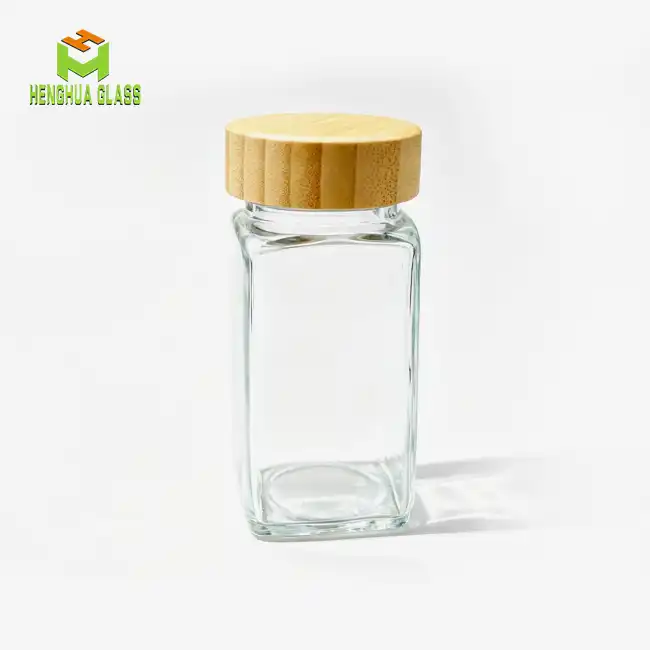
- Wooden lids are ideal for luxury gift packages, craft spirits, or gourmet food lines where natural aesthetics support the company narrative.
- Metallic accents in gold or silver finishes are best for luxury cosmetics, perfume packaging, and high-quality spirits since they indicate premium value.
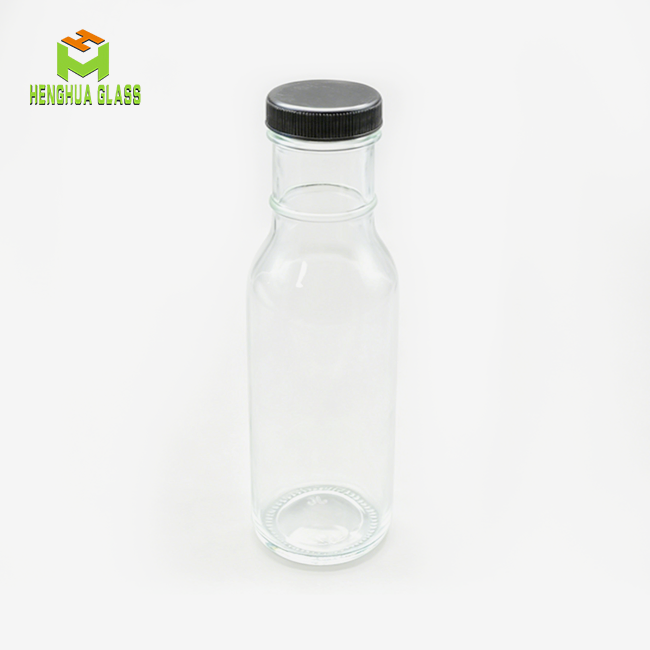
- White or black plastic caps are ideal for food producers requiring cleanliness, low cost, and consistent sealing performance in big volume runs.
Each closure type has various customization services associated with it. The use of brand communication varies according to the sales channel, for hot stamping on wooden lids, inner engraving on glass, or screen printing on the body of the bottle.
Evaluating Supplier Capabilities
A reputable glass bottle supplier should be able to offer OEM and ODM services, provide you with SGS or FDA compliance documents if needed, and have production capability to match your replenishment cycle. For US-based importers, practical necessities such as strong export expertise and ISTA 3A-compliant packaging help avoid loss claims on shipments and customs delays.
Custom Branding as a Differentiation Tool
Customized services for firms include engraving the company logo, distinctive bottle shapes, sticker product labels, and gift box packaging, helping to establish a consistent visual identity across the product range. These services are particularly vital for alcohol firms, cosmetic OEM makers, and luxury food producers competing in retail environments where shelf presence directly benefits conversion.
Trends and Future Outlook for Stackable Glass Bottles in the B2B Market
Allied Industry Research (2023) states that the global glass packaging market is estimated to be $68.1 billion by 2027. Sustainability standards and clean-label consumer expectations are becoming key drivers of demand in the US and European markets.
Sustainability as a Procurement Priority
US retailers and food service buyers are aggressively seeking supplier sustainability certifications as part of vendor qualification. In the evaluations, glass packaging is an advantage for suppliers and brand owners since it has been demonstrated to be recyclable and does not transfer chemicals. Modular stackable forms reduce carbon footprint per sent item by reducing the transport cube and additional packaging material.
Borosilicate Innovation and Smart Labeling
Improved borosilicate glass formulations are clearer and more impact-resistant than traditional soda-lime glass at the same wall thickness. E-commerce companies and direct-to-consumer spirit producers are increasingly demanding QR-code integrated labels and changeable data printing to ensure traceability and customer engagement in their packaging.
Digital Procurement and Supply Chain Efficiency
More and more B2B consumers are using online platforms to purchase glass bottles and want suppliers to offer clear lead time data and insight into capacity to create. Procurement teams on quarterly launch cycles have a substantial planning advantage when their suppliers can provide 25-day sample lead times and 30-day mass production plans.
Conclusion
Set of 12 100ml stackable glass bottle sets - 100ml. These 100ml glass bottles are a safe, space-saving, and fantastic way to promote your firm. Just the right size to showcase your products and brand. By purchasing glass bottles created at an approved facility in the food, cosmetics, medicines, alcohol and food industries, consumers protect the integrity of their product and the value of their brand. Good packaging is not an investment if you have a strong relationship with your supplier and can trust on constant quality, reliable lead times, and real customisation alternatives.
FAQ
1. Are these bottles BPA-free and food-safe?
Yes. The glass is non-reactive and contains no BPA or phthalates. Products comply with FDA food-contact regulations and EU 10/2011 standards, making them appropriate for direct contact with oils, spirits, sauces, and other food products.
2. How many units can be safely stacked?
For stable storage in retail or commercial kitchen environments, a maximum stack height of five units is the standard recommendation. This maintains a safe center of gravity while keeping the vertical footprint compact.
3. What closure options are available?
Options include wooden lids, metal caps, and plastic caps. Cap finishes are available in gold, silver, white, and black. Custom colors are supported for branded product lines.
4. Can the bottles be customized with a logo?
Yes. Custom services include hot stamping, internal engraving, screen printing, adhesive sticker labeling, and gift box packaging. Personalized bottle shapes and colors are also available through OEM and ODM programs.
5. How is breakage managed during international shipping?
Each shipment uses ISTA 3A-compliant packaging with custom-molded pulp or corrugated dividers that isolate individual glass units. Transportation loss compensation services are also available to protect buyer interests.
Partner with Henghua for Your Stackable Glass Bottle Supply
For more than 20 years, Henghua has been making glass boxes. They use what they've learned with every order. Fully automatic lines that can make up to a million units per day per furnace are used to make our 100ml stackable glass bottle sets. These items have been approved by CE, FDA, SGS, and LFGB, and you can try them out for free. You can trust our company; we've sent 100ml stackable glass bottle sets to the US market before. We have factory-direct prices, full OEM and ODM customization, and open order structures for people who buy packaging, own brands, or are wholesalers. Please contact us right away at denny@henghuaglass.com.
References
1. Allied Market Research. Glass Packaging Market – Global Opportunity Analysis and Industry Forecast. 2023.
2. Glass Packaging Institute. Consumer Attitudes Toward Glass Packaging in the United States. 2022.
3. Food Packaging and Shelf Life (Elsevier). Chemical Migration and Sensory Preservation in Glass vs. Plastic Containers. 2023.
4. ASTM International. Standard Specification for Glass Containers for Use in the Food and Beverage Industry (ASTM C1036). 2021.
5. European Commission. EU Regulation 10/2011 on Plastic Materials and Articles Intended to Contact Food. Updated 2022.
6. ISTA (International Safe Transit Association). ISTA 3A Test Protocol for Packaged Products Weighing 150 lb or Less. 2020.
Learn about our latest products and discounts through SMS or email